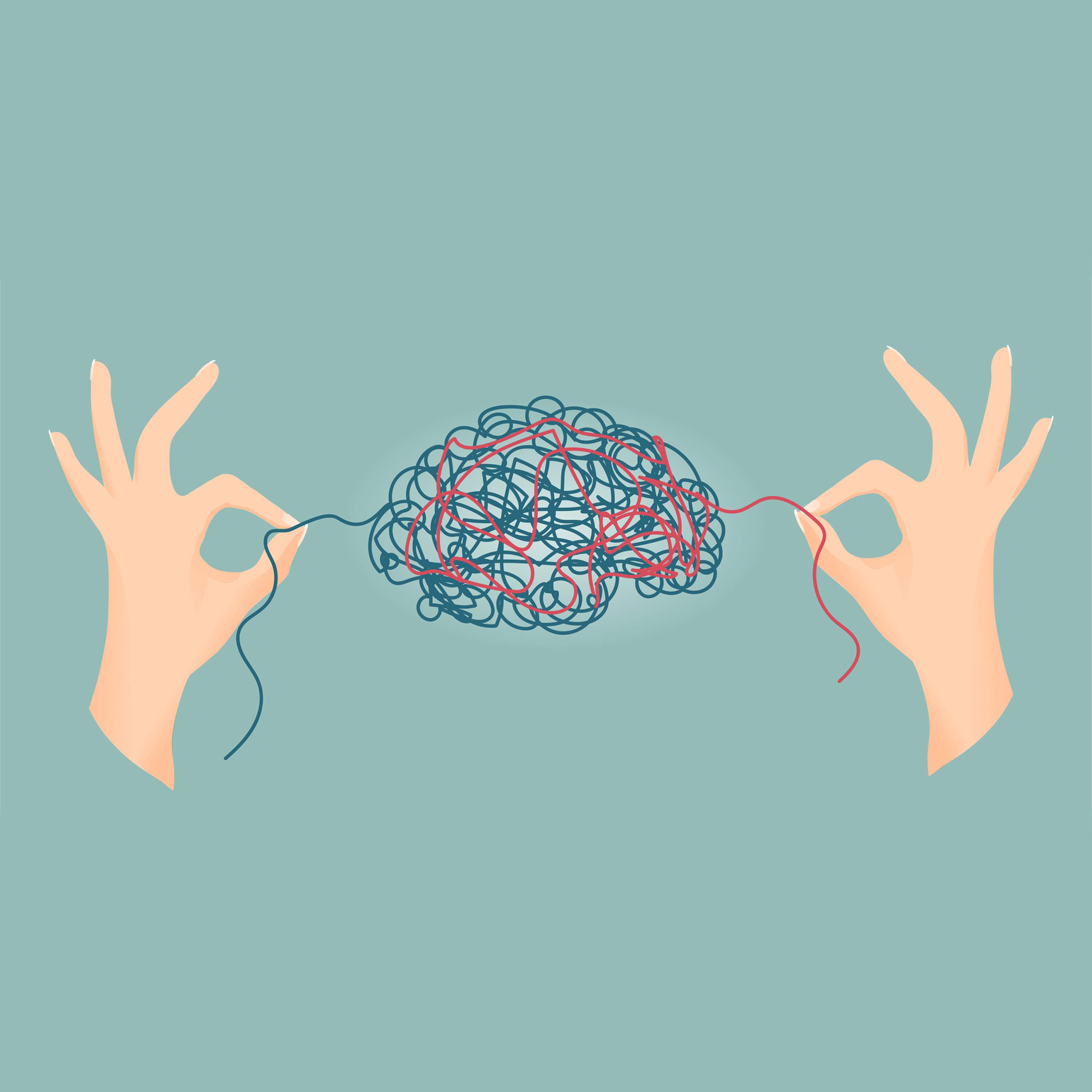
Overview of A neuroscientist's guide to managing our emotions
This episode of the TED Radio Hour (host Manoush Zomorodi) features psychologist and neuroscientist Ethan Cross (University of Michigan). Cross frames emotional regulation as a skill — like learning to play a Stradivarius — and lays out research-backed tools and practical exercises to help emotions “shift” so they don't overwhelm our choices, relationships, or health. He draws on lab studies, long-term cohort research, neuroimaging, and real-life stories (e.g., a mother reacting to her child’s peanut exposure; Malala using self-coaching) to show that emotional management is malleable and learnable.
Key takeaways
- Emotions are neither inherently “good” nor “bad”; their usefulness depends on intensity, timing, and duration. Learning to manage them improves decisions, relationships, and life outcomes.
- Self-control and emotional regulation are malleable across the lifespan (evidence: Dunedin longitudinal study).
- No single strategy works for everyone or every situation. A personalized “toolbox” of multiple strategies (people typically use 3–4 per day) is most effective.
- Low-effort techniques (distanced self-talk, music, scent, awe) are valuable because they’re easy to deploy and therefore more likely to be used.
- Venting helps social bonds but is insufficient on its own; the best supportive conversations validate feelings and then help broaden perspective and problem-solve.
- Flexibly alternating between approaching and avoiding difficult emotions (strategic avoidance) can be adaptive—e.g., Cross’s grandmother dosed remembrance of trauma rather than dwelling constantly.
Tools & strategies that work (with how to use them)
Distanced self-talk
- Speak to yourself using your own name or “you” instead of “I” (e.g., “Ethan, calm down” or “What would you tell a friend?”).
- Why it helps: creates psychological distance, making it easier to give yourself wise, less-reactive advice. Neuroimaging shows rapid reductions in emotional reactivity with minimal effort.
Use the senses (low-effort, high-impact)
- Music: build playlists that reliably shift your mood (hype songs for action; calm songs for down-regulation).
- Scent, visual cues, touch: deliberately leverage smells, art, lighting, or physical contact to alter state.
- Awe: seeking awe-inspiring experiences (nature, space imagery, vast landscapes) can “shrink the self” and reduce stress/PTSD symptoms (study of veterans/first responders on a rafting trip found awe predicted declines in PTSD/stress).
Distress toolbox approach (find combinations that work for you)
- Cross’s COVID-era study tracked 18 emotion-management tools; most people used several each day, and many different combinations produced anxiety reductions. Experiment to discover your effective mix—there’s no single universal recipe.
Venting vs. constructive conversation
- Venting strengthens bonds but often leaves the negative feeling intact or amplified.
- Best conversations follow two steps: (1) validation/empathy, then (2) perspective-broadening/problem-solving/closure.
Emotional Advisor Audit (build your “advisory board”)
- Draw a two-column list: personal problems / work-or-school problems; list people you go to for each.
- Circle the names of people who (a) let you express emotions and (b) help broaden perspective and problem-solve.
- Mark others off your “advisory board” for problem-focused conversations; you don’t need to cut them out, but know their role.
Understanding the inner voice and “chatter”
- We spend roughly 1/3–1/2 of waking time mind-wandering and talking to ourselves. The inner voice is a cognitive superpower (planning, memory, meaning-making).
- Chatter = repetitive, unproductive internal talk (rumination, worry, self-criticism) that consumes attention and impairs performance.
- EEG research: people prone to worrying find reframing (trying to see the bright side) more effortful and sometimes counterproductive—attempting to reframe can increase distress if you’re habitually ruminative.
- Practical implication: don’t blame yourself if reframing is hard; use alternative tools (distanced self-talk, sensory shifts, social support, distraction) and build skills gradually.
Approach vs. avoidance — the value of flexibility
- Chronic avoidance is harmful; chronic approach (forced reprocessing) is also not always optimal.
- Flexible toggling between approach and strategic avoidance can be adaptive. Example: Cross’s grandmother (Holocaust survivor) generally avoided revisiting trauma but participated in an annual remembrance where intense processing occurred—this dosing helped her function day-to-day.
- Practical rule: neither approach nor avoidance is universally right—use them strategically depending on context, timing, and your capacity.
Practical action steps (a starter “shift” plan)
- Build a small toolbox: pick 6–8 strategies to try (distanced self-talk, playlist for moods, brief walks/nature, journaling, brief distraction/immersive activity, social support that problem-solves).
- Self-experiment: apply 1–2 tools when stressed for a week; note whether anxiety decreases compared to days you don’t use them.
- Create an “emotion playlist” on your phone: label songs for lift, calm, focus, or hype.
- Practice distanced self-talk in low-stakes moments (rehearse using your name) so it becomes accessible in crises.
- Do an Emotional Advisor Audit and identify 1–2 people who can both validate and help broaden perspective; cultivate those relationships.
- If recurrent or severe distress impairs functioning, seek therapy (look for a therapist who builds alliance and helps reframe and close distressing loops).
Notable quotes & concise insights
- “Our brain is like our very own Stradivarius. When our emotions are triggered out of proportion, that’s akin to me trying to play a Stradivarius violin.” — framing emotions as skillful practice.
- “We need to devote an equivalent amount of resources to teaching ourselves how to communicate more effectively with ourselves.” — sums up the episode’s call to action.
- Solomon’s Paradox / distanced self-talk: “We are much better at giving advice to other people than we are at taking our own advice.”
Where to learn more
- Ethan Cross — Emotion and Self-Control Laboratory, University of Michigan.
- Books by Ethan Cross: Shift: Managing Your Emotions So They Don't Manage You; Chatter: The Voice in Our Head — Why It Matters, and How to Harness It.
- Full TED Talk and resources at TED.com (Cross’s TED talk is referenced in the episode).
Short, research-backed and practical: this episode provides a science-based framework and concrete starting tools for anyone who wants to stop being hijacked by their emotions and learn to direct them instead.