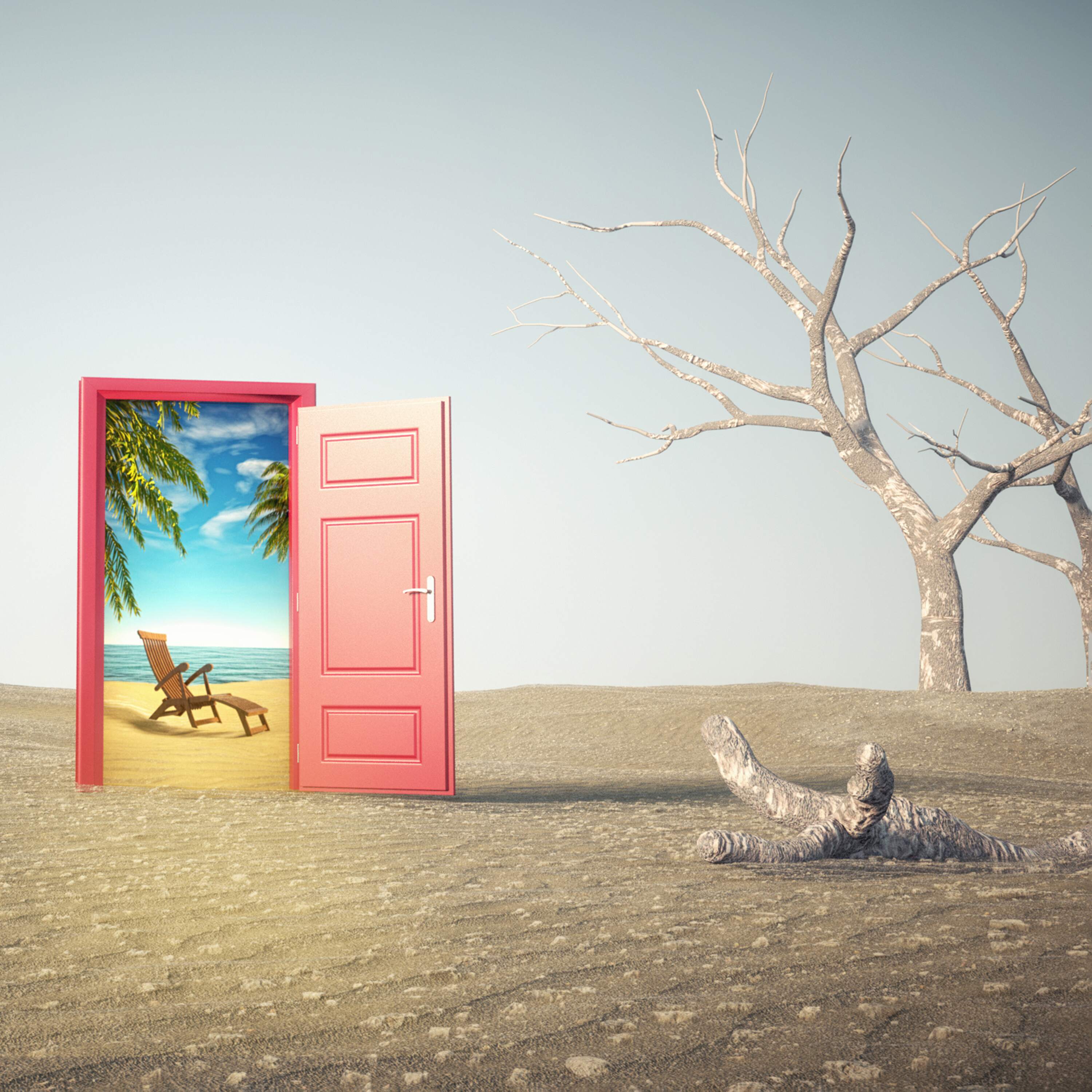
Overview of Searching for Paradise (TED Radio Hour from NPR)
This episode explores the meaning of “paradise” in a world shaped by climate change, conflict, and personal loss. Through stories of wildfire survivors, a writer’s global search for paradise, a country’s renewable-energy transformation, and a remarkable recovery after trauma, the show argues that paradise is less a perfect place than a way of living with reality: building resilience, valuing community, and finding hope inside struggle.
Paradise Lost: The Paradise, California Wildfire
The episode opens with Richard and Zeta Gore, who moved to Paradise, California, in 2018 believing they had found their dream home. Just months later, the Camp Fire devastated the town.
Key details
- A faulty electrical line, drought, and dry brush helped fuel the fire.
- The Gores escaped only after evacuating, hiking out of the danger zone, and walking more than a dozen miles.
- Their home was destroyed.
- The fire killed 85 people and destroyed thousands of structures, becoming the deadliest wildfire in modern U.S. history at the time.
Main takeaway
The story sets up the central question of the episode: in an era of climate risk, is the idea of a perfect, untouched paradise still possible?
Reimagining Paradise with Fire and Climate Reality
TED speaker George Whitesides argues that the wildfire crisis is not just a climate problem but also a land-management problem.
His three-part solution
- Fire-adapted communities
- Clear brush near homes.
- Use ember-resistant vents and metal screens.
- Install fire-resistant roofing.
- Resilient landscapes
- Restore healthier forest conditions.
- Use prescribed burns and Indigenous fire practices.
- Reduce the buildup of dangerous fuel in forests.
- Innovative fire management
- Detect fires faster.
- Respond with more rapid, coordinated resources.
- Use models like Southern California’s Quick Reaction Force with large water-dropping helicopters.
Main takeaway
Whitesides presents a practical, hopeful framework: communities can reduce fire damage by combining home hardening, better forest stewardship, and faster response systems.
Paradise as Projection: Pico Iyer’s Search
Writer Pico Iyer reflects on how “paradise” is often a fantasy projected onto places far away.
What he argues
- What one person sees as paradise, another may experience as ordinary, difficult, or even painful.
- Paradise is often shaped by longing, not reality.
- During the pandemic, Iyer deepened his search for a more grounded, realistic understanding of paradise.
Key examples
- Bali: Beautiful and serene on the surface, but also noisy, complicated, and built partly on unseen labor.
- Iran: A place where different visions of paradise coexist:
- The government’s religious vision
- Citizens’ more worldly desires
- Sufi poetry’s inward, spiritual version
- A taxi driver in Iran: He fled to England, built a life there, then returned every year to see his mother and hometown—showing that paradise can be a collage of places, relationships, and memories.
- Varanasi, India: A sacred city filled with death, ritual, ash, and joy—challenging the idea that paradise must be clean, quiet, or pure.
Notable idea
“The struggle of your life is your paradise.”
Iyer interprets this as a reminder that meaning and growth often come from hardship, not escape. Paradise, in his view, is not a distant destination but something to discover inside daily life and real-world complexity.
Uruguay as a Renewable-Energy Paradise
The episode then shifts to Uruguay, where Ramon Mendez-Galain helped lead a dramatic energy transformation.
What happened in Uruguay
- The country moved to 98% renewable electricity in about five years.
- It now relies heavily on:
- Wind
- Solar
- Hydropower
- Sustainable biomass
- It even exports power to neighboring countries.
How it worked
- Uruguay faced an energy and economic crisis.
- Mendez-Galain, originally a physics professor, was invited to lead the country’s energy agency.
- He reframed renewables not as sacrifice, but as the best national option:
- Lower costs
- More energy independence
- More jobs
- Greater stability
Why it matters
Uruguay succeeded through:
- Strong public policy
- Long-term planning
- Technical innovation, including software for managing intermittent power sources
Main takeaway
The Uruguay case shows that decarbonization is not just aspirational—it can be practical, economically smart, and scalable.
Radical Collaboration: Ramona Pearson’s Recovery
The final story is a personal one about survival, community, and unexpected support.
Her story
- Ramona Pearson was struck by a car at age 22.
- She suffered catastrophic injuries and spent 18 months in a coma.
- When she woke up, she was blind, unable to speak or walk, and severely weakened.
How she recovered
- She was placed in a senior citizens’ home after the hospital could no longer keep her.
- The residents pooled their skills to help her:
- Taught her to eat again
- Helped her relearn speech and writing
- Supported mobility training
- Helped fund a guide dog
- Their support helped her return to college and rebuild her life.
Main takeaway
Pearson credits “extreme radical collaboration” for her recovery—the idea that people working together can restore what seems broken beyond repair.
Key Themes Across the Episode
1. Paradise is not perfection
The episode repeatedly argues that paradise is not a flawless place, but a meaningful one.
2. Resilience matters more than escape
Whether dealing with wildfire, energy crises, or physical trauma, the answer is not denial—it’s adaptation.
3. Community is central
The strongest recoveries and transformations come through shared effort, from neighbors in Paradise to seniors helping Ramona Pearson.
4. Hope is practical
Hope in this episode is not abstract optimism. It is:
- Clearing brush
- Changing policy
- Rebuilding homes
- Supporting each other
- Redefining what “paradise” means
Bottom Line
Searching for Paradise suggests that paradise is not a faraway ideal, but something created in the middle of risk, loss, and imperfection. The episode’s biggest message is that a livable future depends on realism, collaboration, and the willingness to build beauty and safety where we are.