Overview of 989: State of JS 2025
Wes Bos and Scott Tolinski walk through the State of JS 2025 survey (published Feb 2026), calling out major trends in libraries, meta-frameworks, build tools, runtimes, testing, editors, AI tool usage, and developer pain points. The episode mixes survey highlights, personal reactions, and practical takeaways for developers deciding what to learn or adopt next.
Key high-level themes
- The JavaScript language itself feels “mature” and less exciting; most interesting movement is in libraries, tooling, bundlers, and meta-frameworks.
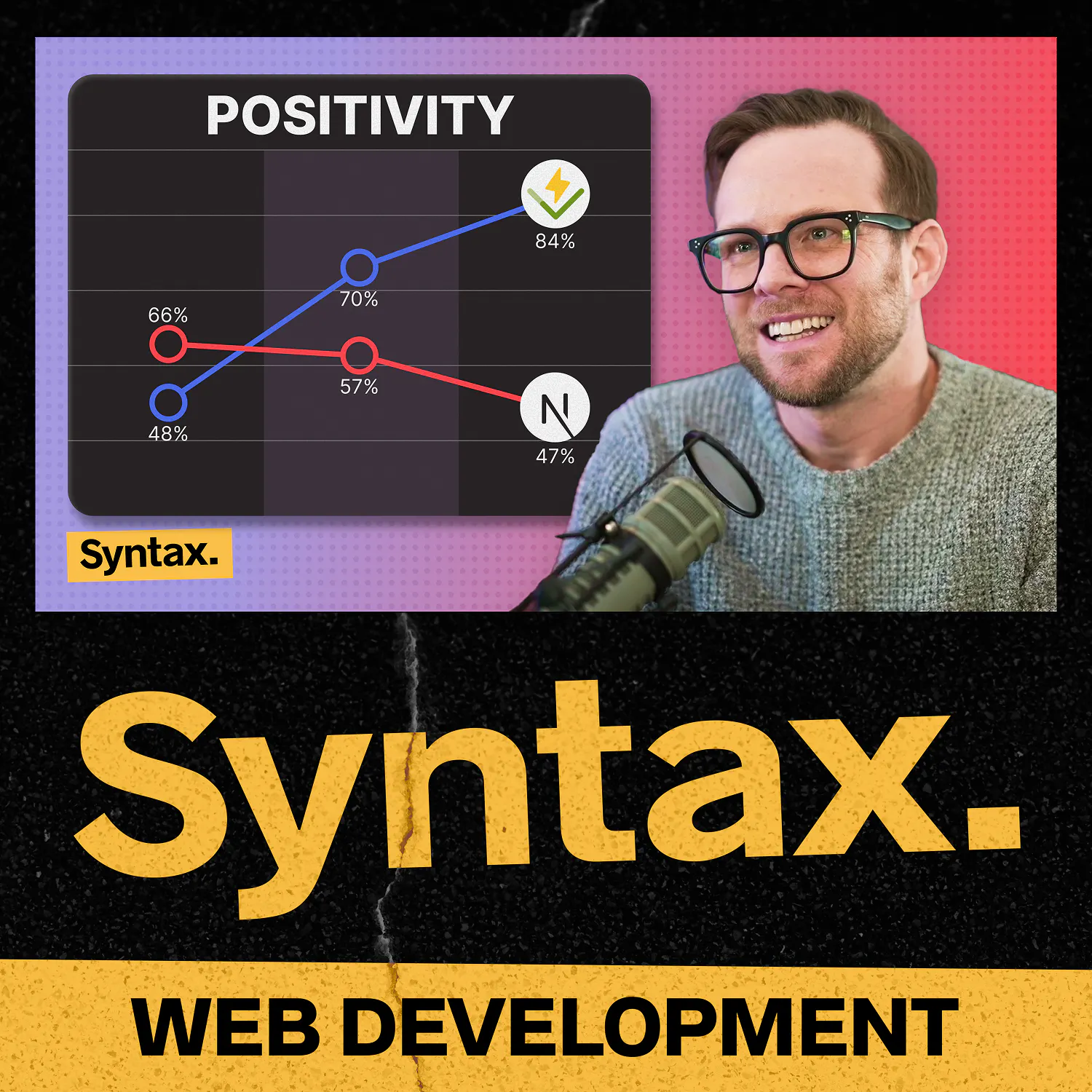
- Many libraries follow a familiar lifecycle in sentiment: initial rise → broad adoption → backlash (a “backwards C” curve). A few tools break that pattern with renewed or sustained positive sentiment (an “S” shape).
- Testing and dev-tooling are seeing big, tangible improvements (Vite, VTest, Playwright, Ox/Lint/Biome, etc.). AI is widely used but not dominant for generating entire apps.
Notable winners and movers
- Vite — the most popular and positively rated tool; widely adopted across the ecosystem.
- VTest — one of the largest adoption increases (fast, modern testing experience).
- Playwright — climbing strongly for browser automation / E2E tests.
- Astro — big rise in meta-framework ranking (usage up from 2021) and strong satisfaction among its users.
- Solid — smaller user base but improving sentiment; seen as an advanced, tasteful alternative to React for some devs.
- TanStack Start & TanStack Router — notable uptake in “other” meta-frameworks (TanStack Start had big interest among those who wrote it in).
- Hono — rising footprint in backend/web server space (bites at Express).
- Cloudflare Workers — significant growth (+12%) as a full-stack deployment option.
Pain points called out by the survey
- Meta-frameworks: highest pain = excessive complexity (wiring many tools, boilerplate, caching/component-level complexity).
- Testing historically painful (flaky integration tests); improvements now coming from VTest + Playwright + AI-assisted test generation.
- Tool fragmentation / configuration complexity remains a common developer complaint.
Libraries, frameworks, and tiers
- Tiered favorites (S-tier examples): Vite, Hono, Playwright, Astro, Bun — though perception varies by audience.
- Next.js: surprisingly low in the tier list and divisive — high usage but lower favorability/satisfaction than many expect.
- Gatsby, Webpack, Cypress, Angular: often receive negative sentiment or appear in lower tiers.
- New/interesting entries: Ripple (ripple-ts) appears as a fresh TypeScript UI framework inspired by Svelte/Solid/React.
Testing and QA
- VTest and Playwright are the standout winners — large relative increases in usage and positive sentiment.
- Storybook still strong (component dev/test tooling).
- Jest and older testing stacks are being replaced/swapped in many codebases.
- Testing pain related to performance and flaky tests is declining due to modern tooling and AI assistance.
Backend frameworks & runtimes
- Express remains the most-used backend framework; Hono (Hano) is growing and appearing as a modern alternative used inside many meta-frameworks.
- Node.js still dominates runtimes; Bun has a big surge in conversation/adoption but hosts report occasional instability or compatibility issues.
- Deno dipped slightly; Cloudflare Workers increased markedly and are perceived as a rising full-stack platform.
Utilities & developer tooling
- Validation/schema: Zod had a major spike — more projects are adopting strict runtime schemas.
- Lodash still widely reported (many respondents mark it, but modern JS covers many use cases).
- Formatters/linters: ESLint and Prettier remain dominant. Biome has traction (16%); OxLint (OXC) is an emerging, promising option leveraging the Go TypeScript port and good TypeScript compatibility.
- Node version managers: FNM showed strong interest/usage in the survey (surprising to hosts).
- Observability: Sentry highlighted as a go-to, especially for monitoring AI/agent tooling; strong endorsement from the hosts for AI observability features.
Editors and AI
- VS Code: still dominant (~84% reported). Cursor, Zed, and others are present; Zed noted as a fast modern editor some hosts use.
- AI tools: ChatGPT is the most-used; Claude and GitHub Copilot also widely used. Grok showed up for a small fraction (likely due to promotional/free access at the time).
- Code generation: average ~29% of code is AI-assisted for respondents; 10% of developers reported not using AI at all. 0% reported generating 100% of their code via AI.
Survey patterns and insights
- Most technologies follow predictable “rise → backlash → consolidation” sentiment patterns, but a small set buck that trend with renewed momentum (Vite, VTest, Playwright, Solid).
- Many respondents are experimenting with newer stacks but big incumbents (Node, Express, VS Code) remain entrenched.
- AI influences recommendation outputs (LLMs recommend different stacks depending on model/version), and how AI suggestions propagate into actual projects is notable.
Hosts’ opinions & colorful takes
- Wes: impressed with Vite’s dominance, skeptical of Bun hype (has seen bugs), pleased to see Hono recognized.
- Scott: surprised by Astro’s S-tier enthusiasm, encourages trying VTest, personally uses bespoke React setups over Next.js.
- Both agree the survey reflects real-world usage more reliably than hype cycles.
Actionable recommendations (from the hosts + data)
- Try Vite if you haven’t — ecosystem momentum and high satisfaction.
- For testing: consider VTest (unit) + Playwright (E2E) — they’re the modern combo many teams are adopting.
- Evaluate Astro for content-heavy or island-architecture sites (high user satisfaction).
- Consider Zod for runtime schema validation — adoption is rising for a reason.
- If you manage Node versions, try FNM (a surprising winner in the survey).
- Keep an eye on OxLint (OXC) as a next-gen linter/formatter ecosystem alternative to Biome/Prettier/ESLint.
- Use observability tooling (Sentry recommended) to monitor AI/agent behavior and token/tool-call costs.
- Be cautious adopting Bun for production if you rely on full cross-platform compatibility — it’s promising but has rough edges for some workflows.
Notable quotes
- “Vite is the most popular, most used tool on the planet.” — hosts’ reaction to survey numbers.
- “Excessive complexity” is the #1 pain point for meta-framework users.
- “The language is getting pretty good — the interesting stuff is in tooling.” — theme repeated throughout.
Wrap-up
The State of JS 2025 shows a tooling-driven evolution: testing, bundling, and developer experience tools are where most momentum is. Big incumbents remain relevant, but focused modern tools (Vite, VTest, Playwright, Astro, Hono, Zod, OxLint) are worth evaluating. The survey is useful to escape your local bubble—trends in adoption, satisfaction, and pain points give practical guidance for what to learn or adopt this year.