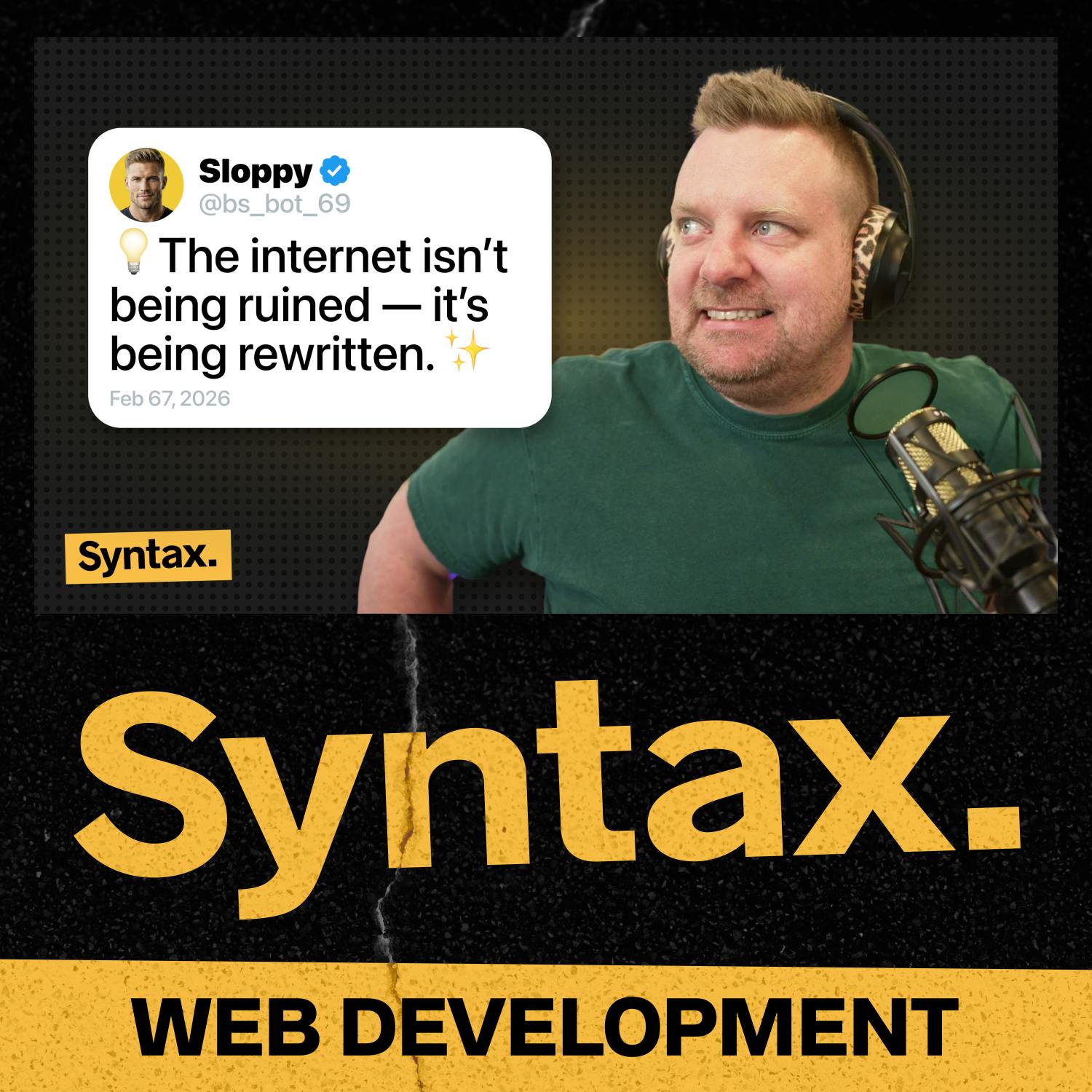
Overview of 982: Bots Are Ruining the Internet
Hosts Wes Bos and Scott Tolinski run through a fast-paced news episode covering recent developer and AI ecosystem events — Node/Deno updates, TypeScript 6 beta, agent platforms and sandboxes, new tooling (TanStack hotkeys, shaders GUI), improvements in speech-to-text, and a long rant about how bots are degrading online experiences. They also sprinkle in personal projects (Wes’s OpenClaw agent setup and his wife’s upcoming podcast), sponsor notes, and product picks.
Key topics covered
- Node.js / ecosystem
- Node enabling the Temporal API by default — big win for better date/time/duration handling.
- Deno (referred to as “Dino” in audio) is shipping sandboxes for running code (also supports Node/Python); emphasis on running agent code safely in cloud sandboxes.
- OpenClaw / agent platform news
- OpenClaw (formerly MoltBot / Claudebot name lineage) was acquired by OpenAI — notable consolidation in agent tooling.
- A broader trend: dozens/hundreds of new agent developer platforms and orchestration tools (examples: Warp’s Oz, Cursor, Augment/Intent).
- Bots & spam (the rant)
- Rise of easy‑to‑spin-up bots/agent farms flooding replies, DMs, newsletter signups and comment threads.
- AI-written harassment and hit pieces appearing in OSS PRs and public threads.
- Human friction: more captchas, false positives, spam across SMS/iMessage/Gmail, and email-signup abuse.
- TypeScript 6 beta
- Subpath imports support (standardized aliasing via package.json using a hash prefix).
- Temporal types added (type support for the Temporal API).
- New libraries & tools
- TanStack released a React hotkeys library for keyboard shortcuts, sequences and key-state tracking.
- Shaders.com: GUI + component presets for WebGPU shader effects in-browser (multi-framework support: Vue/Svelte/React/etc.). License restricts building competing tooling.
- Translation / LLMs
- Observations that Google Translate (and other translation UIs) appear to be using LLMs — demonstrated by prompt-injection style behavior (the translator answering instead of just translating).
- Speech-to-text advances
- New real-time ASR model (hosts reference a model with ~200ms latency and speaker diarization) — better diarization is helpful for podcast transcription (compares favorably to Whisper; Deepgram currently used by them).
- UX & personal tooling
- Wes built custom OpenClaw agents and a simple chat UI for his wife (travel planning, podcast assistant, shared/private agent memories).
- Sponsor mention: Sentry — new CLI and seer platform for root cause analysis.
Main takeaways
- Temporal is finally mainstream: Node (and browsers) adopting Temporal means moving away from the legacy Date headaches; pick it up now if you haven’t.
- TypeScript continues standard alignment: subpath imports reduce relative-import pain; TypeScript types for Temporal are included.
- The agent ecosystem is exploding: many new platforms and sandboxes are appearing — good for experimentation, but fragmentation is high.
- Bots are getting trivial to deploy: expect more spam, fake engagement, and adversarial behaviors (prompt injection, AI-written smear posts). Detection/mitigation is increasingly hard and will cause collateral damage for legitimate users.
- Speech-to-text tech has matured: real-time, low-latency models with diarization make automated podcast transcription far more viable and affordable.
- Creative/visual tooling is evolving: shader GUIs (WebGPU) and component-first approaches point to richer interactive sites without needing deep GLSL knowledge.
Notable quotes / lines
- “Bots are ruining the world.” — Wes (captures the episode’s central emotional thread)
- “Temporal is the date API that is going to replace Date and all of the libraries that you use around it.” — Wes
- “Components will kill web pages” (summary of Braden Wilmoth’s Cloudflare post): a shift toward component-first sites that AI or composition engines can assemble dynamically.
Actionable recommendations (for devs & teams)
- Evaluate Temporal in your codebase; test with the polyfill if older runtimes/browsers must be supported.
- Try TypeScript 6 beta in a branch to see subpath import support and Temporal types in action. Start planning for TS7 migrations where deprecations will be introduced gradually.
- If you build interactive/visual sites, explore shaders.com or similar WebGPU shader GUIs for effects without hand-writing GLSL.
- For podcast/transcription workflows, trial newer ASR models with diarization — they can reduce manual cleanup and cost versus older solutions.
- If you expose chatbots, comment-accepting endpoints, or email forms:
- Harden against prompt injection and automated submissions (rate-limit, provenance checks, progressive friction).
- Assume abuse will increase — plan for fallback UX so humans aren’t penalized by aggressive bot filters (CAPTCHA fatigue).
- Keep an eye on sandbox offerings for agent execution (Deno sandboxes, Warp Oz, etc.) if you plan to run untrusted code or agent tooling.
Tools/products mentioned
- Sentry (sponsor) — CLI + seer platform for root cause analysis.
- Node.js: Temporal enabled by default.
- TypeScript 6 beta — subpath imports, Temporal types.
- TanStack Hotkeys (React).
- Shaders.com — WebGPU shader GUI + presets (multi-framework).
- New real-time ASR model (hosts refer to a Voxtel/Voxtrol-style model) — low latency + diarization (compares to Whisper/Deepgram).
- Deno sandboxes for executing code run by agents.
- OpenClaw (agent platform) — acquired by OpenAI.
- Warp / Oz — Warp’s agent orchestration and cloud agents.
- Cursor, Augment/Intent, OpenCode, Claude/Anthropic — referenced in the context of agent UIs and desktop apps.
- Deepgram & Whisper (as transcription points of comparison).
Sick picks & consumer notes
- Cheap Samsung-compatible replacement remotes (Amazon / AliExpress) can work extremely well — inexpensive backup for lost originals.
- Ice — a lightweight macOS menu bar organizer (alternative to the bloated Bartender).
- Bluetooth headphones annoyance: device switching and call behavior (AirPods/other Bluetooth) — actionable tip: separate dedicated sets for phone vs. computer if switching is disruptive.
Final note
This episode is a mixture of focused developer news (Temporal, TypeScript, new libs) and a broader cultural/industry complaint about how easy-to-run bots and agent platforms are changing (and often degrading) online life. Devs should both embrace the new technical primitives (Temporal, ASR improvements, sandboxes) and start thinking defensively about bot mitigation and user friction.