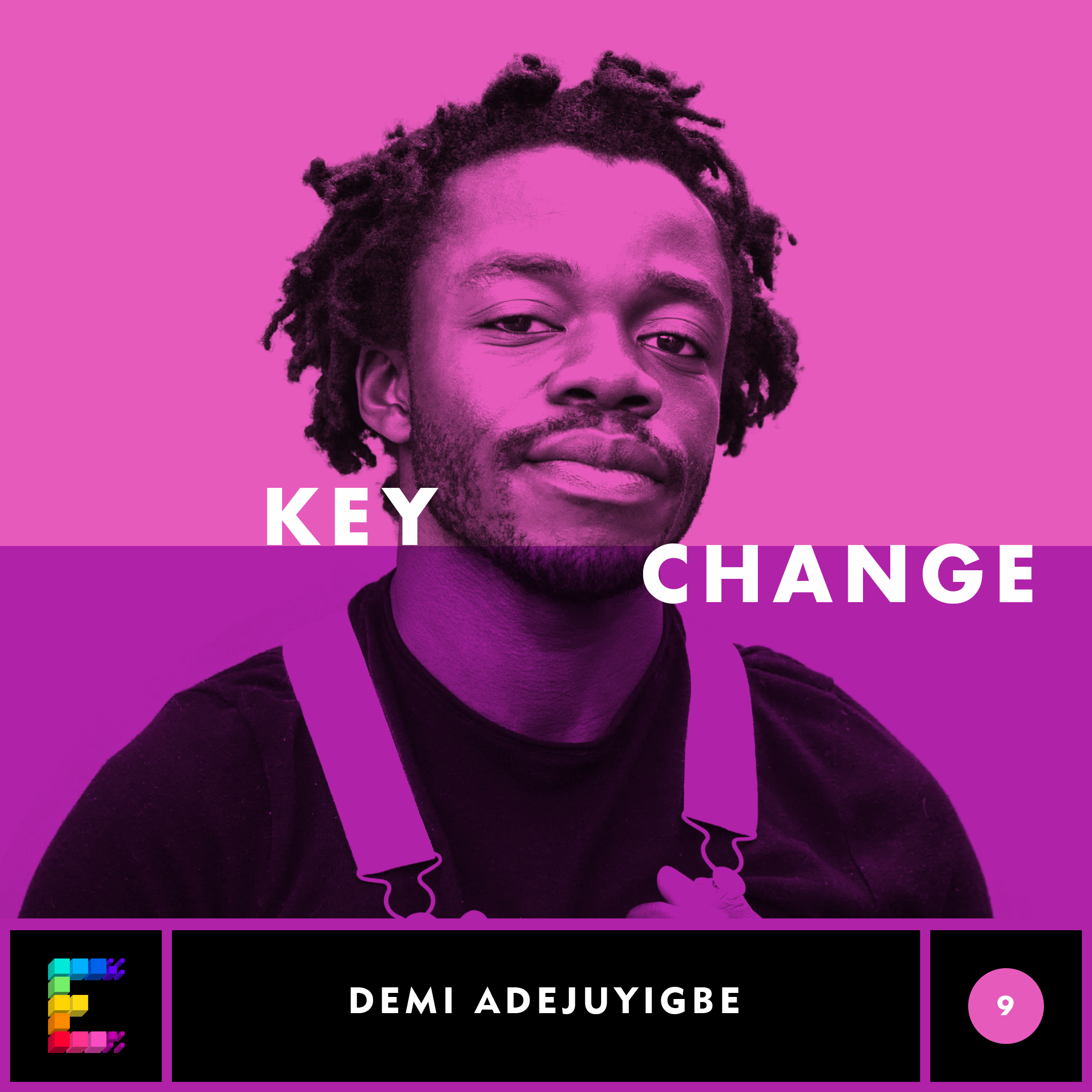
Overview of Key Change: Demi Adejuyigbe on The Strokes
This Key Change episode (part of Song Exploder) features comedian/writer/creator Demi Adejuyigbe talking with Hrishikesh Hirway about how The Strokes’ song “You Only Live Once” — and an alternate CGI music video for it by director Warren Fu — changed his life and career trajectory. Demi describes how Guitar Hero and Rock Band introduced him to music, how the Vimeo-only Warren Fu video inspired him to pursue visual effects and filmmaking, and how that single encounter shaped his sense of taste, creative interests, and even a college application. The episode includes a short follow-up with Warren Fu explaining how he made the alternate video.
Key takeaways
- The combination of a song and a visual (Demi’s experience of the Warren Fu CGI video for “You Only Live Once”) can decisively shape someone’s creative path — Demi credits it with setting much of his career trajectory.
- Guitar Hero and Rock Band were crucial gateways for Demi’s musical taste and his desire to play instruments (piano first, then drums and guitar).
- There were two notable videos for “You Only Live Once”: the widely seen official performance video (oil-flood room) and Warren Fu’s darker, space/CGI piece that resonated deeply with Demi but was not broadly distributed.
- Demi turned a high-school presentation on that alternate music video into his college essay, which helped him gain admission to UT and pushed him toward visual media and filmmaking.
- When making visuals for music, Demi is attentive to small musical moments (e.g., specific drum patterns) and wants visuals to reflect those structural elements — a synesthetic, detail-oriented approach to music videos.
- Warren Fu’s backstory: he self-produced storyboards/presentation packages and eventually got approval from The Strokes’ management to make his alternate video as a lower-budget/alternate version; his inspiration included Voyager/Carl Sagan themes.
Topics discussed
- Demi’s first encounters with The Strokes and “You Only Live Once”
- How rhythm games (Guitar Hero, Rock Band) shaped musical discovery and instrument interest
- The two music videos for the song — official Sam Bayer(?) performance video vs. Warren Fu’s CGI/space video
- The role of music videos as art and career inspiration
- The process of finding obscure/alternate media (Vimeo, Japanese releases) and how digging into a band’s ephemera can be formative
- Demo versions and song evolution (reference to early demo “I’ll Try Anything Once”)
- Warren Fu’s process of contacting the band and the conceptual inspiration behind the video (Voyager/space beacon)
- Demi’s continuing relationship to the song: drum parts, nostalgia, and how it still transports him to specific memories
Notable quotes & insights
- Demi: “Genuinely, this song is responsible for a large trajectory of my current career.”
- Demi on rhythm/game influence: “With the Strokes, it felt like the music was so appealing to me in a way that it was like, this is for me now.”
- Demi on visual-musical sync: “There’s a right way to interpret the song… that little bit has to be connected.”
- Warren Fu: “The theme of the video is sort of like… the Voyager missions… this video I launched out there. Not a lot of people saw it, but it seems like he found the beacon.”
Practical recommendations & resources
- Watch Warren Fu’s alternate “You Only Live Once” video (linked on warrenfu.com) to see the CGI/space treatment that inspired Demi.
- If you’re interested in Demi’s work:
- His comedy special: Demi Adejuyigbe Is Going To Do One Backflip (Dropout TV)
- Social handle: @ElectroLemon (Instagram)
- For the episode’s playlist and more Key Change episodes: songexploder.net/keychange
- Support Song Exploder (if you find the show valuable): songexploder.net/donate
Production & context notes
- Host: Hrishikesh (Rishikesh) Hirway; episode part of Song Exploder’s Key Change series.
- Sponsors & fundraising appeals appear in the intro (Radiotopia fundraiser; AT&T, Sonos, Function).
- Warren Fu’s short follow-up segment provides the director’s perspective and confirms how the alternate video came to be.
This episode is a concise case study in how a single piece of art — especially a music video that perfectly matches a listener’s internal sense of a song — can act as a pivot point for a creative life.