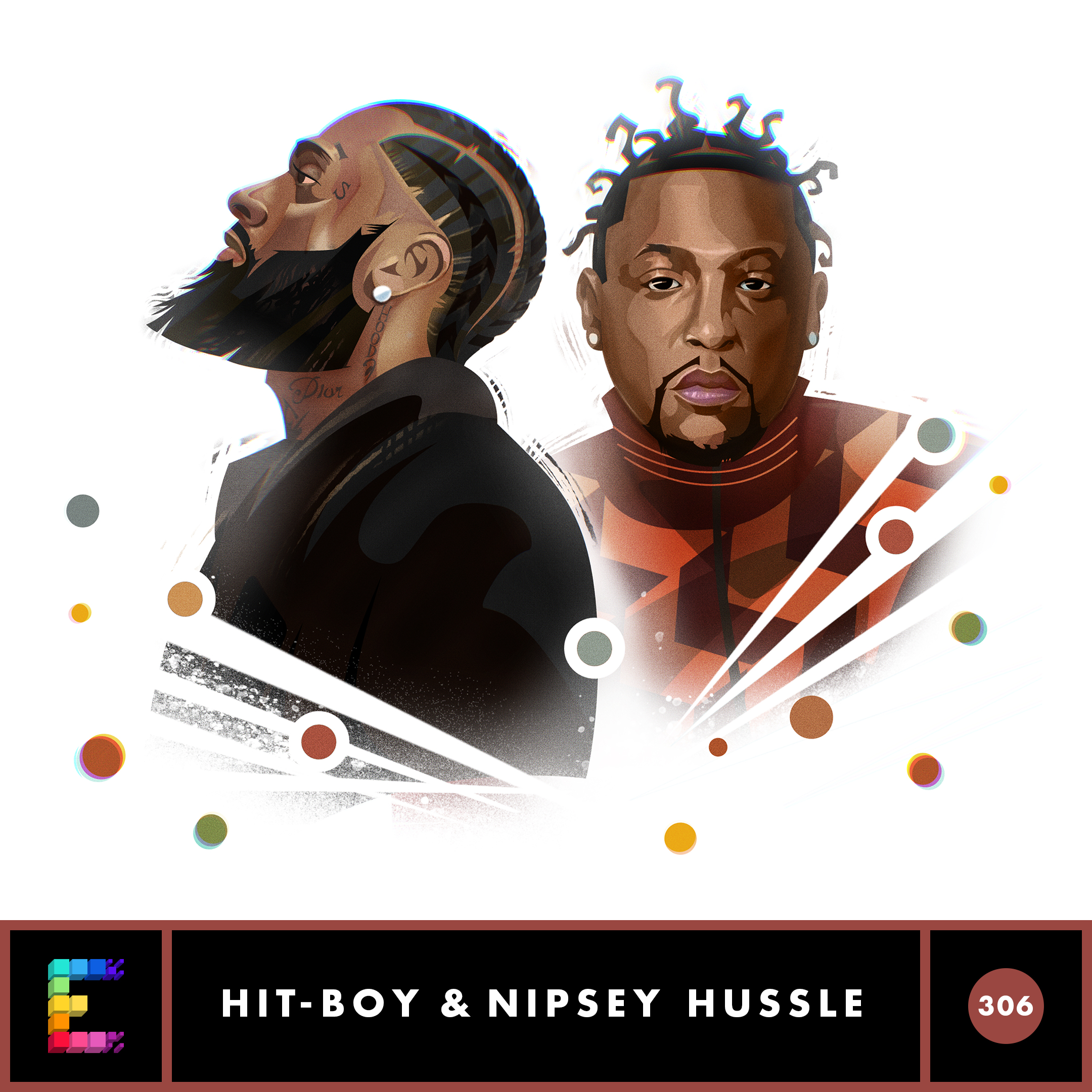
Overview of Song Exploder — Hit-Boy and Nipsey Hussle: "Racks in the Middle" (feat. Roddy Ricch & Hit-Boy)
This episode of Song Exploder features producer/artist Hit-Boy breaking down the creation of "Racks in the Middle," the last single Nipsey Hussle released in his lifetime (featuring Roddy Ricch). Hit-Boy describes how the beat was built, how Roddy immediately added the hook, how Nipsey transformed the track with three emotional verses, and the post-production choices that let Nipsey’s voice and story sit centerstage. The episode also situates the song within the tragic context of Nipsey’s murder soon after its release and its subsequent Grammy win.
Key points and main takeaways
- Hit-Boy created the track intentionally in the sonic vein of Roddy Ricch’s breakout song "Die Young" after seeing Roddy on YouTube and learning he’d be at the same studio.
- The core harmonic loop came from producer Corbett (a choir/harmony loop that Hit-Boy pitched and tempo-shifted). G Dave added the bass; Hit-Boy and collaborators programmed the drums and added counter-leads (Omnisphere wobble).
- Roddy Ricch arrived at Chalice, heard the beat and recorded the hook (and a verse) on the spot.
- Hit-Boy thought of Nipsey for the record, played it for him, and Nipsey insisted he needed it for his next album (Victory Lap). Nipsey ultimately recorded three verses and muted Roddy’s verse while keeping Roddy’s hook.
- Production decisions emphasized the vocals—filters, drum EQ changes, reverse guitar transitions, and other post-production moves were used to make Nipsey’s storytelling the focal point.
- The recording process took days, not a single session—roughly an eight-day process of writing, revising, and finishing.
- The song was released shortly before Nipsey’s murder; it later won the Grammy for Best Rap Performance posthumously.
Song creation — step-by-step
- Inspiration: Hit-Boy repeatedly watched Roddy Ricch’s "Die Young" and made a beat meant to fit that vibe, hoping to catch Roddy while he was working at Chalice Studios.
- Main loop: Corbett sent a choir/harmony loop in a pack; Hit-Boy pitched and slowed it, looping it as the song’s main harmonic bed.
- Additional parts:
- Corbett later added a pluck/key synth.
- G Dave contributed the bass line.
- Hit-Boy programmed and shaped the drums with collaborators; added a counter lead (wobbly, pitchy synth from Omnisphere) to push the melody forward.
- Artist input:
- Roddy recorded the hook (and initially a verse) immediately when he sat with the beat.
- Nipsey recorded three verses over multiple sessions; he connected deeply to the theme and lyrics.
- Mixing/arrangement choices:
- Hit-Boy filtered the drums and removed highs in parts to keep focus on Nipsey’s voice.
- Reverse guitar transition and drum filtration were used to create emotional and dynamic shifts.
- Post-production was key: the song evolved substantially after the initial recordings.
Notable insights & quotes
- Hit-Boy on making beats: "I look at production like a video game — the blocks looking like Tetris... clicking these blocks." Production is playful, iterative, and obsessive for him.
- On tagging beats: Hit-Boy began using his producer tag (around 2018) partly to build branding and ensure credit/visibility—something he felt he missed earlier in his career.
- Nipsey on the song: he heard it and immediately had a story and three verses in mind—he wanted it to "usher in my new wave" ahead of Victory Lap.
- Emotional context: Nipsey recorded the lines about his friend Fats with real tears; Hit-Boy recalls Nipsey with a hoodie wrapped around his head, tearful while writing—making the performance authentic and raw.
Themes and lyrical focus
- Success juxtaposed with grief and street realities: lines about luxury (V12, Patek, gold Cubans) sit alongside mourning and the risk of violence.
- Brotherhood, loss, and survival: the verse about Fats and the repeated "I got killers to the left of me" underline the tension between achievement and the costs of that life.
- Authentic songwriting: Hit-Boy highlights Nipsey’s ability to be more than a rapper—Nipsey wrote melodically and structurally, creating replay value rather than just punchlines.
Timeline & contextual aftermath
- Beat made at Chalice Studios after Hit-Boy learned Roddy Ricch was working nearby.
- Roddy recorded hook and verse immediately during a late-night encounter.
- Nipsey recorded over the subsequent days (about an eight-day process), refining three verses.
- The song was released in early February (shortly before Nipsey’s murder outside his store).
- A year later, "Racks in the Middle" won the Grammy for Best Rap Performance (2020), making the track bittersweet and emblematic of Nipsey’s legacy.
Production credits & collaborators mentioned
- Producer/artist: Hit-Boy
- Vocal features: Nipsey Hussle, Roddy Ricch
- Sample/loop provider/co-producer: Corbett
- Bass: G Dave
- A&R who facilitated meeting: Knowledge
- Studio: Chalice (West Hollywood)
Why this song matters
- It captures a high-water mark of contemporary West Coast rap production and songwriting — a blend of atmospheric, haunting chords with tight, modern trap rhythms.
- It documents Nipsey Hussle’s final artistic statements and demonstrates his songwriting depth (three cohesive, personal verses).
- The track’s creation story highlights modern beatmaking workflows: sample/loop packs, in-the-moment artist sessions, and collaborative production polish.
Where to listen / watch
- The episode notes point to links to stream/buy "Racks in the Middle" and to watch the official music video.
- A Genius video features Nipsey breaking down the lyrics; Hit-Boy references that performance in the episode.
For more context, Song Exploder’s website includes episode resources, and the Genius video (mentioned in the episode) gives a complementary artist-led lyric breakdown.