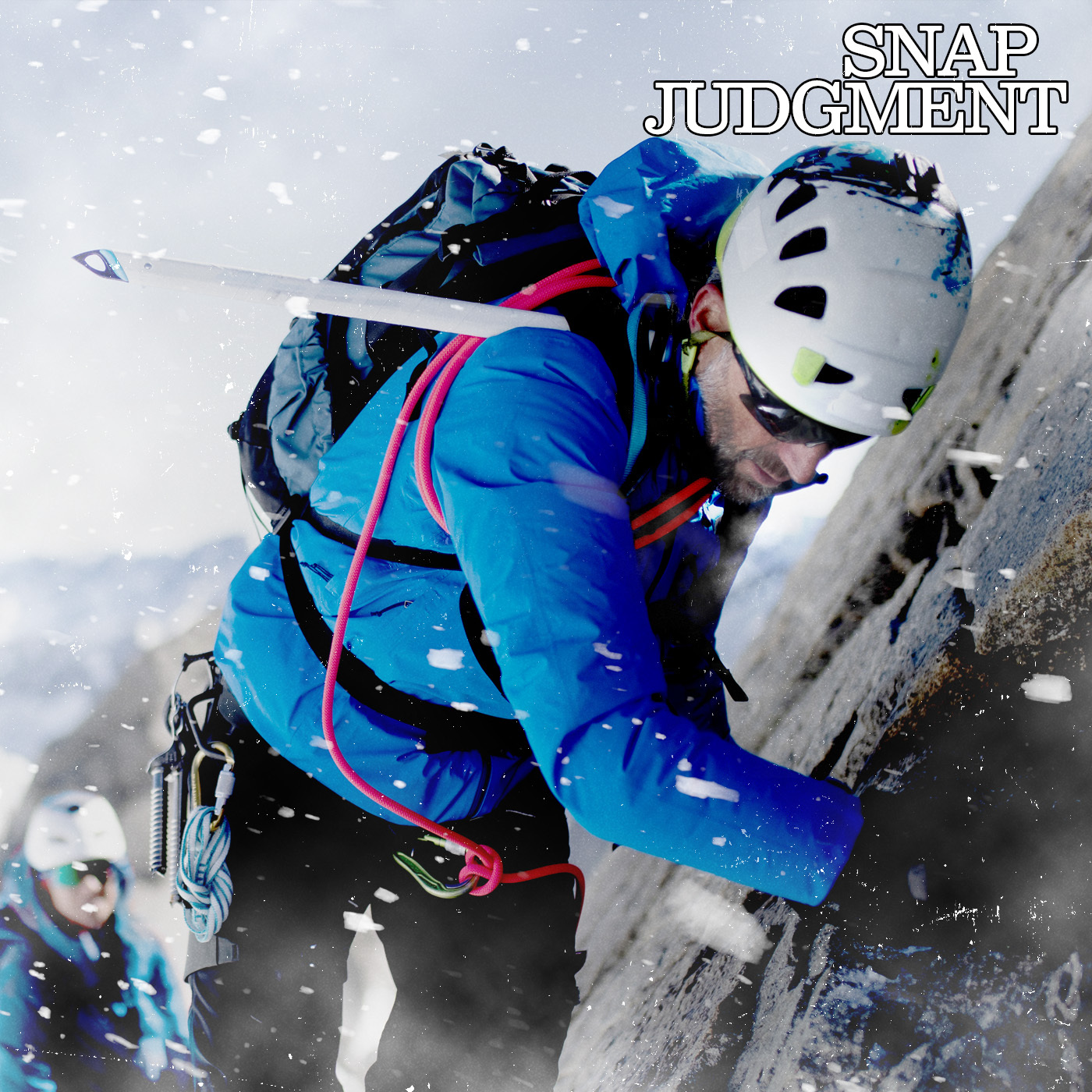
Overview of The Ledge — Snap Classic
This episode of Snap Judgment (story titled "The Ledge") tells Jim Davidson’s first‑person account of a climbing accident on Mount Rainier that kills his climbing partner, Mike Price, and leaves Jim to fight for his own survival and then to live with the fallout. The piece follows the fall into a crevasse, Jim’s self‑rescue, the immediate emotional shock, the difficult conversations afterward (especially with Mike’s family), and how Jim eventually returns to big‑mountain climbing — including an Everest trip interrupted by the catastrophic 2015 Nepal earthquake. Produced with cinematic sound and score, the story explores sacrifice, responsibility, survivor’s guilt, and the conscious choice to continue living after loss.
Trigger warning: contains descriptions of a fatal accident, graphic/traumatic detail, and CPR.
Key events (chronological)
- Jim and his climbing partner Mike Price attempt Mount Rainier (summer 1992).
- While roped together on a glacier, Jim breaks through a snow bridge and falls into a crevasse; Mike is pulled in trying to arrest the fall.
- Jim ends up on a small ledge inside the crevasse; Mike is buried and later dies. Jim performs nearly 40 minutes of CPR before realizing Mike is gone.
- Jim rigs an ice screw, ties the rope to it to secure Mike’s body, and makes an exhausting self‑rescue — climbing an ice wall with ice axes, crampons, and screws — eventually popping out through the original hole.
- Rangers find and assist Jim; Mike’s body is recovered the next day. Jim returns home, struggles with grief and guilt, and begins therapy.
- Jim meets Mike’s parents to tell the story; they respond with compassion (holding hands, a hug/shake).
- Years later, Jim decides to pursue Mount Everest as a way to honor life and Mike’s memory.
- In April 2015 at Everest base camp, a 7.8 magnitude earthquake triggers avalanches that kill climbers and locals; Jim survives an avalanche blast at Camp 1 and witnesses massive destruction at base camp.
- With travel disrupted, Jim helps recover bodies and ultimately abandons the climb to walk home (or arrange transport) — leaving Everest behind and reflecting on priorities.
Main takeaways and themes
- Sacrifice and debt: Jim frames his survival as inextricably linked to Mike’s sacrifice — the rope arrested Jim’s fall but cost Mike his life — prompting the question: what do you owe someone who sacrifices for you?
- Survivor’s guilt vs. responsibility: Jim grapples with guilt, attempts to justify that he did all he could, and later seeks validation and forgiveness by retelling the story—especially to Mike’s family.
- Choice and meaning after trauma: The story emphasizes agency — Jim chooses to live, to grieve, to honor Mike by embracing life (eventually going after long‑held climbing goals).
- The ethics of risk and community: Climbing culture’s deep interpersonal trust (roped partners depending on each other) is central; the narrative also shows how disasters reframe personal goals relative to larger human suffering (Nepal earthquake).
- Resilience: The physical self‑rescue and the psychological journey (therapy, conversations, continuing to climb) illustrate resilience without simple closure.
Notable moments & lines
- The fall: Jim’s description of sinking through a snow bridge into a crevasse and the sound/feel of the fall — visceral and immediate.
- The realization and grief: “I realized he was gone.” Jim’s shift from trying to save his friend to the urgent need to save himself is a powerful emotional pivot.
- Self‑rescue: The painstaking account of drilling ice screws, inching up two feet for every 5–10 minutes, and finally crawling out under the snow bridge.
- Pilgrimage to Everest: Climbing Everest later in life becomes part of processing and honoring what was lost: “He had given me a gift of continued life.”
- Nepal earthquake on Everest: Jim’s Camp 1 experience of avalanches and the aftermath that killed many — shifting perspective from personal goals to human catastrophe.
Practical / technical details (brief)
- Gear mentioned: ropes, harnesses, ice axes, crampons, ice screws, helmet.
- Crevasse dynamics: snow bridges can mask deep crevasses; warm conditions soften snow and increase risk; rope teams are designed to arrest falls, but rescue can still be deadly.
- Rescue and medical: Jim attempted prolonged CPR (~40 minutes). Rangers located the survivors and recovered Mike’s body; Jim was checked and treated for non–life-threatening injuries.
Aftermath, healing, and resolution
- Immediate: Rangers and a lodge provide care; Jim drinks two beers (one for him, one for Mike) as a private ritual of mourning.
- Emotional work: Jim attends therapy, talks with climbing friends, and repeatedly tells the story to process guilt and ensure he “did all he could.”
- Reconciliation: Visiting Mike’s parents was one of Jim’s biggest fears; their gracious, physical comfort (handholding, hug) provided important, though not complete, relief.
- Continued life: Jim returns to mountain sports, ultimately climbs toward Everest, but abandons summit ambitions when disaster strikes in Nepal. He helps with recovery efforts and chooses life over a singular summit goal.
Production & further resources
- Story contributor: Jim Davidson (author of The Ledge, co‑written with Kevin Vaughan).
- Credits (as heard in episode): original score by Renzo Gorio; production credits include Justin Craymon and the Snap Judgment team. The episode is a Snap Judgment (PRX) production.
- For more: snapjudgment.org hosts links and resources related to the story and Jim’s book.
Why this episode matters
- It’s a tightly told, cinematic true story that examines how one moment of shared risk can ripple through a lifetime: the practical mechanics of survival, the ethical and emotional burden of living when someone else dies for you, and the choices that follow — to withdraw or to honor life. The episode provides both a gripping adventure narrative and a thoughtful meditation on sacrifice and meaning.