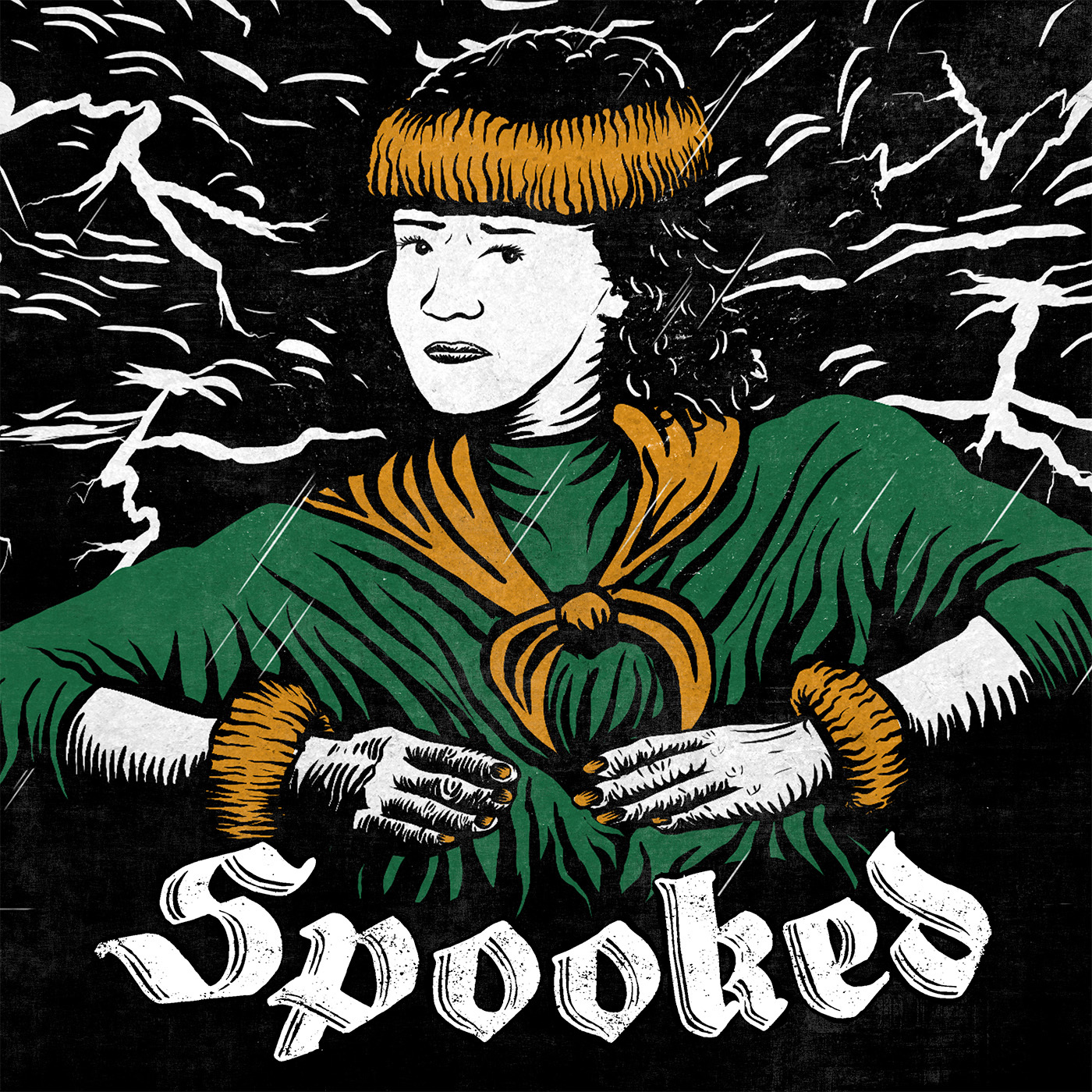
Overview of Something Sacred from Snap Judgment
This Snap Judgment / Spooked episode explores what people consider sacred—and how faith, ritual, memory, and the unseen can take on physical power. It opens with a childhood story about anger, religion, and a homemade “golden calf,” then moves into two main supernatural/spirited accounts: a Coast Guard sailor who encounters a mysterious figure on a ship, and a Hawaiian hula dancer whose performance seems bound to a storm and an ancient goddess.
Main Stories
1) The “golden calf” childhood memory
- A speaker recalls being a nine-year-old in church, furious at a preacher’s sermon about Exodus 32 and the golden calf.
- In protest and frustration, he makes his own idol out of bent hangers and aluminum foil.
- He takes it into the woods and, after feeling ignored by God, prays to the homemade figure instead.
- This functions as the episode’s thematic prologue: a meditation on worship, rebellion, and what people treat as sacred.
2) The Coast Guard “shipmate” who may have been a ghost
- Jordan, a new Coast Guard recruit on night watch aboard a cutter off New England, sees a man standing at the bow in the dark.
- When he and the officer of the deck investigate, the figure appears visible to some but not others; one crewmember even seems to walk through him.
- Other crew members later report similar sightings around the ship—hallways, the fantail, the gym—suggesting a recurring presence.
- The mystery resolves when the crew announces a burial at sea: the ship had been carrying the ashes of a former Coast Guard electrician’s mate who had served on that same cutter in the 1980s.
- Jordan concludes the figure was likely the departed shipmate returning to revisit the vessel and its memory.
- After the ashes are committed to the sea, the sightings stop.
3) The hula performance, the storm, and Goddess Hina
- Leanne Durant recounts preparing for the Merrie Monarch Festival in Hilo, Hawaiʻi, the world’s premier hula competition.
- Her halau was performing a kahiko chant and dance about Hina, a powerful Hawaiian goddess associated with wind, rain, and warning storms.
- Leanne felt uneasy throughout rehearsals, as if the dance carried real force rather than being just a performance.
- On the day of the competition, the weather turns severe: rain, thunder, lightning, and eventually a stadium blackout.
- As the storm intensifies, Leanne and other dancers become afraid the performance is somehow helping to “wake” the goddess or escalate the storm.
- The group tells their kumu, Mapuana de Silva, they do not want to perform. She honors their fear and announces they will withdraw.
- The rain stops soon after the decision, reinforcing Leanne’s belief that they interrupted or “broke” a dangerous cycle.
- Though they were disqualified, the halau later had another chance to dance and delivered one of their strongest performances.
Key Themes and Takeaways
-
Sacredness is emotional and cultural, not just religious.
The episode treats sacred objects, rituals, places, and memories as deeply alive to the people who carry them. -
The unseen can still feel real.
Both the Coast Guard story and the hula story blur the line between coincidence, memory, spirituality, and supernatural experience. -
Ritual carries weight.
Burial at sea, hula chant, prayer, and even a child’s improvised idol all show how humans create meaning through symbolic acts. -
Respect for the dead and for tradition matters.
In both major stories, honoring the past—through burial rites or cultural performance—changes how the present is experienced.
Notable Moments
- The child’s homemade aluminum-foil calf becoming a private act of prayer.
- The Coast Guard crew realizing the “figure” is tied to a buried former shipmate.
- Leanne’s fear that the performance could literally intensify the storm.
- The kumu’s response: prioritizing the dancers’ wellbeing over competition.
- The rain stopping after the halau withdraws.
Production Notes
- The episode is presented by Snap Judgment and draws from Spooked stories.
- It features original music and production credits typical of the show’s storytelling format.
- The closing section also includes promotional material for Snap+/Spooked and listener submissions.