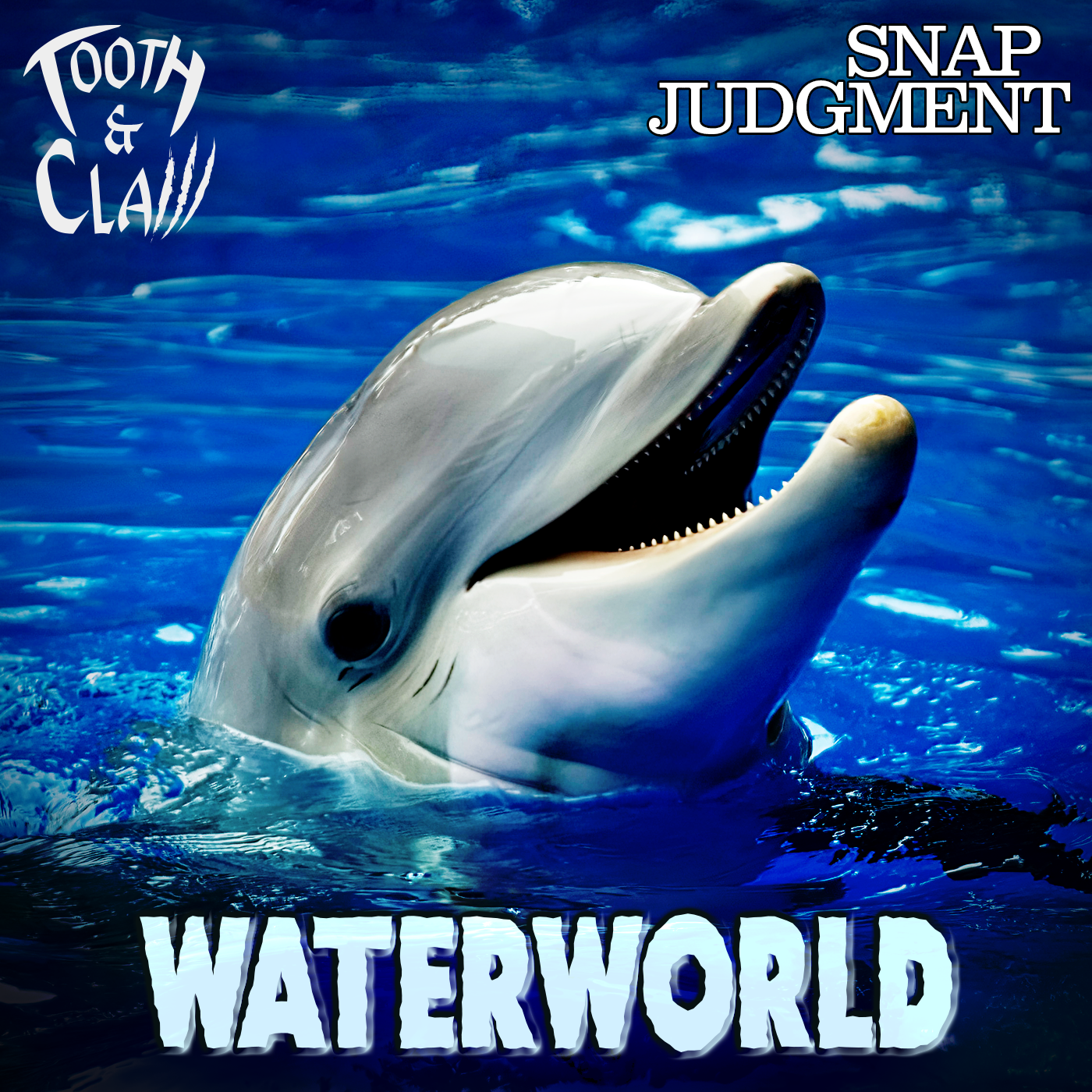
Overview of Waterworld — Tooth & Claw (Snap Judgment / PRX)
This episode of Snap Judgment’s "Waterworld" features first‑person, cinematic stories about people thrown into extreme situations involving animals and water. Two centerpiece narratives drive the episode: a dramatic, improvised dolphin rescue by former NBA player Clifford “Big Cliff” Ray, and a ground‑level account of sudden flood devastation from Hurricane Helene in western North Carolina by storyteller Ray Christian. The episode explores courage, improvisation, human‑animal bonds, and community resilience in the face of unexpected natural forces.
Stories covered
Dolphin rescue — Clifford Ray (Marine World / Dr. Spock)
- Incident: A prized bottlenose dolphin named Dr. Spock (about 12 ft, ~1,000 lbs) swallowed a loose three‑inch bolt from his tank, creating a life‑threatening obstruction.
- Problem: Dolphins must consciously surface to breathe; anesthetizing or conventional surgery was not an option. Vets needed someone with an unusually long reach to retrieve the bolt by hand.
- The call: Clifford Ray — a 6'9" NBA center with an ~8‑foot wingspan — was in town rehabbing and was recruited, a limo was held for him and a plane was delayed while he came to help.
- The procedure: Guided over an intercom by the head vet, Clifford entered Dr. Spock’s mouth, passed through the throat and first stomach, reached into the second stomach, located and oriented the bolt (placing the sharp end against his palm), and extracted it within the ~3‑minute safety window.
- Aftermath: Dr. Spock regurgitated stomach contents as expected but recovered once returned to water. Marine World bronzed the bolt and gave it to Clifford; Clifford later co‑authored an illustrated children’s book (Big Clifford Ray Saves the Day).
- Human elements: Clifford’s calm, measured narration; the vets’ trust; the dolphin’s apparent recognition and gentle behavior after rescue.
Hurricane Helene — Ray Christian (Boone / Blue Ridge Mountains, NC)
- Event: Sudden, torrential rains during Hurricane Helene transformed creeks into raging rivers, wiped out roads and bridges, and caused widespread infrastructure failure in mountain valleys around Boone, NC.
- Immediate impact: No effective local warnings (radio stations and cell towers were down); roads peeled up, bridges destroyed, communities instantly isolated.
- Personal response: Ray and his wife opened animal feed, let goats/chickens/ducks loose to seek higher ground, evacuated on foot, and later coordinated to get into town where family sheltered them.
- Recovery snapshot: Local, improvised relief — neighbors with tractors/backhoes, small stores like "Plan B" becoming informal relief hubs, people forming chains to move water/food. Ray returned to find many animals alive; a favored goat, Brownie, miraculously reappeared behind the barn.
- Broader note: The story highlights the suddenness of extreme weather events, breakdowns in communications/infrastructure, and community improvisation and mutual aid.
Themes & main takeaways
- Improvisation matters: Both stories show how quick thinking and ordinary people (or athletes) can bridge gaps that institutions and conventional procedures cannot, especially in crises.
- Human–animal bonds: People take extraordinary risks to protect animals they know and love; animals often respond in ways that suggest recognition or gratitude.
- Vulnerability of systems: Natural events (storm/flood) can rapidly overwhelm infrastructure — communications, roads, and official warning channels — making local, grassroots responses crucial.
- Courage under pressure: Calm, focused action (Clifford’s arm in a dolphin’s stomach; neighbors forming relief chains) can be the decisive factor between catastrophe and survival.
- Storytelling as repair: These intimate first‑person narratives preserve human moments of tenderness, bravery, and resilience after trauma.
Notable quotes
- “We gonna need more seed.” — father’s farming optimism (intro vignette)
- “I got it.” — Clifford Ray, upon locating and securing the bolt inside Dr. Spock
- “I was in a channel… I was on the inside of the line.” — Clifford, describing his confident navigation inside the dolphin’s stomach
- “I gotta let y’all go.” — Ray Christian, opening animal feed and releasing his goats to seek higher ground
Action items & resources
- Book: Big Clifford Ray Saves the Day — an illustrated children’s book by Clifford Ray and Lainey D. Weaver (link available via SnapJudgment.org).
- Hurricane relief: SnapJudgment.org episode page lists resources Ray Christian shared for helping NC Hurricane Helene victims.
- Listen/subscribe: Snap Judgment releases weekly episodes; find more stories and credits at snapjudgment.org and PRX distribution channels.
Production & credits
- Show: Snap Judgment (KQED / Snap Studios) — episode: Waterworld
- Dolphin story score: Dirk Schwartzov; produced by Bo Walsh.
- Hurricane Helene story score: Derek Barber; produced by Anna Sussman.
- Host/producer mentions and production team listed in episode credits (producers, editors, engineers noted in broadcast).
- Sponsor mentions in episode: Progressive Insurance; opening promos included Immigrantly podcast promo by Sadia Khan.
If you want a one‑line elevator pitch: this episode pairs a cinematic DIY animal rescue with a grounded flood survival tale to show how courage, community, and quick improvisation save lives when water turns dangerous.