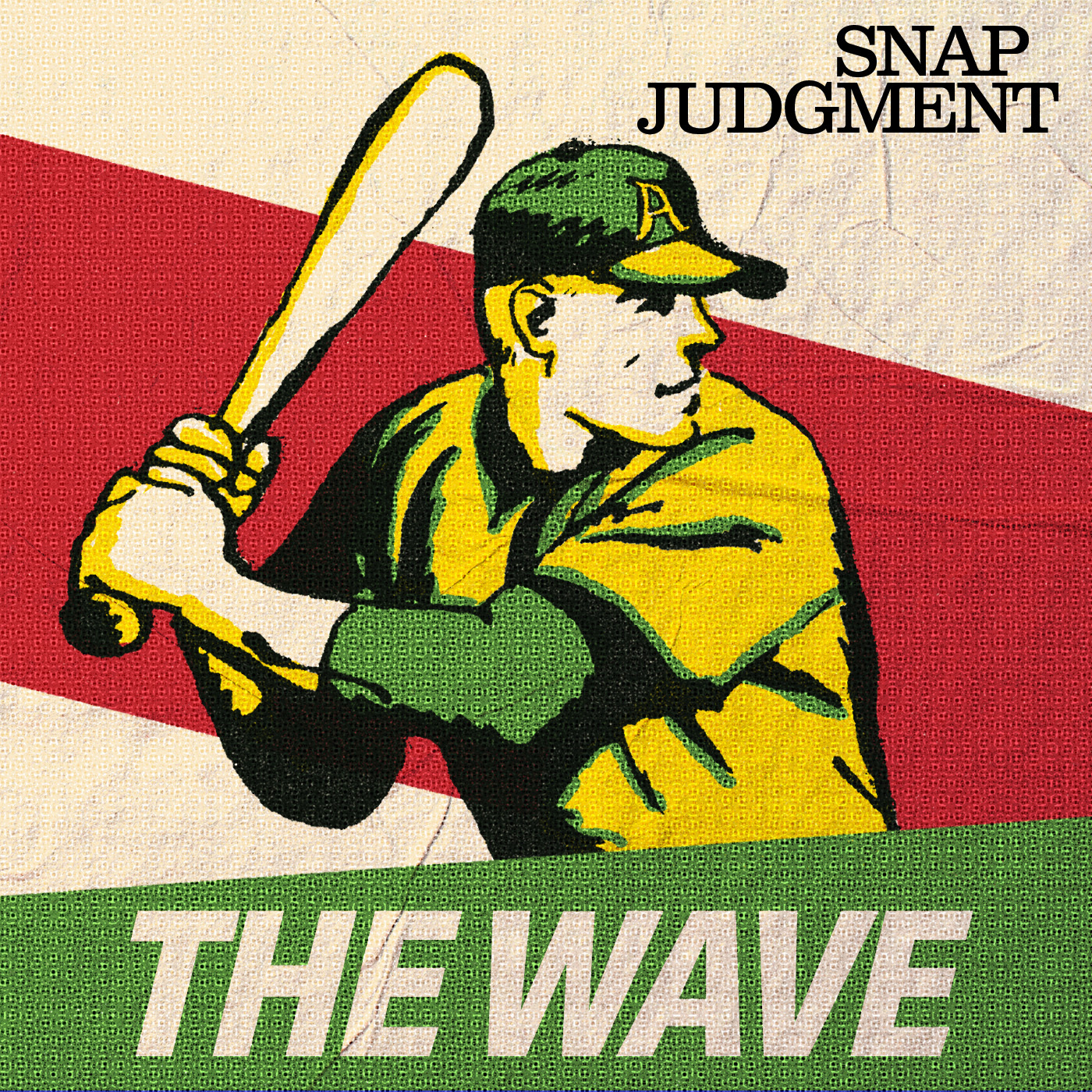
Overview of The Wave — Snap Classic (Snap Judgment / PRX)
This episode tells the origin story and legacy of "the wave" through the life of George Henderson — better known as Crazy George — the charismatic stadium cheerleader who popularized the fan ritual. The piece traces George's transformation from a shy kid (called Mike) into a professional cheerleader, his invention and national debut of the wave at an Oakland A's playoff game (Oct 15, 1981), the ensuing authorship dispute (notably with the University of Washington), and the wave's global spread and cultural impact. The episode closes with George still cheering decades later and reflections on legacy and attribution.
Story summary
-
Early life and transformation
- George was shy in high school (went by Mike). While at San Jose State University, a friend handed him a drum at a football game; banging it unlocked a new, extroverted persona.
- The drum allowed him to lead cheers, get crowd attention, and build a career as a stadium cheerleader.
-
Becoming "Crazy George"
- He left teaching to cheer professionally, developing a repertoire of chants and crowd-leading techniques.
- Worked locally (San Jose State, high schools) and then for pro teams (Colorado hockey, Oakland A's).
-
Invention and national debut of the wave
- George developed the “stand-sit-stand” sequential cheer (the wave) at smaller events and for the Colorado Rockies.
- He introduced the wave on a nationally televised Oakland A’s playoff game on October 15, 1981, at the Oakland Coliseum. A clip shows the wave sweeping all three decks of the stadium and eliciting a massive roar.
-
Dispute over origin and spread
- After the A’s game, other groups (notably University of Washington) claimed to have started the wave later in October 1981. A long-running authorship dispute ensued.
- The wave rapidly spread: George performed it at the 1984 Olympics, it was adopted in Mexico (often dubbed the “Mexican wave”), and it became a worldwide stadium staple during events like the World Cup and Olympics.
-
Legacy and later life
- Despite disputes, the Oakland A’s and many fans backed George’s claim. He continued to lead cheers for decades.
- At age 80 he still drums for San Jose State and celebrated 50 seasons cheering professionally with the San Jose Earthquakes. He published a memoir, Still Crazy, After All These Cheers.
Key takeaways
- The wave began as an intuitive crowd-leading tactic and became a global phenomenon once broadcast to a large audience.
- Attribution of cultural practices can be contested — televised exposure and timing often shape who gets credited.
- Leadership and showmanship can transform an individual's life and create enduring community rituals.
- Crazy George’s story is as much about belonging and identity (from shy Mike to stadium persona) as it is about inventing a cheer.
Notable moments & quotes
- George on his transformation: “When I’d hit the drum… 5,000 people would be looking at me. That’s what the drum did.”
- On inventing the wave: “If I pull it off here, this could be big.” (re: Oct 15, 1981 A’s playoff game)
- Broadcaster reaction during the A’s game: “Each section… all the way from behind home plate, completely around the stadium… Looked like it was orchestrated.”
- On the wave’s global rebranding: “Outside of this country… it’s the Mexican wave. They invented it.” (George speaking ironically about scale of claims)
- Finale: George leading the wave at the A’s final game in Oakland — a symbolic bookend.
Timeline (concise)
- Early 1970s–80s: George develops crowd-leading skills at San Jose State and local events.
- Early 1980s: Works games for Colorado hockey franchise, refines the wave.
- Oct 15, 1981: Waves goes viral (national TV) at Oakland A’s playoff game — George’s signature moment.
- Oct 31, 1981: University of Washington performs a similar wave; dispute over origin begins.
- 1984 Olympics onward: The wave spreads internationally (Mexico, World Cup) and acquires names like “Mexican wave.”
- 2019 (A’s final Coliseum season): George invited back to lead one last Coliseum wave.
- Present: George continues cheering; memoir released.
Themes & insights
- Cultural diffusion: Small local inventions can become global phenomena once amplified by mass media.
- The role of a catalyst: One charismatic person in the right moment can create a self-perpetuating social ritual.
- Attribution complexity: Multiple simultaneous or near-simultaneous inventions are common; public memory often credits the first widely televised or publicized instance.
- Identity and reinvention: George’s story highlights how performance and public recognition can reshape personal identity and career.
Where to learn more / resources mentioned
- Memoir: Still Crazy, After All These Cheers (George Henderson)
- Snap Judgment episode and extras: snapjudgment.org (episode notes include links to George’s socials and book)
- Producer/creative credits noted in episode: Produced by Bo Walsh; edited by Anna Sussman; original score by Dirk Schwartzov.
Why this episode matters
Listeners get a compact case study in how fan culture, individual charisma, and television exposure interact to make a local practice into a global tradition. The episode is both a human story of reinvention and a cultural-history nugget about a ritual almost every sports fan knows.