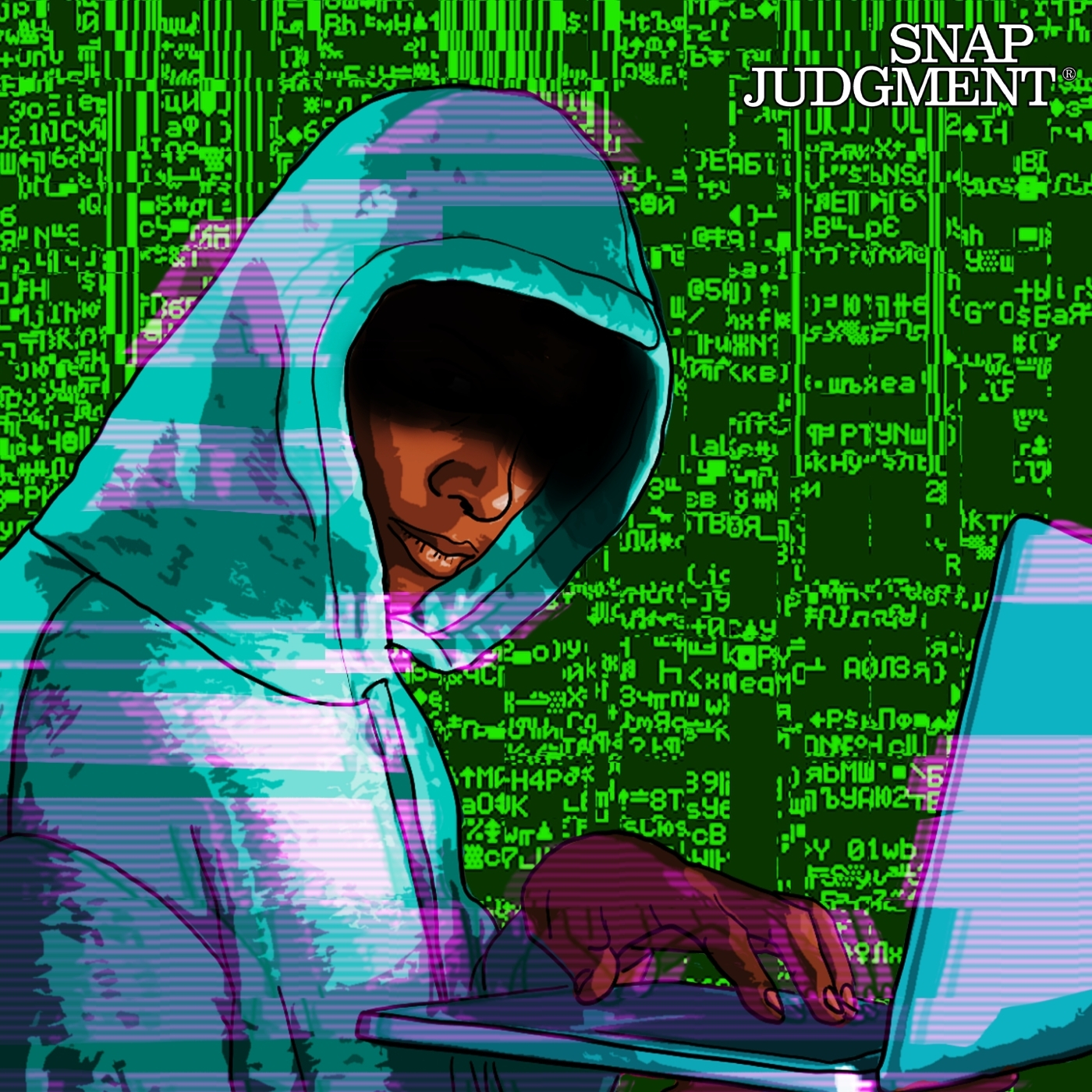
Overview of Respawn — Snap Classic (Snap Judgment / PRX)
This episode, titled "Respawn," collects two adapted true stories about sudden do-overs and the human consequences of second chances. The first is an adapted Darknet Diaries episode ("Finn") about a teenage hacker who exploits lax school security, posts sensitive data, and faces legal fallout. The second is an essay adapted from Nocturnus about a junior doctor learning how to break the news of death to families—and discovering a fragile, ambiguous moment where "dead" becomes negotiable. Content warning: the hacker story contains explicit language.
Segment 1 — "Finn" (adapted from Darknet Diaries)
- Who: "Finn" (pseudonym), a 16-year-old self-taught hacker; principal, school staff, family, police, and legal actors.
- Setting: A U.S. public high school; Finn's backstory includes private school/homeschooling and social isolation upon entering public school.
- What happened:
- Finn finds an unsecured shared server on the school's network (mistakenly believed to be a principal’s folder).
- He discovers a Word doc titled "Password" containing staff credentials.
- Using those credentials, he logs into the principal’s Twitter and the school's admin web panel.
- He posts inflammatory tweets (then deletes some), and then escalates: dumps Social Security numbers, employee lists, student/parent contact details and passwords to Twitter and Pastebin.
- The school initiates a Code Yellow lockdown. Finn hides his tablet, but the device is later matched via MAC address.
- Motive and mindset:
- Adrenaline, curiosity, proving vulnerability of the system, and a desire to impress/flex to peers.
- He rationalizes the act as exposing security holes; later admits regret for exposing innocent people.
- Consequences:
- Immediate: school lockdown, social ostracization, suspension and permanent barring from school computers.
- Legal: two years later he’s prosecuted—pleads guilty to a felony. He avoids incarceration because he had since stayed productive, but must pay $1,300 restitution, is barred from social media for six months, and must have supervised internet access.
- Personal: strained family relations, mother’s distress, loss of friendships, and long-term professional pivot toward seeking legitimate security work (wants to be "white hat").
- Reflections:
- Finn views the hack as effective in exposing vulnerabilities but regrets harming uninvolved people.
- He oscillates between black/gray/white-hat impulses and is motivated to use his skills legitimately after nearly losing everything.
Segment 2 — "A Doctor's Moment" (adapted from Nocturnus)
- Who: A medical intern/ED doctor narrator; patient "Mark"; Mark’s wife, Samantha.
- Setting: Emergency Department resuscitation leading to apparent death.
- What happened:
- Mark arrives critically ill; while the team resuscitates him, his pulse repeatedly returns then disappears.
- The intern pronounces death to the wife (used the practiced phrase rhythm: "I have terrible news... Your husband has died") but then feels a weak pulse.
- The intern shares the uncertain reality with Samantha, explains agonal movements, and recommends letting Mark die—Samantha is relieved by the clarity.
- Afterward the doctor experiences a mix of professional detachment, moral unease, and personal reflection on mortality and the difficulty of handling death.
- Themes and insights:
- The procedural rhythm of pronouncing death versus the messy, humane reality of borderline moments.
- Death in clinical settings is both technical and deeply interpersonal; the doctor must balance competence with compassion.
- The emotional burden of clinicians: small moments (a pulse, a memory shared) can shift how families and providers process loss.
- Takeaway: The story highlights the fragility of definitive labels (alive/dead) and underscores how communication and presence matter more than clinical scripting.
Key takeaways
- Cybersecurity lesson (from Finn):
- Even low-cost consumer devices and minor oversights (open shared drives, plaintext password files) can enable large privacy breaches.
- Motivations like curiosity and status-seeking can lead to severe legal and social consequences; exposure of private third-party data is ethically harmful.
- Rehabilitation can lead hackers toward ethical security work, but consequences (felony, restitution, restrictions) are real and long-lasting.
- Human/medical lesson:
- Delivering bad news is as much art as procedure; clinicians must stay attentive to both the clinical facts and how families process those facts.
- Moments of ambiguity—an agonal movement, a flicker of pulse—change how families grieve and require delicate communication.
- Broader: Both stories are about sudden reversals—the thrill of control and the weight of responsibility when you lose it.
Notable quotes & lines
- From Finn: "It was the adrenaline. It was the excitement. It broke my day-to-day norm."
- On the hack’s impact: "I think that's probably my biggest regret, is bringing innocent people into it."
- From the doctor: "I have terrible news... Your husband has died." (the rehearsed rhythm he must get right)
- On ambiguity of dying: describing an agonal movement and then finding "a weak and slow but undeniable pulse."
Production & sources
- Finn story adapted from the podcast Darknet Diaries (episode titled "Finn"); produced by Jack Reisider. Original available at darknetdiaries.com.
- Doctor's essay adapted from Nocturnus (storyteller Joe Sills; narrator Marina Poole in live performance).
- Episode produced/hosted by Snap Judgment and PRX; original score by Renzo Gorio. Full episode and links at snapjudgment.org.
- Note: Darknet Diaries episode contains explicit language.
Practical recommendations (for listeners and institutions)
- Schools and small organizations:
- Audit and secure shared drives and admin panels; eliminate plaintext password files; use proper access controls and password managers.
- Train staff on basic security hygiene (unique passwords, two-factor auth).
- For curious teens/young technologists:
- Seek mentorship and legal ways to practice (bug bounties, internships, capture-the-flag competitions). Understand ethical and legal boundaries.
- For clinicians and families:
- Recognize that communicating about death needs honesty, presence, and sensitivity; be prepared for ambiguous physiological signs and the emotional fallout.
If you want the full narratives, listen to the adapted original pieces: Darknet Diaries' "Finn" and Nocturnus' episode; links and credits are available on snapjudgment.org.