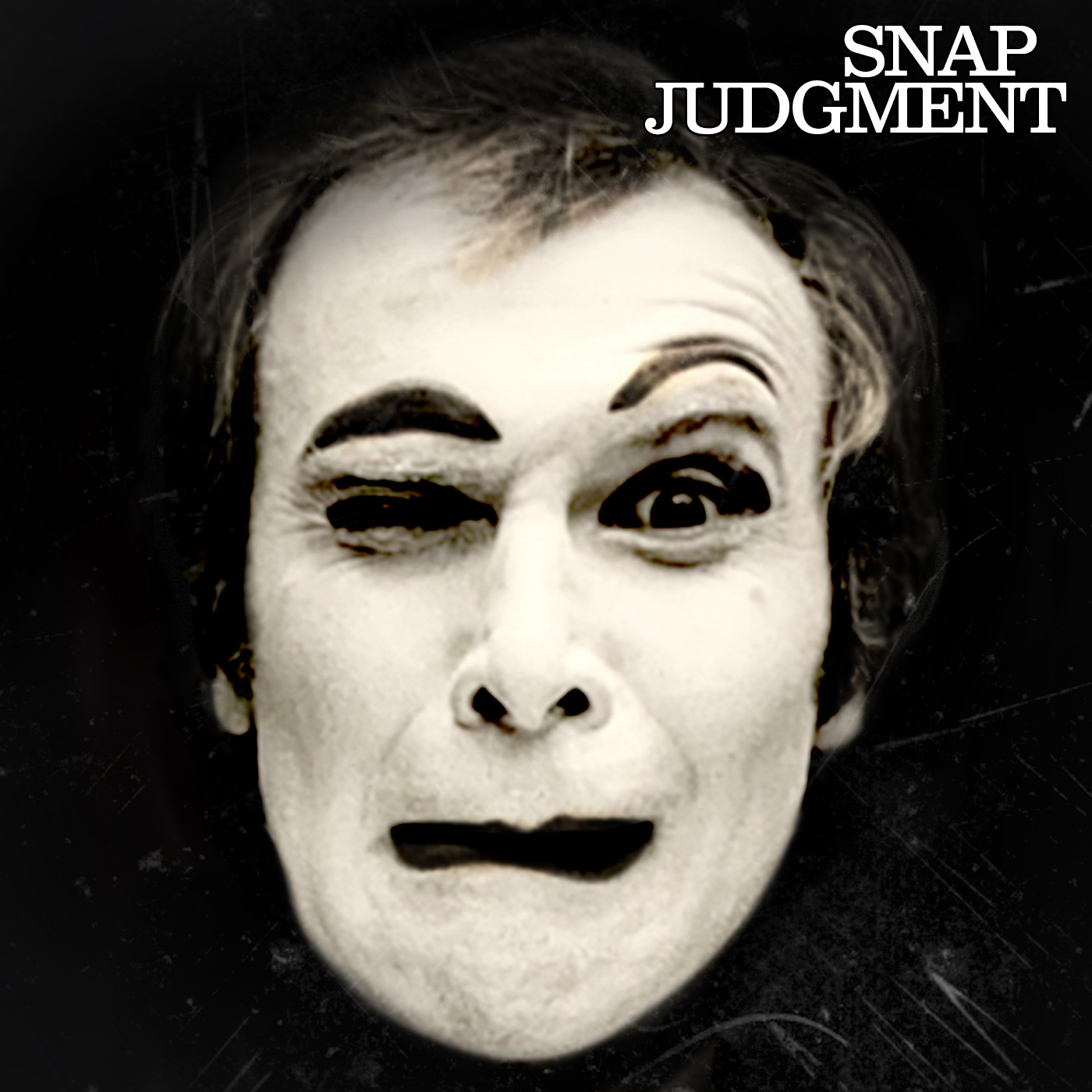
Overview of Silence Speaks
This Snap Judgment episode explores how silence can become a powerful form of speech. The main story follows Gregory Gurievich, a Soviet mime who used pantomime to criticize oppression, only to be censored when his political allegory became too obvious. The episode also includes a companion segment about mime legend Marcel Marceau’s wartime resistance, plus a lighter second story about an immigrant teen’s nerve-wracking first kiss in a school play.
Gregory Gurievich: Mime as Political Resistance
Gregory Gurievich grew up in the Soviet Union and became a mime after seeing Marcel Marceau perform in Leningrad. Inspired by Marceau’s silent storytelling, Gregory realized mime could express truths that speaking out could not.
Why mime mattered in the Soviet Union
- In a society where open criticism could be dangerous, silence gave artists a kind of protection.
- Mime allowed Gregory to comment on government, oppression, and human freedom without using words.
- He viewed the body as a vehicle for truth: if the state controlled speech, silent performance could still resist.
Breakthrough and success
- His first performance, at a hospital in the early 1960s, was a success and gave him confidence to continue.
- He formed a troupe, toured across Soviet republics, and eventually created original work with clear political meaning.
- His piece Man in the Sea used an allegory of a pearl hunter and a mermaid to suggest that artists need freedom or they die creatively.
The piece that got him banned
- Gregory’s most daring work, Man and Machine, showed a free person trapped by an invisible wall and absorbed by a machine-like force.
- The message was unmistakable: individual freedom being crushed by an authoritarian system.
- The TV broadcast was shut down mid-performance after officials realized how subversive it was.
- As a result, Gregory was banned from TV, from performing, and from teaching mime.
Exile and reinvention
- Gregory struggled financially in the years after the ban and felt his life had lost its purpose.
- He eventually left the Soviet Union through a Jewish exit route, traveled through Vienna, and arrived in New York.
- In the U.S., he reinvented himself as a painter, sculptor, and art teacher, while still making mime a part of his life.
- At 88, he reflects that his inner voice and his art are his way of giving back to society.
Marcel Marceau and the Roots of Silent Protest
The episode’s companion commentary broadens the theme by showing that mime has long been tied to resistance.
Marceau’s wartime story
- Marcel Marceau, a Jewish Frenchman, joined the Resistance during Nazi occupation.
- He helped transport Jewish children to safety in Switzerland while posing as a Boy Scout leader.
- These experiences may have shaped his later performance style: using gesture, shadow, and expression to calm and communicate without words.
The “Mask Maker” and the danger of performance
- The story uses Marceau’s famous “Mask Maker” routine to show how performance can expose human fragility.
- The bit evolves from playful transformation into something darker: the performer becomes trapped by the very mask he chose.
- The segment draws a connection between forced positivity, identity, and the emotional cost of survival under fear.
Second Story: First Kiss by Namisha Latva
The episode closes with a very different but thematically adjacent story about performance, identity, and the fear of being seen.
What happens
- Namisha, an Indian American high school student, lands the role of Helena in A Midsummer Night’s Dream.
- The role includes a first kiss scene with a boy named Randy, which terrifies and excites her.
- After an awkward moment at a swim party and strict disapproval from her parents, she’s already insecure about how others see her.
Why it resonates
- The kiss becomes a moment of self-conscious performance: she worries about rejection, embarrassment, and cultural expectations.
- In the scene, she accidentally lets the kiss continue farther than planned, leading to a family-show interruption.
- The story lands as a humorous but honest coming-of-age moment about desire, shame, and the thrill of crossing a boundary.
Main Takeaways
- Silence can be a language of resistance.
- Art can challenge power even when direct speech is dangerous.
- Mime, often treated as a joke in the West, can carry serious political and emotional weight.
- Performance can reveal hidden truths about identity, fear, and freedom.
- Both stories center on people learning how to be seen — or not seen — in public.
Notable Themes and Ideas
- Freedom vs. control: Gregory’s work repeatedly frames the artist as trapped by systems of power.
- The body as expression: When speech is restricted, gesture becomes political.
- Masks and identity: Whether literal or metaphorical, masks help people survive, but they can also become prisons.
- Coming of age through performance: Namisha’s story shows how a staged role can trigger real emotional growth.
Credits and Production Notes
- Main story produced by Snap Judgment with John Fasile as the resident mime/producer.
- Additional commentary includes discussion with Marshall Payette, co-creator of Marcel on the Train.
- The episode also features standard Snap Judgment sponsor segments and a teaser for the next story.