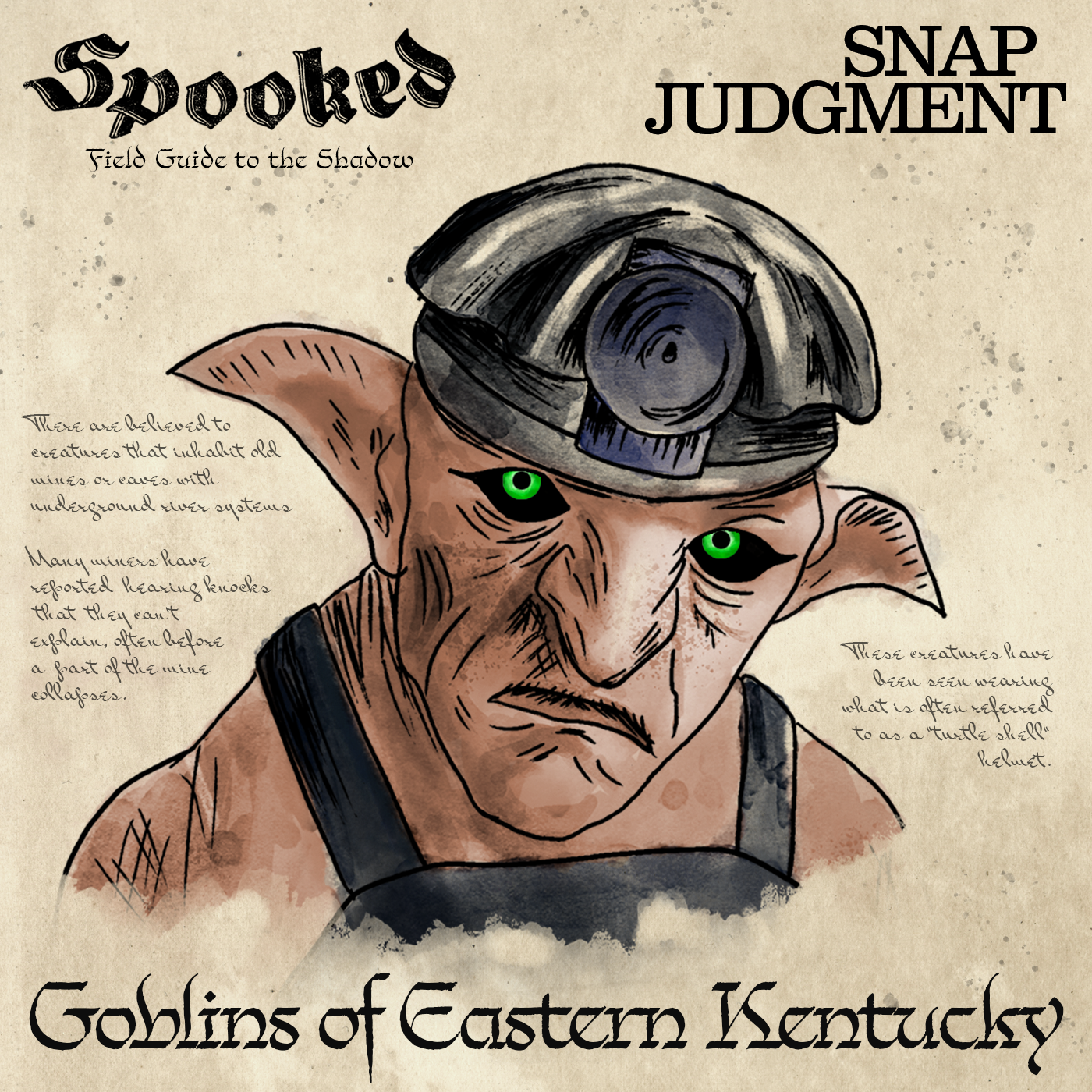
Overview of Goblins of Eastern Kentucky
This Snap Judgment / Spooked episode follows the aftermath of the devastating 2022 floods in eastern Kentucky, where multiple locals independently report seeing small, goblin-like beings near roads, homes, and wooded areas. What begins as a strange personal sighting turns into a shared regional mystery, blending disaster recovery, Appalachian folklore, trauma, and the idea that some kinds of suffering may make the “veil” between worlds feel thinner.
What Happens in the Story
- The episode opens with a vivid, almost confessional framing: the narrator describes growing up seeing faces and hearing voices in wood paneling and shadows, then being told to ignore what they saw.
- The story then shifts to eastern Kentucky, where coal mining has long altered the landscape and contributed to instability.
- After the 2022 floods, the region is devastated:
- homes are destroyed,
- roads are washed out,
- landslides are everywhere,
- and rescue/relief workers are stretched thin.
- One responder, Bo Morgan, sees a small, uncanny figure in a ditch while driving through flood damage:
- tiny body,
- huge ears,
- long skinny limbs,
- something like a leathery bib.
- Though he tries to rationalize it, the image stays with him.
- Laura Smith, working in community relief, later hears from a friend about “goblins” others have seen near the flood zone.
- Her friend describes two child-sized figures on the roadside:
- gray skin,
- black eyes,
- pointy ears,
- one standing, one sitting and distressed.
- Laura is initially skeptical, then increasingly intrigued as she hears more similar reports.
- Gwen Johnson says she has seen one too:
- a small being near her driveway and woodpile,
- wearing a miner-style “turtle hat,”
- watching her with curiosity.
- She later sees the same figure again near a fence while out helping with flood relief.
- Laura continues asking around and collects more sightings:
- small figures near trees,
- black eyes,
- sudden appearances and disappearances,
- repeated descriptions that are eerily consistent.
- The episode connects these reports to tommyknockers, mining folklore about mysterious beings in mines that can warn of danger.
- By the end, Laura interprets the sightings as possibly tied to the catastrophe itself—something like a response to environmental damage, grief, and a thinning boundary between worlds.
Key Themes and Ideas
Disaster and the “Thin Veil”
- The flood creates not just physical destruction, but a sense that reality itself has shifted.
- Several speakers suggest that in times of crisis, people become more open to experiences they might otherwise dismiss.
Appalachian Folklore and Memory
- The goblin sightings are framed within a broader Appalachian tradition of mine folklore, especially tommyknockers.
- The story treats these beings not as gimmicks, but as part of a local cultural and spiritual landscape.
Trauma and Perception
- The episode keeps returning to the idea that people in extreme stress may see more—or at least notice more.
- At the same time, it refuses to fully reduce the sightings to hallucination.
Mutual Aid Amid Chaos
- The flood relief efforts are central:
- delivering water,
- oxygen,
- baby supplies,
- food,
- and helping neighbors survive.
- The goblin sightings happen in the middle of real-world human care work, which gives the story emotional weight.
Notable Takeaways
- The episode never fully explains what the goblins are.
- Instead, it leaves listeners with a layered possibility:
- folklore made visible,
- trauma made symbolic,
- or something genuinely supernatural.
- Laura’s final response is practical and strange at once: she keeps a “goblin first aid kit” in her car, just in case she sees one again.
Bottom Line
Goblins of Eastern Kentucky is a flood-recovery story, a folklore story, and a mystery story all at once. It uses firsthand accounts from community members to explore how disaster, belief, and Appalachian tradition can converge into something haunting, intimate, and deeply human.