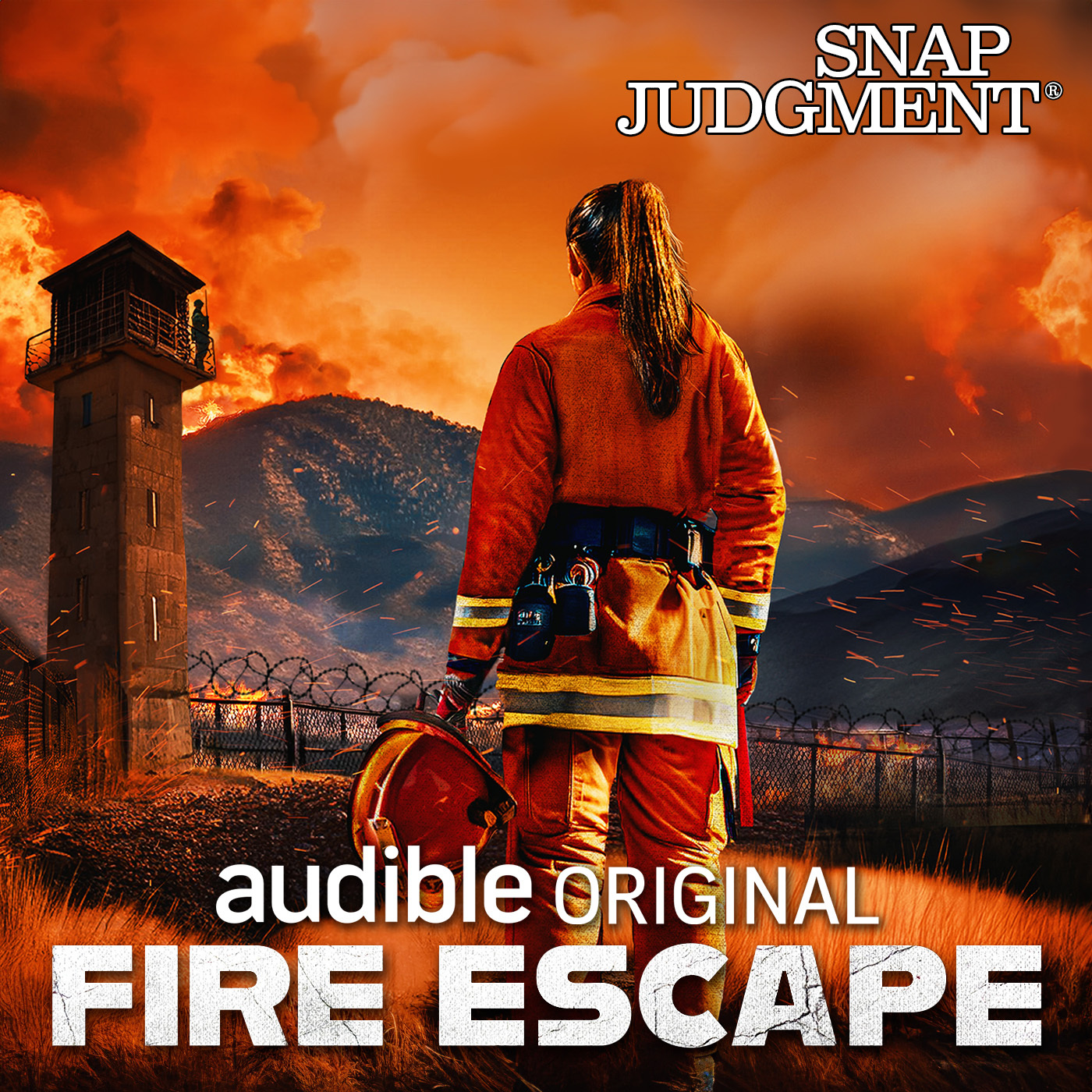
Overview of Fire Escape: The Crash (Snap Judgment)
This episode is Episode 1, “The Crash,” from Fire Escape — a six-part Snap Judgment / Wondery series produced and hosted by Anna Sussman. It tells the true story of Amika (inmate X32168), a woman whose life collapses after a deadly car crash and who — inside the Central California Women’s Facility (CCWF) — becomes part of an all-female incarcerated firefighting crew. The episode traces the crash, Amika’s arrest and conviction, her first days in state prison, and the jarring contrast between the life she once had and the new one behind the prison gates.
Main events & timeline
- Pre-crash life: Amika lived in Kern County mountains with three children, aspiring to be a present mother and homemaker.
- The crash (October 2008): While driving in Cypress, CA, Amika ran a light and collided with another car, which led to a fatality. She sustained severe injuries (broken pelvis, lacerated liver, punctured lung).
- Arrest and detention: Wakened in a hospital, handcuffed to the bed; moved from county jail (isolation, medical unit) while awaiting trial.
- Plea and sentencing: Pleaded guilty to vehicular manslaughter; faced an open sentence and was ultimately given 9 years, 8 months (effectively ~10 years with credits). The judge’s framing emphasized punishment over rehabilitation.
- Prison intake and daily life: Assigned to CCWF, processed into overcrowded housing, issued a muumuu, shackled during movement, and given a new inmate number. She hung photos of her children in her locker and anticipated a contact visit.
- Work as an incarcerated firefighter: Station 5 at CCWF houses 12 incarcerated women who train and respond to emergencies outside the prison (engines, bunk room, hoses). Their duties include extraction at crash scenes, entering burning buildings, and other emergency responses.
- Institutional friction: Encounters with correctional officers (“green cops”), write‑ups for rule violations, one fight in the day room leading to 40 days in solitary and the cancellation of her contact visit with her kids.
- Emotional aftermath: Grappling with guilt, shame, and identity — internally condemned by society and the prison system, while simultaneously performing life‑saving work on the trucks.
Key characters & roles
- Amika (inmate X32168): Central narrator — former mother, convicted of vehicular manslaughter, incarcerated firefighter.
- Anna Sussman: Host and producer, narrator of the episode.
- CCWF Station 5 crew: Twelve incarcerated women trained as firefighters; they respond to community emergencies and handle physically and emotionally difficult scenes.
- Correctional officers: Referred to as “green cops,” they regulate daily life, enforce discipline, and can curtail privileges (including visits).
- Victim and victim’s family: Not named in the episode; their courtroom testimony and presence shape Amika’s remorse and sentencing.
Themes & takeaways
- Moral complexity and accountability: The story presents both the real harm done in the crash and Amika’s attempts to take responsibility and live with the consequences.
- Punishment vs rehabilitation: The judge’s explicit statement that sentencing was about punishment—and not rehabilitation—frames the institutional stance toward people like Amika.
- Identity and stigma of women prisoners: The episode foregrounds the social shame women feel when they’re incarcerated and how that shame compounds their punishment.
- Redemption through service: Incarcerated women perform heroic, life‑saving labor as firefighters, creating a striking moral contrast between their societal labels and the work they do.
- The dehumanizing mechanics of prison life: Shackling, counts, write‑ups, solitary confinement, and the arbitrary discretion of guards highlight systemic power imbalances.
Notable quotes
- “We’re women, we’re not supposed to commit crimes. We’re not supposed to be here.” — on the gendered shame of incarceration.
- “You fucking broke the social contract with the whole world when you went to prison and left your kids.” — captures internal and external condemnation.
- “I never had the chance to express how sorry I am… From the deepest part of my soul I am so very sorry.” — Amika addressing the victim’s family at sentencing.
- “This was not about rehabilitation. This was about punishment.” — the judge’s message that shapes Amika’s experience.
Sensory details that shape the story
- The foggy, claustrophobic drive to Amika’s first crash scene; the sight of bodies covered with yellow sheets.
- The small brick firehouse inside CCWF: two engines, rolled hoses, a bunk room of 12 cots, and a captain’s office behind barbed wire.
- Prison routines: counts, muumuus, shackling, and the tactile ritual of putting toothpaste on photos of her children to “smell” them in her locker.
Production notes & where to listen
- Produced by Snap Studios and Wondery; created, written, and produced by Anna Sussman.
- Episode credits include music by Renzo Gorio and Doug Stewart; sound design/engineering by Miles Lassie.
- Fire Escape is a six-part series released weekly on the Snap Judgment feed. Listen on snapjudgment.org or wherever you get podcasts.
Why this episode matters
- It humanizes a person both culpable and remorseful, complicating easy categories of “villain” and “hero.”
- It reveals an understudied program: incarcerated people serving as first responders, and the moral and institutional tensions that come with that role.
- It raises broader questions about justice, rehabilitation, and how society treats those who have caused immense harm but also perform public service.