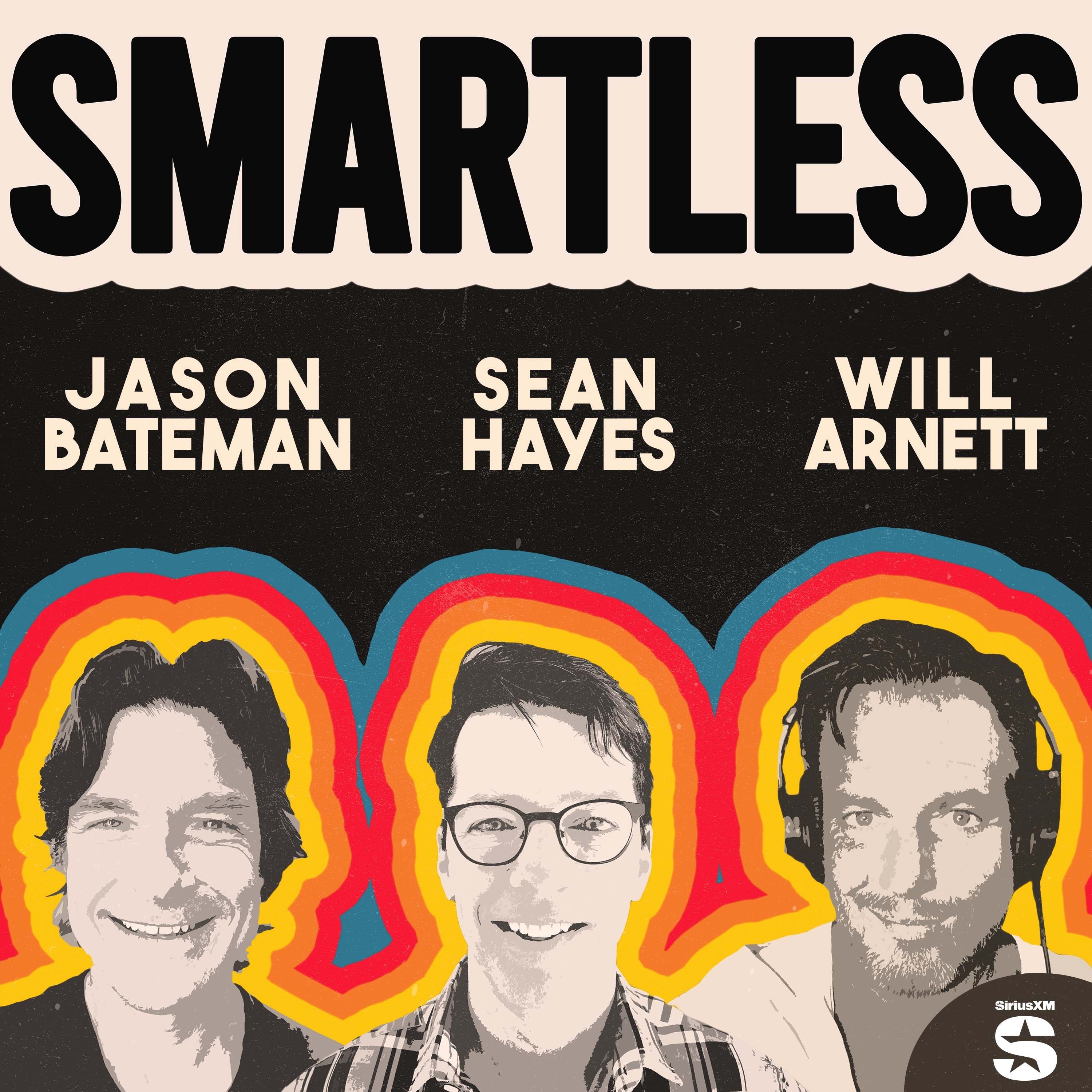
Summary — "RE-RELEASE: Paul Thomas Anderson" (SmartLess)
Hosts: Jason Bateman, Sean Hayes, Will Arnett
Guest: Paul Thomas Anderson
Overview
This SmartLess episode features filmmaker Paul Thomas Anderson in a wide-ranging conversation with hosts Jason Bateman, Sean Hayes, and Will Arnett. The discussion mixes personal anecdotes, deep-dive craft talk, and industry commentary: PTA’s origins, writing and directing process (including the genesis of Boogie Nights), collaborations with designers and composers, views on theatrical distribution vs. streaming/TV, film preservation, and bits about his personal life (meeting Maya Rudolph, family influences).
Key points & main takeaways
- Early influence: PTA grew up around broadcast production (his father was a prominent network promo voice) and was drawn to the “behind-the-scenes” technical craft from childhood.
- Writing as practice: PTA loved writing from an early age, learned formatting by copying scripts (e.g., Monty Python Holy Grail), and practiced his stories in multiple formats before settling on the final form (the Dirk Diggler concept evolved over ~10 years into Boogie Nights).
- Experimentation & adaptation: He often tells the same core stories in different ways to find the best form; emergence during shooting/editing is embraced — “surrender” to what appears in dailies.
- Collaboration is central: PTA emphasizes close work with production designers (e.g., Jack Fisk) and composers (e.g., Jonny Greenwood) and values teams who solve practical creative problems.
- Practical production advice: Favor locations where key elements are close together (allows quick reshoots/experimentation). Simplify complex research — “get the children’s book first.”
- Sound & music: Music choices influence his approach; Greenwood’s inventive orchestral choices added crucial texture (detuning, etc.).
- Theatrical experience matters: PTA wants films seen on quality big screens; lamented how many cinemas are in poor condition and how wide-release economics favor blockbusters.
- Streaming/TV caution: He’s wary of stretching modest stories into long-form series and worries that the craft of concise feature storytelling (90–120 minutes) could be undervalued.
- Film preservation: PTA is active in preservation efforts and collaborates with Scorsese’s Film Foundation; he sees preservation as essential to cinema culture.
- Personal notes: He met Maya Rudolph through SNL connections and made a decisive choice to return and build that relationship; anecdotal stories about Adam Sandler and actors’ casting (DiCaprio/Titanic vs. Boogie Nights).
Notable quotes & insights
- “Get the children’s book first” — practical approach to simplifying complex production research.
- On editing/shooting: you must “surrender” a bit to what emerges in the process.
- On theatrical exhibition: “There’s probably 30 theaters in this country where it would look great and sound great and the rest are fucking filth.” (emphatic view on exhibition quality)
- On writing: “I get so scared of writing to a theme… I have more like facts — what really happens here?”
- About early Boogie Nights: wrote “The Dirk Diggler Story” at 16–17 as a faux-documentary; that evolution into a feature took about a decade.
Topics discussed
- PTA’s childhood and influence of his father (network promo voice)
- Early filmmaking experiments and script practice
- Genesis of Boogie Nights and the Dirk Diggler short
- Working relationships with production designer Jack Fisk and composer Jonny Greenwood
- Practical tips for production and location scouting
- Approach to writing, theme, and letting films reveal themselves in editing
- Theatrical releases vs. streaming/TV limited series
- Film preservation and collaboration with Scorsese’s Film Foundation
- Personal life: meeting and marrying Maya Rudolph; anecdotes about Adam Sandler and casting trivia (Leo DiCaprio/Titanic)
- Music tastes and how soundtrack choices inform cinema
Action items & recommendations
For filmmakers
- Start small and iterate: explore your story in different formats (shorts, treatments, faux-docs) before committing to a final structure.
- Prioritize close-knit locations and practical logistics to allow flexibility and reshoots.
- Collaborate early and closely with production design and music teams; their input shapes the film from preproduction onward.
- Embrace emergent discoveries during shooting and editing — don’t be rigidly attached to an initial theme.
- Preserve your work and support film preservation efforts (archives, foundations).
For listeners/viewers
- Watch (or revisit) key PTA films if you want context: Boogie Nights, There Will Be Blood, Phantom Thread, Punch-Drunk Love, Licorice Pizza.
- Check out The Worst Person in the World (recommended by PTA) and the scores by Jonny Greenwood for film-music context.
- If you care about cinema presentation, seek out specialty theaters with good projection and sound — PTA argues the viewing venue matters.
Notable asides / light moments
- Hosts’ banter about voyeuristic Valentine’s Day window-watching and tour life.
- Humorous back-and-forth about teaching, “big brains,” and PTA’s classroom reputation.
- Ads and sponsor reads interspersed (Hilton, Lowe’s/Maytag, Adobe Acrobat, KeyBank, DreamCloud).
This episode mixes practical craft wisdom, industry perspective, and warm personal stories — valuable for filmmakers, film lovers, and anyone curious about Paul Thomas Anderson’s creative life and priorities.