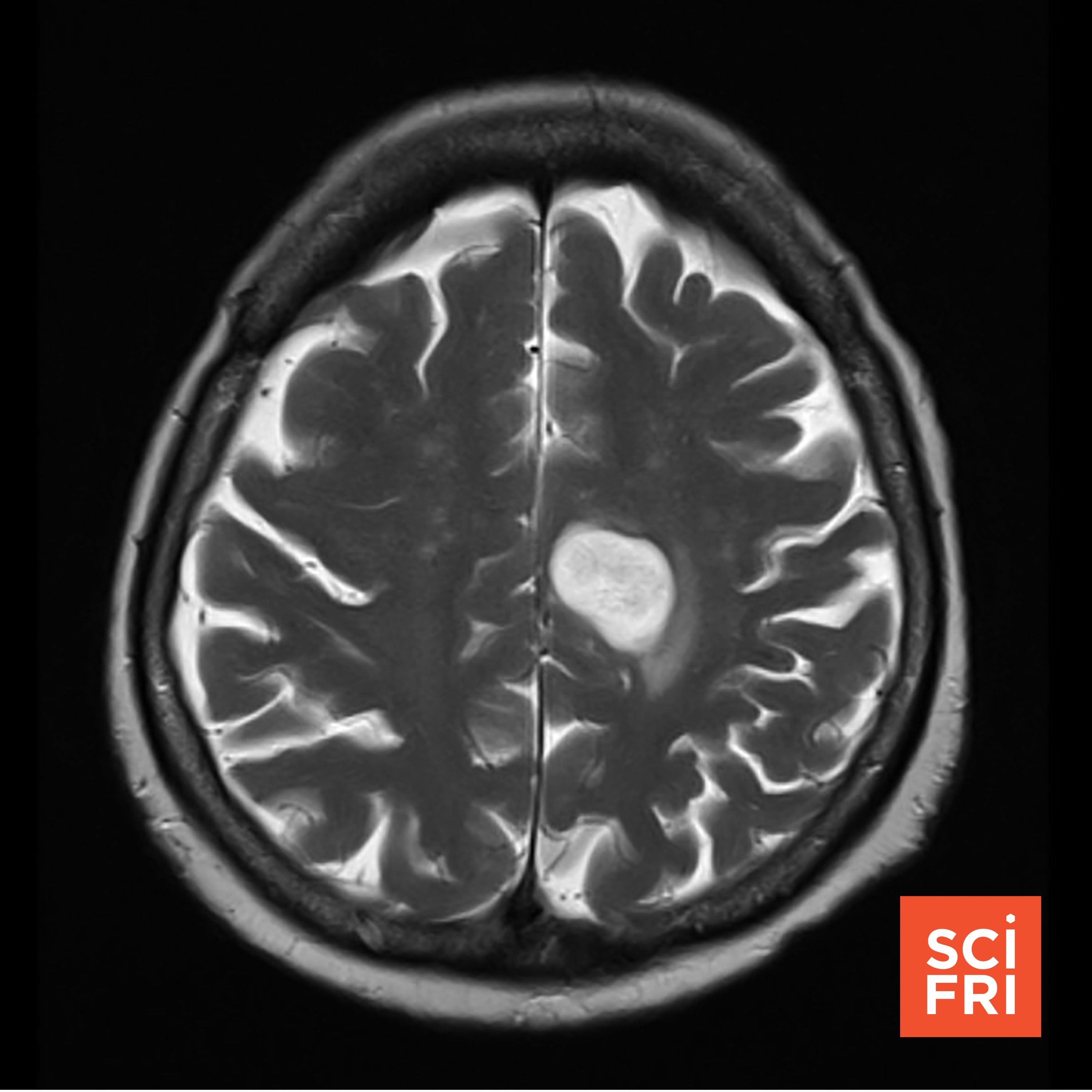
Overview of Why is brain cancer so hard to treat?
This Science Friday segment explores why brain cancers—especially aggressive pediatric tumors like diffuse midline glioma (formerly DIPG)—remain so difficult to treat, and how Dr. Michelle Monje’s work at Stanford is reshaping the field. The discussion centers on “cancer neuroscience,” a growing area of research showing that brain tumors don’t just survive in the brain; they actively wire themselves into neural circuits, using neuronal activity to grow, invade, and resist therapy.
Why Brain Cancer Is So Hard to Treat
Brain cancers are uniquely challenging for several reasons:
- The blood-brain barrier limits how effectively many drugs can reach tumors.
- Diffuse tumors spread through the brain, so they can’t always be removed surgically.
- They are hard to biopsy and study, especially historically in pediatric cases.
- Standard therapies often fall short, since radiation and chemotherapy are rarely curative for these cancers.
- The tumor environment matters: brain tumors behave very differently in the brain than they do in a petri dish.
Dr. Monje emphasized that many drug candidates look promising in isolated cancer cells but fail once the tumor is in the living brain.
Dr. Monje’s Path to Cancer Neuroscience
Monje began studying brain cancer after seeing the devastating progression of diffuse intrinsic pontine glioma in a young patient early in her training. At the time, very little was known about the biology of these cancers, and there were no real laboratory models for them.
Her breakthrough came when a family donated their child’s tumor after death. That tissue allowed her team to create the first cell culture and mouse xenograft model of DIPG, opening the door to real biological and drug-response studies.
Key Discovery: Tumors Form Synapses with Neurons
One of the most important findings discussed in the interview is that brain cancer cells can form functional synapses with neurons.
What that means
- Neuronal activity can directly stimulate tumor growth and invasion.
- The cancer cells are not passive; they are electrically connected to brain circuitry.
- This signaling helps tumors resist therapy and become more aggressive.
Monje described this as a major shift in thinking: brain cancers are not just clusters of mutated cells, but diseases that exploit the brain’s own communication systems.
Promising Treatment Directions
The conversation highlights two major therapeutic strategies:
1. Disrupting tumor-neuron signaling
Researchers have identified existing drugs—such as certain:
- anti-seizure medications
- psychiatric drugs
- cardiology drugs
that target the receptors and ion channels tumors use to hijack neural signaling.
Early evidence suggests:
- these drugs can slow tumor growth in mice
- retrospective patient data suggest some children lived longer when taking one of these medications
- prospective clinical trials are being prepared
2. Immunotherapy and CAR T cells
Monje’s team also explored CAR T-cell therapy for diffuse midline gliomas.
- They identified a tumor target called GD2
- In mouse models, GD2-targeting CAR T cells cleared the tumors
- Human trials began in 2020
- Early results have shown tumor shrinkage and temporary improvements
While not yet a cure, this approach is seen as a major piece of the treatment puzzle.
Broader Impact of Cancer Neuroscience
A major takeaway from the interview is that discoveries in brain cancer are influencing the treatment of other cancers too:
- Brain metastases from lung cancer also appear to exploit neural activity.
- Peripheral nerves may promote growth and spread in cancers elsewhere in the body.
- The field of cancer neuroscience is emerging from these insights and may help millions of patients.
Main Takeaways
- Brain cancers are hard to treat because of both anatomical barriers and biological complexity.
- Dr. Monje’s research shows that brain tumors interact directly with neurons, using electrical activity to grow.
- Existing drugs may be repurposed to interrupt tumor-neuron signaling.
- CAR T-cell immunotherapy is one of the most promising experimental approaches.
- The future likely lies in combination therapy, not a single cure.
- Research in pediatric brain cancer is helping uncover principles relevant to many other cancers.
Closing Insight
Dr. Monje’s central message is hopeful: what once seemed impossible is now within reach. The field has moved from having almost no understanding of these tumors to identifying concrete biological mechanisms that can be targeted. For her, the motivation remains the same: children and adults with brain cancer deserve better treatments, and the science is finally catching up.