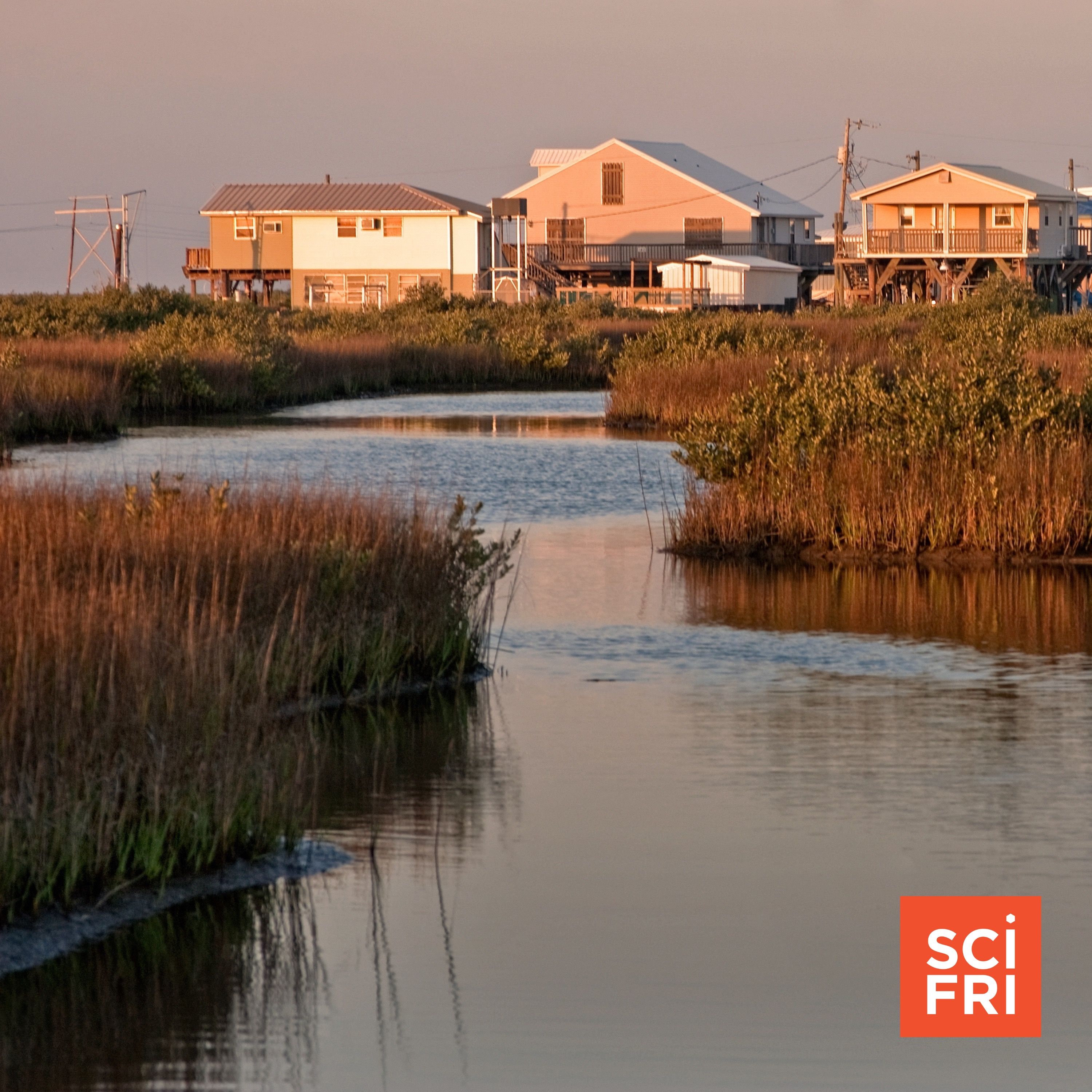
Overview of Why a paper about relocating coastal communities hit a nerve
This Science Friday episode explores why a recent Nature Sustainability paper arguing that coastal Louisiana may have crossed a “point of no return” sparked such a strong reaction in New Orleans and beyond. The conversation centers on a difficult climate adaptation question: when should communities try to protect a place, and when should they begin planning for relocation? Two guests—Jessica Dandridge-Smith of the Water Collaborative of Greater New Orleans and climate adaptation scholar Dr. A.R. Siders—argue that the answer is not simple, and that any relocation strategy must account for culture, equity, infrastructure, and long-term community vision.
Why the paper caused such a reaction
- The paper quickly entered public conversation, especially in New Orleans, because it touched a raw nerve around sea-level rise, land loss, and the future of coastal Louisiana.
- Jessica Dandridge-Smith notes that the article elevated a debate that has existed locally for decades.
- The issue is not just scientific; it is emotional, cultural, political, and tied to questions of identity and survival.
Jessica Dandridge-Smith’s perspective: relocation is deeply complicated
Louisiana is already losing land
- New Orleans and surrounding areas are extremely vulnerable.
- She points out that Orleans Parish sinks by about 2 centimeters per year.
- Louisiana loses about a football field of land every 100 minutes.
Relocation efforts can fail if they ignore people
- Past relocation programs have often failed both the families moving and the communities receiving them.
- A key example is the planned relocation of the Indigenous community on Ile de Jean Charles.
- She says people may lose:
- connection to one another,
- fair compensation for their homes,
- and the sense that their new place is actually better.
Culture matters as much as geography
- New Orleans is not just a physical location; it is a living culture built over centuries.
- She emphasizes that New Orleans culture is not easily replicable:
- music and street life,
- Mardi Gras,
- jazz and second lines,
- Cajun and Creole food,
- and a history of diverse communities living together.
- Her core point: relocation cannot be reduced to moving houses; it is about preserving human dignity, community, and cultural memory.
Dr. A.R. Siders’ perspective: think about shaping the future, not just saving the past
It’s not an either/or choice
- Siders argues we should think about the future and the present simultaneously.
- Communities are always changing due to climate, technology, and social shifts.
- The goal is not to freeze a place exactly as it is, but to decide what kind of future we want to build.
Main adaptation strategies discussed
Siders outlines four common options for climate adaptation:
- Resist: build defenses like levees or dunes to hold back water.
- Accommodate: elevate homes or otherwise reduce flood damage.
- Avoid: stop building new homes or infrastructure in high-risk areas.
- Relocate: move homes or businesses away from places that no longer make sense to occupy.
What successful relocation has looked like
- Siders cites examples such as:
- Valmeyer, Illinois
- Soldiers Grove, Wisconsin
- These relocations worked better because communities kept their identity and had a forward-looking plan.
- Soldiers Grove is especially notable because its relocated business district was also made solar-powered, showing that relocation can be tied to innovation and resilience.
What makes relocation work better
Local leadership is essential
- In an ideal case, relocation planning should be driven locally:
- by mayors,
- parish or town governments,
- and community members themselves.
- People need a real voice in what they want to preserve and what they want to build.
Funding will likely need to come from multiple sources
- Possible sources include:
- private sector,
- city government,
- state government,
- and federal government.
- Large-scale relocation, especially for a city like New Orleans, would likely require a combination of all of these.
The goal should be a better future, not just damage control
- Siders emphasizes that the real question is not simply “do we save this place?”
- The more useful question is: what kind of place do we want to create for the next generation?
Key takeaways
- The climate relocation debate is about more than science; it is about people, culture, equity, and place.
- Relocation can fail if it ignores community ties or treats residents as interchangeable.
- New Orleans is often a symbol in this debate, but the issue affects many vulnerable places.
- Good adaptation planning should include:
- local participation,
- long-term vision,
- infrastructure investment,
- and honest recognition that some places may become harder to inhabit.
- The episode rejects a simplistic “save it or abandon it” framing and instead argues for a nuanced middle ground.
Bottom line
The episode argues that climate relocation should not be treated as a technical or purely logistical problem. For places like New Orleans, the challenge is to plan realistically for rising risk while protecting the cultural and social fabric that makes a community worth preserving in the first place.