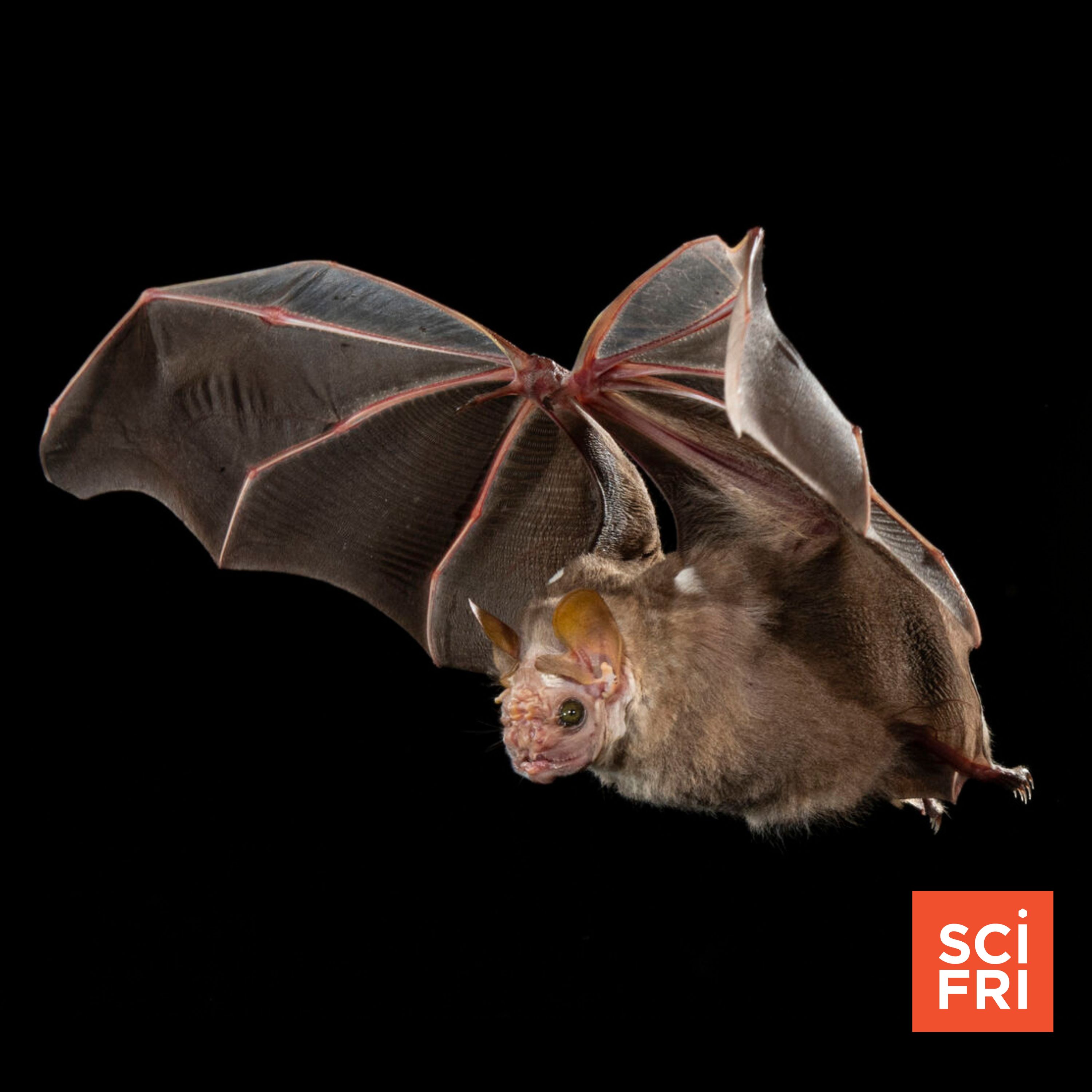
Overview of When, and where, did bats first take to the sky?
This Science Friday segment explores new research on bat evolution led by Dr. Emma Teeling and the Bat1K consortium. By combining high-quality genomes from 103 living bat species with fossil evidence from 65 ancient bats, the team reconstructed bat family history and concluded that bats likely first evolved in Europe around 65 million years ago—challenging earlier ideas that they originated in North America, Africa, or Asia. The conversation also highlights how bats’ extraordinary diversity, flight, echolocation, immunity, and longevity make them a powerful model for evolutionary biology.
Main Findings
Where bats originated
- The study argues that bats first evolved in Europe.
- This conclusion contradicts previous hypotheses that bats originated in North America, Africa, or Asia.
When bats first appeared
- Bats likely emerged around 60 to 65 million years ago.
- Their origin closely follows the mass extinction event that wiped out the dinosaurs, suggesting bats may have evolved in a radically changed post-impact world.
How the research was done
- The Bat1K consortium sequenced 103 bat genomes to reference quality.
- Researchers integrated this with data from 65 fossil bats to build a more complete evolutionary tree.
- The team also reconstructed the ancestral genome of the first flying mammal.
What the Fossils Revealed
Early bats were already highly specialized
- Fossils from about 50 to 55 million years ago show bats that were already:
- capable of flight
- likely capable of echolocation
- Anatomical evidence included:
- long fingers for wings
- inner-ear structures associated with echolocation
- jaw and tooth features that helped classify them as bats
Why fossils were hard to place before
- Ancient fossils do not preserve DNA, so earlier genome-only trees left gaps.
- New methods allowed researchers to combine:
- genomic data
- morphological/anatomical fossil data
- This helped refine bat evolutionary history and even correct earlier ideas, including some previously published by Teeling.
Bigger Scientific Takeaways
Bats are unusually diverse
- There are about 1,500 bat species today.
- Roughly one in five living mammals is a bat, making them an exceptionally successful mammal group.
Bats are evolution’s “natural experiments”
Researchers are now using bat genomes to study:
- echolocation
- flight
- vision and smell tradeoffs
- dietary adaptation
- nectar-feeding bats
- insect-eating bats
- blood-feeding vampire bats
- immune system resilience
- tumor suppression
- longevity and aging
- conservation and genomic decline
Why the work matters
- Bat diversity gives scientists a built-in comparison set for studying evolution.
- Because bats are found worldwide, the research must be global and collaborative.
- The findings may help answer broader biological questions about adaptation, disease resistance, and aging.
Notable Insights from Dr. Teeling
- The bat genome is “highly mosaic,” meaning different parts can tell different evolutionary stories.
- The more scientists learn, the more they realize how much remains unknown.
- Bat research is not just about evolution—it may also inform understanding of immunity, cancer resistance, and conservation.
Closing Note
The episode ends with a plug for Science Friday’s Halloween costume contest, inviting listeners to submit spooky, science-themed costumes for a chance to win prizes.
Key People Mentioned
- Dr. Emma Teeling — Professor of Zoology at University College Dublin; co-founder of Bat1K
- Flora Lichtman — host/interviewer
- Bat1K consortium — global bat genome sequencing collaboration