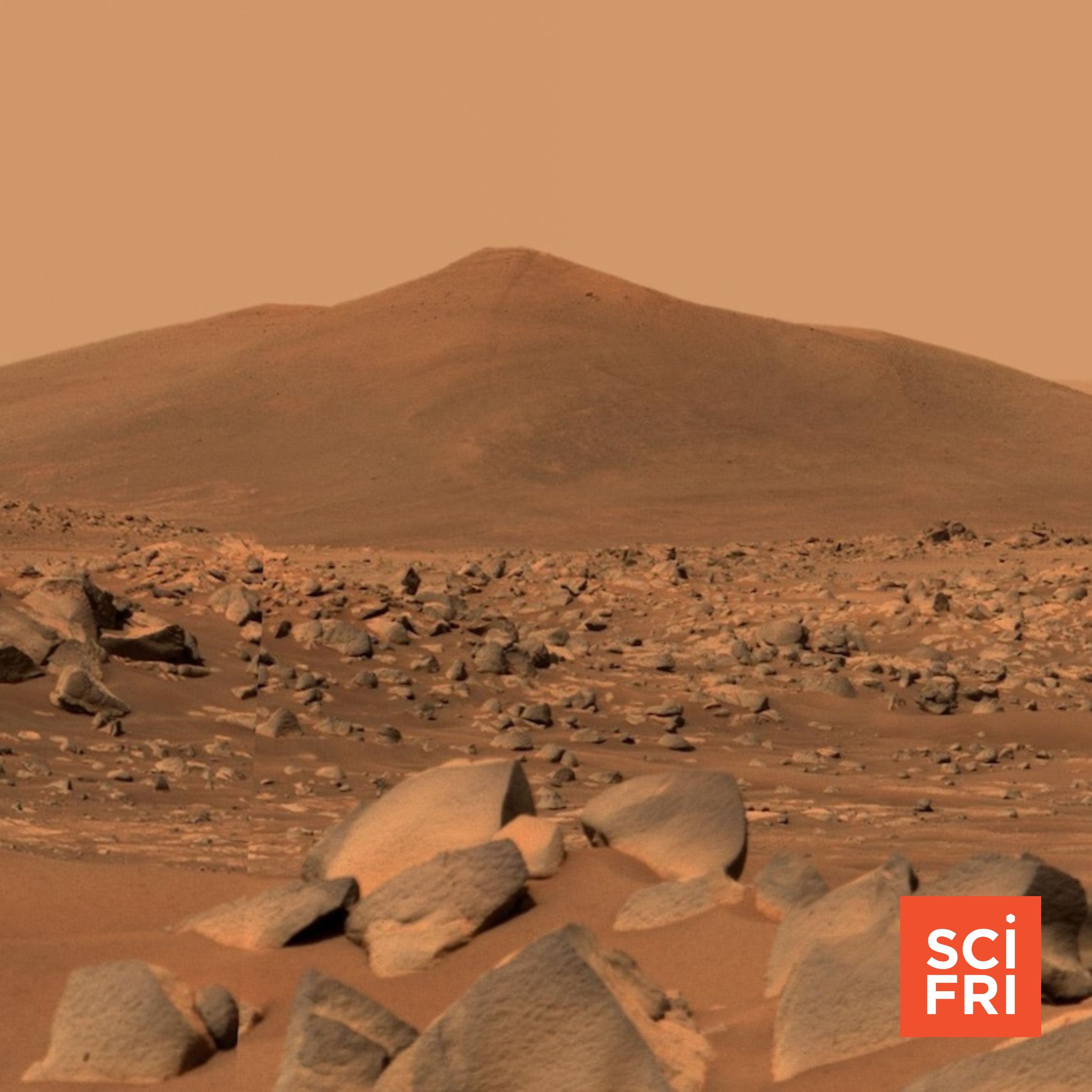
Overview of What should astronauts do first when they reach Mars?
This Science Friday interview with planetary scientist Dr. Lindy Elkins-Tanton explores what humanity’s first Mars missions should prioritize, why the search for life is the top scientific goal, and how humans and robots will likely work together on the Red Planet. The conversation also branches into her NASA Psyche mission, what makes ambitious space teams succeed or fail, and her broader philosophy on the purpose of science.
Mars Mission Priorities
First priority: search for life
- The National Academies report she co-chaired ranks searching for life on Mars as the top scientific priority.
- Elkins-Tanton emphasizes that this goal would also reveal a lot about:
- Martian habitability
- the planet’s geology and history
- what humans will need to survive there
What the first Mars mission might look like
- NASA is imagining a multi-mission Mars campaign rather than a single dramatic landing.
- The first human mission would likely be a short stay of about 30 days:
- test systems
- gather initial measurements
- collect samples
- experience being on another planet
- Later missions could involve:
- cargo deliveries
- short stays
- much longer stays of 300–500 Martian days
Humans, Robots, and “Agents” on Mars
Why humans still matter
- The report argues that Mars exploration will work best with humans and robotic systems together.
- Elkins-Tanton says humans are especially good at:
- seeing details directly
- adapting to unexpected situations
- repairing difficult equipment
- making fast judgment calls
Robots are essential too
- Robotic helpers, or “agents,” will do much of the heavy lifting.
- Human exploration will likely build on:
- sample-return missions
- autonomous systems
- increasingly capable robotic tools
The Psyche Mission
What Psyche is
- Elkins-Tanton is also the head of NASA’s Psyche mission, launched in 2023 and scheduled to arrive in 2029.
- Psyche is thought to be a metal-rich asteroid, possibly the exposed core of a small planetary body.
Why it matters
- Scientists have explored rocky worlds, gas giants, and icy moons, but no object with a metal surface has been studied up close.
- The asteroid may offer a rare look at:
- the metal cores of early planetary bodies
- how rocky planets formed
- the origin of planetary magnetic fields
- clues to habitability in other solar systems
Building and Leading High-Pressure Teams
Mission development takes years
- The Psyche mission began as an idea in 2011 and took years of proposals, reviews, and team coordination before launch.
- Elkins-Tanton notes that such missions require enormous patience and collaboration.
Her main team lesson: make it safe to speak up
- Her biggest leadership principle is to eliminate status games and hierarchy in favor of respect for expertise.
- She says teams perform best when:
- junior people can raise problems
- bad news is surfaced early
- leaders actually listen
“The best news is bad news brought early enough to fix it”
- She shares a painful Psyche setback: the mission missed its original 2022 launch date and slipped to 2023.
- The root issue was not that the engineers failed, but that warnings about software readiness did not travel clearly enough through the leadership chain.
- Her takeaway: a team fails when the messenger cannot safely deliver the truth.
The Purpose of Science
Science as an ongoing process of questioning
- Elkins-Tanton describes science not as a way to produce final answers, but as a method for:
- understanding how the world works
- asking better questions
- moving incrementally closer to truth
- She argues that scientific knowledge is always provisional:
- new data can amend, refine, or overturn earlier conclusions
- The value of science is in its persistent, cumulative search for better understanding.
Key Takeaways
- If humans land on Mars, the first scientific priority should be looking for life.
- Mars exploration will likely be a humans + robots partnership.
- The first Mars missions may be short, staged, and incremental rather than a single permanent settlement push.
- The Psyche mission could reveal a metallic planetary core fragment, a unique window into planet formation.
- Successful space missions depend as much on team culture and communication as on engineering.
- Science is ultimately about continual inquiry, not absolute certainty.