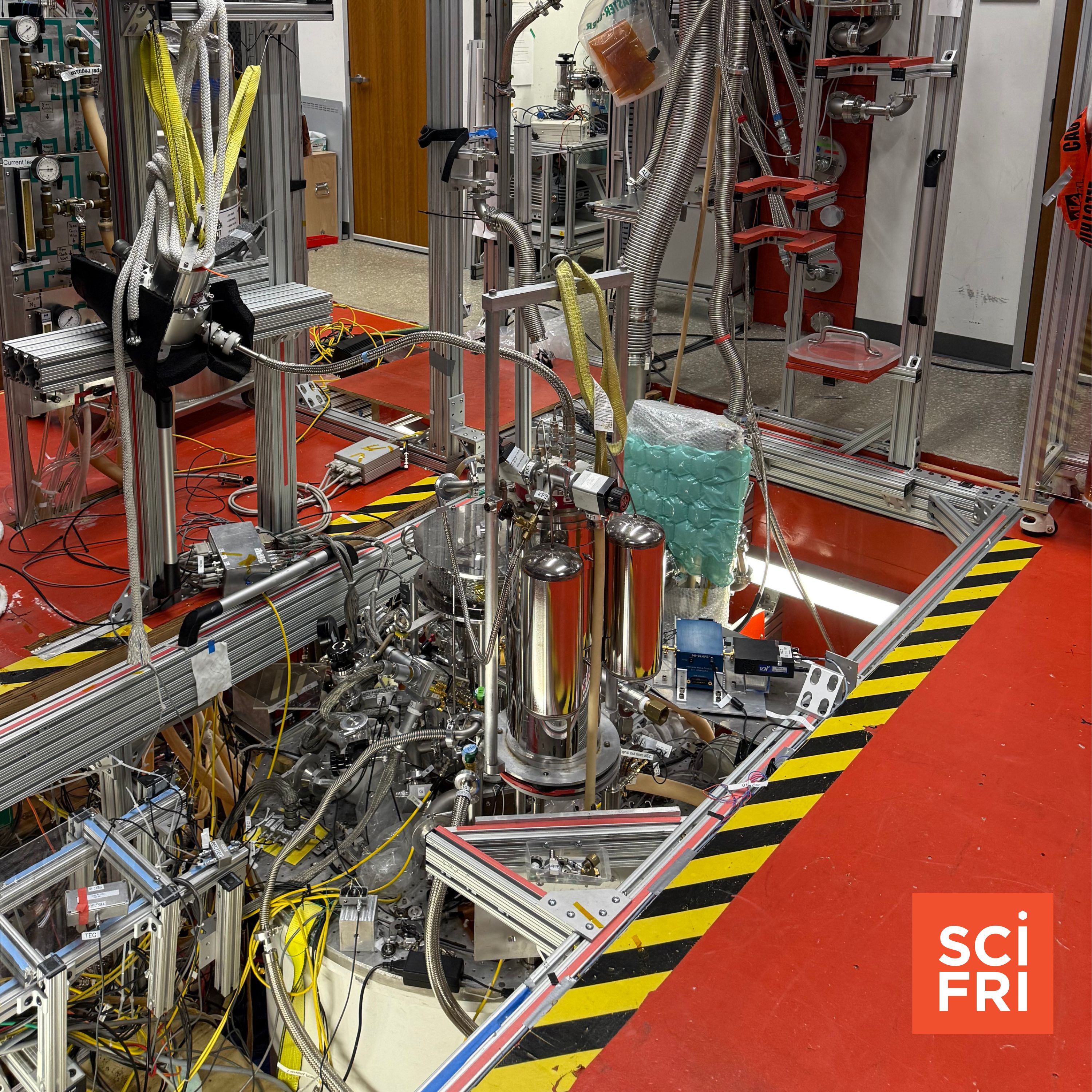
Overview of What a trapped antimatter particle could tell us about reality
This episode of Science Friday explores a breakthrough in antimatter research: scientists have trapped a single positron, the antimatter counterpart of an electron, for months and used quantum methods to study its behavior. The conversation with physicist Dr. Gerald Gabrielse explains why this matters: by comparing the positron’s properties with those of the electron at extreme precision, researchers can test whether matter and antimatter are truly perfect opposites and probe some of the deepest questions about how reality is built.
What the episode is about
The interview centers on a new experiment called a one-positron quantum cyclotron, which allows researchers to:
- trap a single positron for long periods
- cool it to near absolute zero
- observe quantum jumps between energy levels
- measure its magnetic moment with extraordinary precision
This is not just about holding antimatter in place; it’s about using it as a tool to test fundamental physics.
Key scientific ideas explained
What antimatter is
Dr. Gabrielse breaks down antimatter as the set of particles corresponding to ordinary matter:
- proton → antiproton
- neutron → antineutron
- electron → positron (historically called the antielectron)
These antiparticles have:
- the same mass as their matter counterparts
- opposite electric charge
- opposite magnetic properties, as currently predicted
Why positrons are important
The exciting part of the experiment is that the positron can now be studied in the same way scientists previously studied electrons. That allows for a direct comparison to see whether the two are exactly opposite, as theory predicts.
What “quantum jumps” reveal
By watching the positron move between energy levels and probing it with radio or microwave signals, researchers can measure its magnetic properties with very high precision. This is the key to testing whether antimatter obeys the same rules as matter.
Why this research matters
Testing the foundations of reality
If the positron and electron differ in any measurable way, it would be a major discovery. It could force physicists to rethink existing theory and possibly explain deeper mysteries about the universe.
The mystery of matter’s dominance
One of the biggest unanswered questions in physics is why the universe is made mostly of matter instead of antimatter. Gabrielse notes that the universe could, in principle, have been made from antimatter instead.
A step toward broader antimatter studies
The episode also looks back to Gabrielse’s earlier work making cold antihydrogen—an antimatter atom made from an antiproton and a positron. That project took years longer than expected, underscoring how difficult antimatter experiments are.
Notable takeaways
- Antimatter is real, but extremely hard to trap because it annihilates when it meets matter.
- The new achievement is not merely trapping antimatter, but studying its quantum behavior.
- Scientists aim to measure the positron’s magnetic moment to one part in 10¹³.
- Any difference between electron and positron would be a huge physics result.
- The work is fundamentally about understanding reality, not immediate applications.
Practical applications and outlook
This research is not driven by near-term technology. Gabrielse emphasizes that it is basic science: the goal is to understand how the universe works at the most fundamental level. While applications may eventually emerge, the immediate value is in discovering new principles that could reshape physics over time.
Memorable insight
Gabrielse’s view of the scientific process comes through clearly:
- “God decides and we measure.”
That line captures the episode’s core theme: scientists build instruments, make careful measurements, and let nature reveal whether our theories are right.