Overview of Tracking shark populations, one shark at a time
This Science Friday segment follows marine conservation biologist Catherine McDonald and her team from the University of Miami as they study sharks off the coast of Florida. The conversation focuses on how scientists track shark populations, why hands-on fieldwork still matters, what surprising discoveries come from shark research, and how everyday people can help protect sharks indirectly by supporting marine ecosystems.
How Shark Research Works in the Field
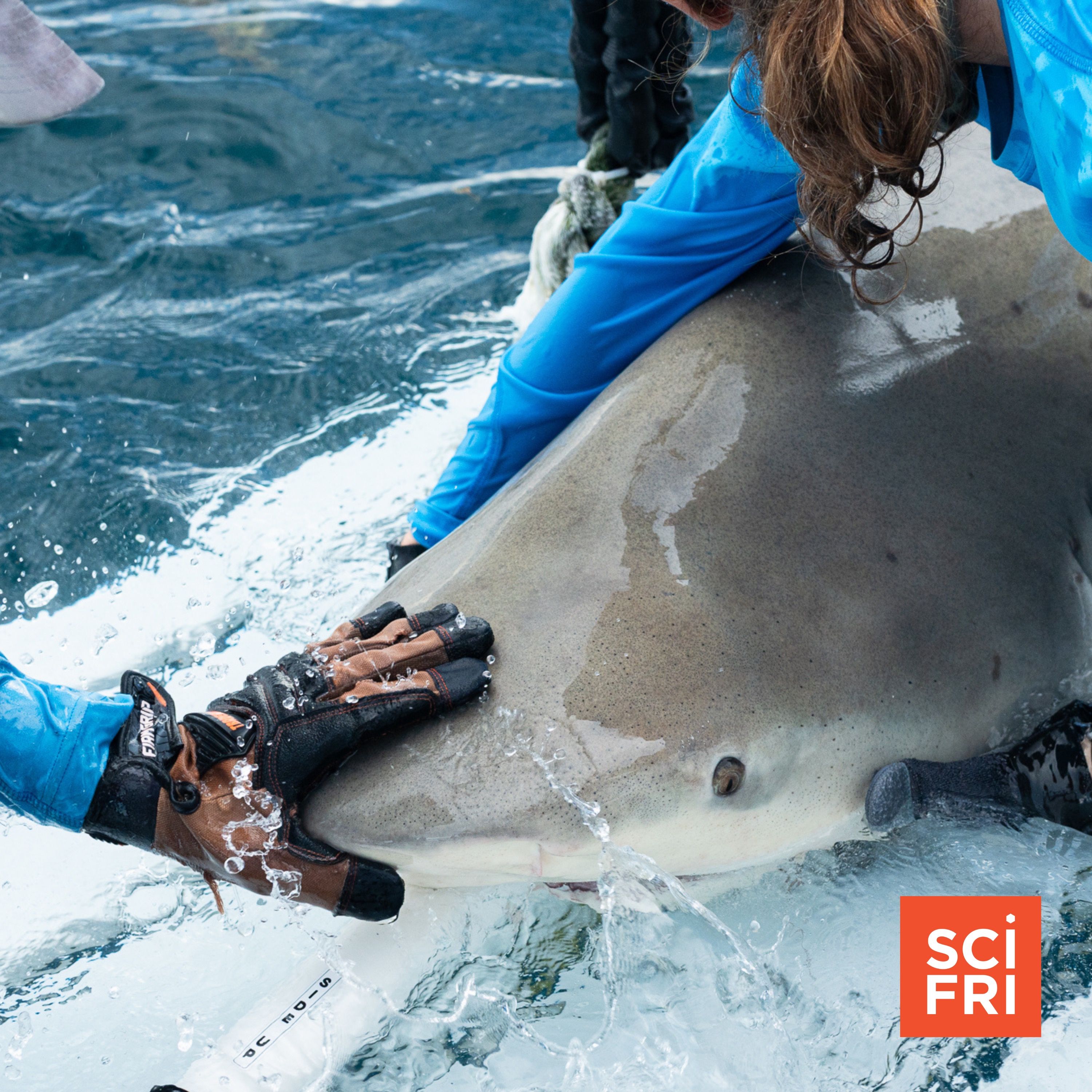
The episode opens with a vivid look at a typical shark research day: scientists catch sharks using baited drumlines, then carefully restrain them on a platform while they:
- measure the animal
- collect blood and tissue samples
- count parasites
- swab for microbiome analysis
- implant tracking tags
- release the shark back into the water
McDonald says this kind of work is routine for her team, which samples around 600 sharks a year over roughly 130 field days.
Why the Hands-On Approach Matters
The goal is fisheries-independent monitoring—data gathered outside commercial fishing operations. That matters because fisheries data can be skewed when:
- gear changes over time
- regulations shift
- fishing effort varies based on economics or policy
Hands-on sampling gives researchers a more stable way to compare shark populations across years.
What Scientists Learn From Shark Samples
Blood, tissue, and other samples help answer a wide range of questions, including:
- population genetics
- diet and feeding behavior
- parasite loads
- microbiome composition
- movement and habitat use
- species recovery trends
The team regularly studies about 12 species in South Florida, including:
- blacknose sharks
- blacktip sharks
- bonnethead sharks
- nurse sharks
- bull sharks
- hammerheads
- tiger sharks
They also note that more cold-water species, like white sharks, are usually only passing through the region.
Surprising Findings and Shark Behavior
One memorable discovery: a tiger shark vomited up a whole pig’s foot. McDonald suspects it may have eaten bait from lobster or crab traps, since pig’s feet are sometimes used as bait in local fisheries.
The segment also highlights a recent paper from McDonald’s lab about remoras and manta rays. Researchers observed remoras entering the manta ray’s cloaca—a multipurpose opening used for waste elimination and reproduction—in a behavior jokingly dubbed “cloacal diving.”
Why This Matters Scientifically
Beyond the novelty, the finding raises a bigger question:
- Are remora-host relationships really as harmless as previously assumed?
- Could these interactions be more disruptive to hosts than scientists thought?
Shark Population Trends and Recovery
The discussion turns to whether sharks are actually increasing in some areas—or whether we’re simply seeing them more clearly because of better tools like drones and cameras.
Key point:
It’s often difficult to separate:
- true population increase
- from better detection
Still, McDonald says some regions do show real recovery. For example:
- Massachusetts has seen more white sharks, likely linked to recovering seal populations.
- In Florida, trends vary by species.
- Some shark populations are recovering thanks to improved management.
- Others remain severely depleted and may take many decades to rebound.
One striking example: dusky sharks may not recover until after 2100.
Shark Facts, Myths, and Misconceptions
McDonald shares several fun and clarifying shark facts:
Sharks Are Ancient
- Sharks have existed longer than trees
- They are even older than Saturn’s rings
- Their long evolutionary success is not primitiveness, but evidence of a design that works well
Most Sharks Are Not “Movie Sharks”
The sharks people usually picture—white sharks, tiger sharks, hammerheads, bull sharks, makos—are dramatic outliers.
In reality, the average shark is more often:
- 3 to 4 feet long
- brown or gray
- relatively unremarkable in appearance
- often living in deeper or less visible habitats
Why Shark Teeth Are Found So Often
Sharks continually replace their teeth throughout life—sometimes every 10 days in some species. That means:
- each shark produces thousands of teeth
- teeth are commonly found because they fossilize well
- much of the shark fossil record comes from teeth, since sharks are cartilaginous and don’t preserve like bony fish
Megalodon Myth-Busting
McDonald also addresses the recurring question of whether Megalodon is still alive:
- Yes, Megalodon was real
- No, it is not alive today
- A giant shark like that would almost certainly have been caught on video by now
How People Can Help Sharks
McDonald says the most useful thing people can do is not just “don’t eat shark,” since most people already don’t.
Instead, she recommends supporting marine habitat conservation through everyday actions that improve water quality, such as:
- reducing trash pollution
- limiting fertilizer runoff
- avoiding pesticide contamination
- protecting streams, rivers, and coastal waterways
Her broader message: helping sharks often means helping the whole marine ecosystem.
Notable Takeaways
- Shark population research depends on careful, repeated field sampling
- Better observation tools can make it seem like sharks are increasing when they may just be more detectable
- Some shark species are recovering, but others remain under severe pressure
- Sharks are ancient, diverse, and often misunderstood
- Conservation is not just about sharks directly—it’s about protecting water quality and habitat
Closing Thought
The episode captures both the scientific rigor and the wonder of shark research. McDonald’s perspective is that asking questions like “Why is the crab doing that?” or “What is this shark eating?” is part of the joy of science—and part of how we learn to better protect marine life.