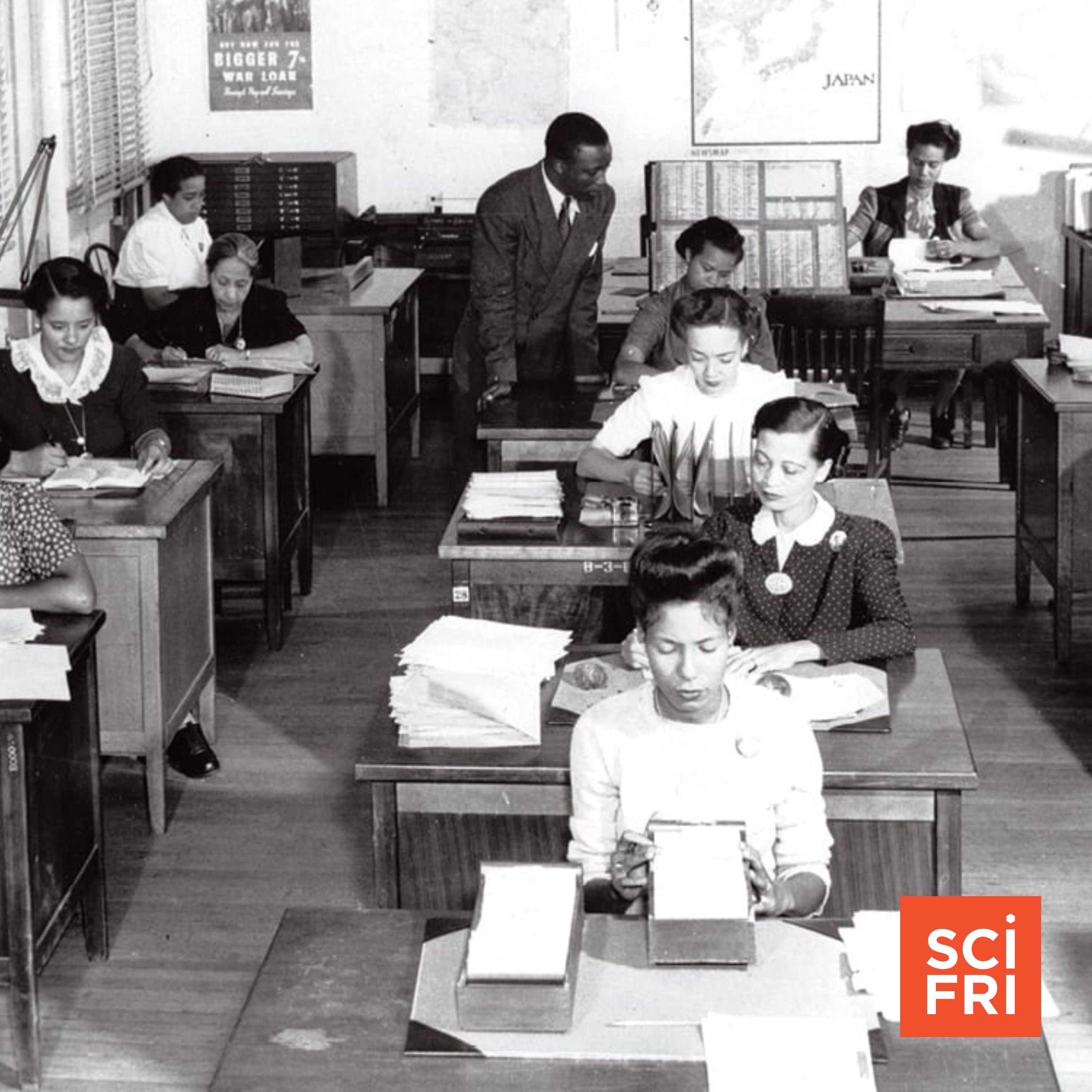
Overview of The Black women codebreakers of the Cold War
This Science Friday segment explores the overlooked history of Black women who worked as codebreakers and cryptologic specialists for the U.S. Army and later the NSA during the early Cold War. Guest Dr. Sarah Valentine, author of Decoding the Devil: Black Women Code Breakers and the Secret War Against Stalin’s Bomb, explains how these women helped decode intercepted Soviet communications, contributed to early automation and machine-based language processing, and did so while facing segregation and limited career advancement.
Key Themes and Takeaways
Hidden history of Cold War intelligence
- The U.S. government recruited a group of highly educated Black women to process and decode Soviet messages.
- Their work was central to nuclear intelligence gathering during the Stalin era, but their contributions were largely erased from public history.
Segregation shaped their roles
- The codebreaking operation at Arlington Hall was segregated:
- White analysts worked upstairs.
- Black workers were assigned to the noisy basement “traffic processing division.”
- Even when these women had college or graduate training, segregation often restricted them to lower-level positions.
“Big data” before computers
- Their job involved scanning millions of intercepted Soviet telegraph strips in Cyrillic for keywords related to:
- military activity
- science
- nuclear research
- Valentine describes them as the “manual Google” or “GPU” of the operation, doing enormous amounts of human pattern recognition by hand.
Early automation and machine learning
- The women helped train an early top-secret machine system called “Soap Flakes” using about 1,500 Russian keywords.
- Once that machine became operational in the mid-1950s, it effectively replaced the traffic processing division’s manual work.
- The segment draws a parallel to modern AI and automation: workers helped train the system that later made parts of their labor obsolete.
Career limits and missed opportunities
- Some women used the job as a pathway into government service and advancement, but many were not given access to the higher-level training offered to white workers.
- The story highlights both their skill and the structural barriers that prevented fuller professional recognition.
Notable Story: Iris Carr
- Iris Carr was a Texas schoolteacher who left the Jim Crow South for Washington, D.C. seeking better pay, benefits, and retirement.
- She eventually worked her way up within the intelligence system and became a manager, helping others improve their careers.
- Her story illustrates both ambition and the limited but meaningful opportunities federal work could offer Black women at the time.
How the Book Was Researched
- Valentine discovered the story through an NSA history page about “Invisible Cryptologists.”
- Much of the material was classified or buried in archives and personnel records.
- Her research included declassified first-person interviews from the women themselves.
- She also describes finding an original note signed by Eleanor Roosevelt in the National Archives, a major archival discovery.
Broader Insight
- Valentine connects her background in Russian literature and translation to the work of codebreaking.
- She notes that translation can resemble codebreaking, but the cryptologists’ work was far more stressful, time-sensitive, and repetitive.
- Her description of cryptoanalysis as “a New York Times crossword puzzle with no hints” captures the difficulty of the task.
Recommended Follow-Up
- Read an excerpt from Decoding the Devil at: sciencefriday.com/codebreakers
- The segment also suggests this history could make a compelling film adaptation.