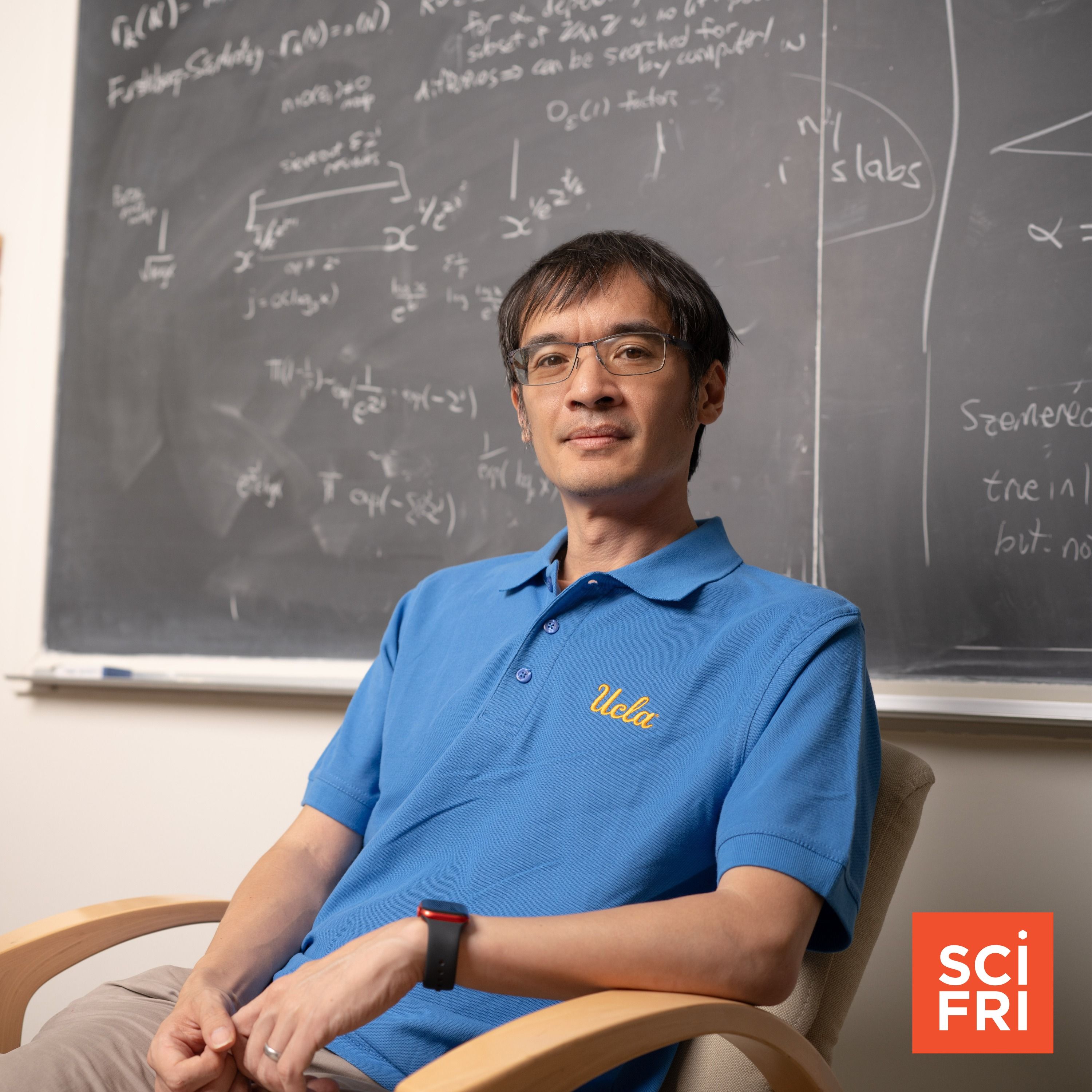
Overview of Science Friday — Terence Tao on how AI math solutions miss the point
This episode explores the growing impact of AI on mathematics and why mathematicians like Terence Tao worry that fast, machine-generated proofs can obscure the deeper purpose of math: understanding. Tao argues that while AI can now solve or assist with many difficult problems, the real value of mathematics lies in explanation, context, and the human process of building insight—not just producing answers.
Main Takeaways
-
AI is solving prestigious math problems, but not always in a useful way.
- OpenAI’s claims about solving the Navier–Stokes regularity problem and hundreds of other unsolved problems have sparked excitement and concern.
- Tao says these results often arrive as “proof artifacts” without the surrounding explanation mathematicians need to trust, verify, and build on them.
-
Mathematics is fundamentally about understanding, not just answers.
- In school, math can seem like a system of right and wrong answers.
- In research and applied math, the goal is to understand models, their limits, and how they connect to the real world.
-
AI is disrupting the profession’s norms.
- Math culture has long been built around scarce, hard-to-produce proofs.
- Now that AI can generate solutions quickly, traditional incentives like first authorship, priority, and prize-driven competition are being strained.
-
Human mathematicians still matter.
- Tao argues that humans are needed to interpret results, explain them, connect them to applications, and help train the next generation.
- He worries that the math community is being pushed into “soul-searching at gunpoint” before it has had time to adapt.
-
Public understanding of math is part of the solution.
- Tao’s upcoming book, Six Math Essentials, aims to show that advanced math grows out of simple ideas like numbers, shapes, change, and scale.
- He believes math should be more accessible and more human, helping people feel less intimidated by modern technology.
Why AI Math Breakthroughs Feel So Unsettling
Speed without explanation
Tao says the biggest issue is not that AI can find answers, but that it often does so without the collaborative, explanatory process that gives mathematics its value. Human mathematicians typically discuss, refine, and contextualize major results; AI outputs can arrive as unexplained dumps that others must clean up.
Loss of the “gift economy”
Mathematics traditionally relies on a culture of shared labor:
- refereeing papers,
- explaining ideas to colleagues,
- building on each other’s work,
- and respecting unspoken norms of academic generosity.
Tao argues that this social ecosystem doesn’t map neatly onto an AI-driven, benchmark-optimized world.
A shift in what counts as progress
The profession has long treated “solving the problem” as the main marker of success. Tao says that was always only a proxy for the deeper goals:
- understanding,
- communication,
- application,
- and intellectual continuity.
AI is forcing mathematicians to rethink those priorities.
Tao’s View of Math as a Human Enterprise
Math is part science, part humanities
Tao emphasizes that mathematics isn’t just technical; it is also narrative, explanatory, and social. He says math helps people:
- make sense of the world,
- understand technology,
- and feel less overwhelmed by complex systems.
Narratives improve both teaching and research
He describes his own work as increasingly driven by stories, analogies, and human intuition:
- giving equations “characters,”
- identifying which terms are helpful or harmful,
- and using simpler geometric or physical analogies to understand abstract problems.
The humanities still matter
Tao says he didn’t fully appreciate the humanities early on, though he valued languages and grammar. Over time, he’s come to see that respecting different ways of thinking—scientific, artistic, linguistic—enriches both mathematics and life.
What Tao Says Needs to Change
- Better access to AI tools for practicing mathematicians, not just big tech companies.
- Reworked reward systems that value collaboration and explanation, not just being first.
- More philosophical reflection on what proofs, understanding, and explanation really mean.
- Stronger public outreach so mathematics feels less alien and more connected to everyday life.
- More openness behind the scenes, including sharing how mathematicians think and communicate with one another.
Notable Ideas and Quotes
- “Soul-searching at gunpoint” — Tao’s phrase for how abruptly AI has forced mathematics to confront its future.
- Proofs as “lighthouses” — problems are not just trophies; they illuminate the broader landscape of ideas.
- “If you are producing things that no human understands, what is the point?” — Tao’s core challenge to AI-generated math outputs.
About the Book
Tao’s upcoming book, Six Math Essentials, is meant to:
- make math more accessible to general readers,
- show continuity between childhood arithmetic and advanced research,
- and frame math as a story built from simple ideas that evolve over time.
It reflects his broader message: math is not just a collection of answers, but a deeply human attempt to understand the world.