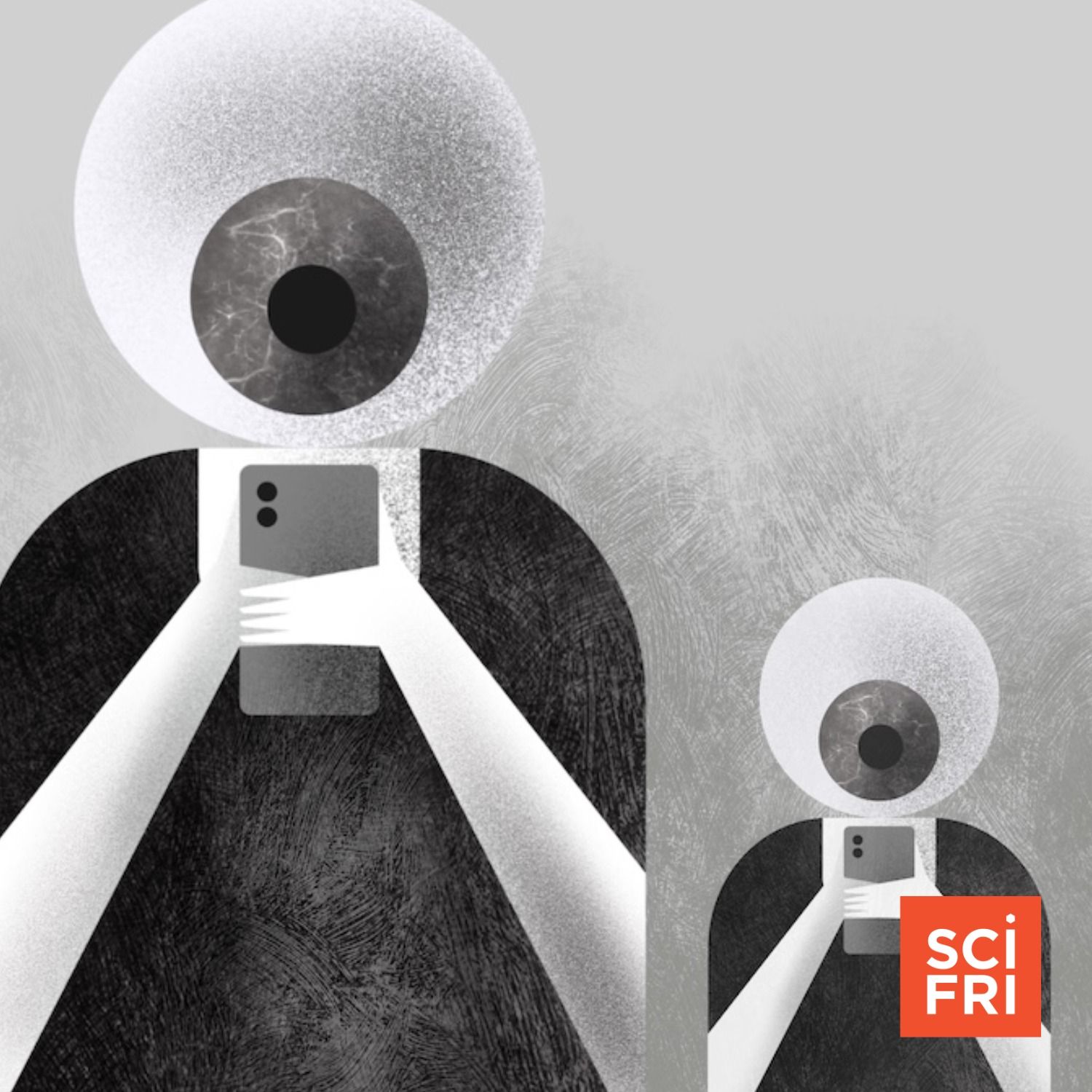
Overview of "Why Worry About My Data If I Have Nothing To Hide?"
This Science Friday episode (host Flora Lichtman) features Laura Moy, Associate Professor of Law at Georgetown, explaining how everyday devices and services generate data that can be collected, aggregated by data brokers, and sold to both companies and government agencies (notably ICE). The conversation breaks down how tracking works in practice, why “nothing to hide” is a weak response, and what limits exist on opting out — concluding that systemic legal reforms are needed in addition to individual precautions.
Who’s speaking
- Guest: Laura Moy, Associate Professor of Law, Georgetown Law — privacy expert, congressional witness, and policy advocate.
- Host: Flora Lichtman (Science Friday / WNYC Studios).
How our data is collected (what gets tracked)
- Smartphones: continuous powerful tracking (location, app use, browsing, communications metadata).
- Apps and services: share data with phone makers, carriers, app developers, and advertising networks.
- Advertising networks: receive and pass along info (including location) when ads are served — can happen even with location services “off.”
- Cars and license plates: cameras (red lights, tolls, parking garages) continuously record movement.
- Faces and images: facial recognition can identify people from photos or live camera feeds.
- Social media: private accounts are more protective but not airtight; platforms can still mine data.
Where the data goes and how it’s used
- Data brokers: companies that buy, aggregate, repackage, and sell personal data from many sources.
- Buyers: primarily advertisers/marketers — but also government agencies (e.g., ICE) and law enforcement.
- Integration at scale: platforms like Palantir enable cross-referencing multiple sources (ad/location data, driver’s license photos, state records, family/associates) quickly and automatically.
- Use cases noted: tracking and locating people for deportation, arrests, or suppression of dissent; targeting vulnerable communities (immigrant, mixed-status, low-wage workers).
Key takeaways / main insights
- “Nothing to hide” is inadequate: automated data linking makes profiling and deep insight into individuals trivial at scale.
- Opting out is limited: turning off location services helps but does not stop location data from being inferred or shared via ad networks and other channels.
- Private = not absolute: private social media settings reduce but do not eliminate platform access or downstream resale.
- Plates and faces are unavoidable: cameras and facial features are inherently exposed; mobile apps allow agencies to identify people in the field (e.g., ICE’s Mobile Fortify, which has produced misidentifications).
- Legal gap: federal privacy law is weak/absent; state laws vary; industry lobbyists have fought comprehensive protections that would reduce valuable advertising data streams.
Legal and policy context
- Fourth Amendment: protections exist in theory, but legal interpretations and agency statements (e.g., ICE about warrants) complicate protections in practice.
- Legislative landscape: repeated attempts at comprehensive federal privacy laws have stalled; some state-level progress exists but may not be sufficient to prevent misuse by agencies.
- Industry resistance: companies that rely on targeted advertising oppose restrictions (location, retention/deletion limits, data minimization) because it undercuts valuable monetizable data.
Practical steps individuals can take
- Opt out where possible: choose app permission settings, limit ad tracking, and opt out of data-sharing programs when available.
- Use encryption: prefer end-to-end encrypted messaging (e.g., Signal) for sensitive communications.
- Minimize sharing: be cautious about posting location-tagged photos or check-ins, especially at protests or politically sensitive events.
- Vehicle caution: license plates and public cameras are difficult to avoid; be aware of where you park and travel.
- Advocacy: push for stronger privacy legislation focused on data minimization, deletion horizons, and protections for vulnerable communities.
Notable quotes
- “We all carry a very powerful tracking and computing device with us everywhere we go now. It’s our smartphone.”
- “That process can be done at scale in an automated way, really quickly.”
- “We need to solve this problem, not at an individual level, but at a societal level. The way to do that is through legislation and policy.”
Recommended actions (summary)
- Short-term: tighten app permissions, use encrypted communication, avoid posting real-time location at protests or sensitive sites.
- Long-term: support and lobby for comprehensive privacy laws (data minimization, deletion periods, limits on sale/use of location and sensitive data), and pay attention to state/federal policy developments.
Produced content: interview with Laura Moy on the real mechanics of data collection, aggregation, and misuse — emphasizing that (1) scale + automation makes deep surveillance feasible and (2) systemic legal reforms are necessary to protect vulnerable populations.