Overview of Science Friday — Who uses Farmers’ Almanacs? + Zebra finch home design
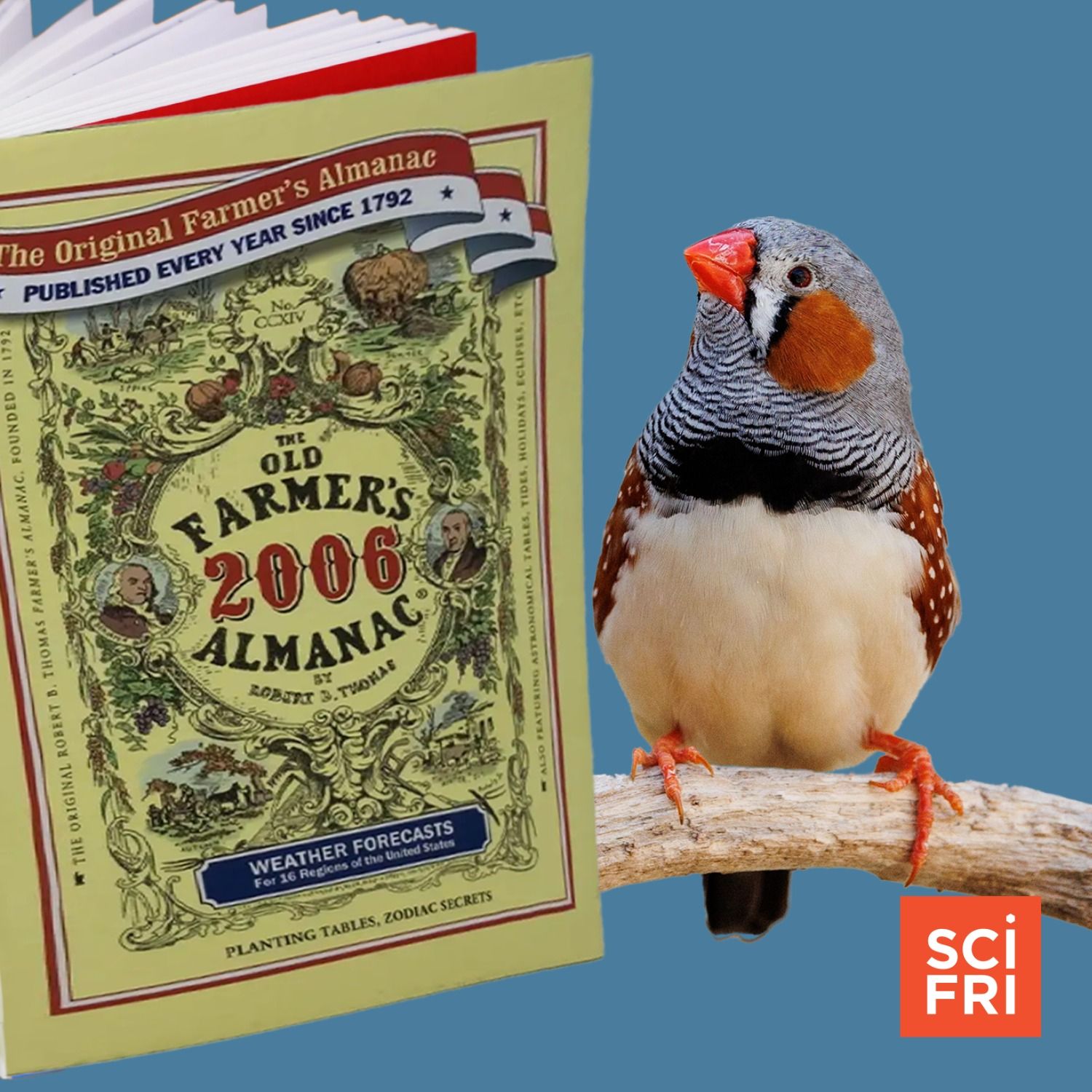
This episode of Science Friday explores two short segments: (1) the role and relevance of farmers’ almanacs in modern agriculture with astronomer/contributor Dean Regas and organic farmer Liz Grazek; and (2) new research on color preferences and social conformity in nest material choice by zebra finches, with ecologist Lauren Gillette (University of Alberta). The show contrasts nostalgia and print culture with practical, data-driven farming decisions, then pivots to animal cognition and how individual bias and social information shape behavior.
Farmers’ almanacs: background and current use
- Two long-running publications: the Farmer’s Almanac (founded 1818) and the Old Farmer’s Almanac (late 1700s). Both include weather, gardening tips, and a substantial astronomy section.
- The Farmer’s Almanac briefly announced a shutdown but was acquired and resumed publication.
- Dean Regas contributes astronomy content (eclipses, meteor showers, comet info) and notes the almanacs’ strong social-media reach (over a million followers).
- The almanacs are valued for nostalgia and as physical books; many readers enjoy them for entertainment and historical tidbits rather than strict guidance.
What farmers actually use (conversation with Liz Grazek)
- Liz Grazek, an organic farmer in Missouri, reads almanacs for entertainment and old-wives’-tale interest, but does not base operational decisions on them.
- Modern farmers rely on:
- Short-term weather forecasts (10–30 day)
- Official weather data (e.g., NOAA)
- Personal and regional farm records and local farmer experience
- Climate change has significantly affected planting/harvest timing and reliability. Grazek invests heavily in high tunnels and other protected production methods to control growing conditions and ensure crop reliability.
- Older farmers may still consult almanacs and follow traditional timing rules, and sometimes those heuristics still work regionally.
Zebra finch nest-color study — goals and methods
- Research question: Do individual preferences in zebra finches override social pressure from the group, or do birds conform to the majority?
- Species/context: Zebra finches — males collect and deposit nest material.
- Measuring preference:
- Initial preference test: male–female pairs given two colors of tied-down string (e.g., blue and yellow) for ~4 hours.
- Researchers recorded time spent interacting with each color to compute a “preference strength” (proportion of time with a given color).
- Social test:
- Focal pairs were placed into small colonies where existing nests were built with either the same or the opposite color as the focal male’s preference.
- After observing colony nests for a few days, the focal pair was allowed to build a nest with both colors available; researchers recorded which color they used.
Zebra finch results and interpretation
- Individual variation: birds have individual color preferences (not all birds prefer the same color).
- Conformity depends on preference strength:
- Birds with weak initial preferences (close to 50/50) tended to conform to the majority color used by the colony.
- Birds with strong initial preferences tended to ignore the majority and use their preferred color.
- Birds’ color vision: zebra finches are tetrachromats (see UV in addition to human-visible colors), so their color perception is richer than ours.
- Female role: although males collect material, females also show preferences and influence final nest composition. Preliminary data indicate females can bias nest outcome (possibly by discarding unwanted material or communicating preferences to males); more work is underway.
- Broader implication: Strong pre-existing biases affect how individuals filter social information; this parallels human social dynamics and cultural transmission.
Main takeaways
- Farmers’ almanacs remain culturally significant and entertaining; they also provide useful astronomy outreach, but modern farming decisions are generally driven by up-to-date weather data, records, and climate adaptation strategies.
- Climate change is shifting planting/harvest timing and increasing reliance on controlled-environment approaches (e.g., high tunnels).
- In zebra finches, both individual preference strength and social context shape behavior: weakly biased individuals conform, strongly biased individuals resist conformity. Females influence nest composition despite males doing the building.
- The study highlights that opinion strength and social learning dynamics are not uniquely human — they exist across species and influence cultural transmission.
Notable quotes and insights
- On almanacs: “It’s for entertainment… I read old wives’ tales, which I think are super fun and interesting.” — Liz Grazek
- On persistence of the almanac: “Any publication that has lasted hundreds of years… it’s a really kind of quaint, interesting form of entertainment.” — Dean Regas
- On zebra finch culture: “Strong opinion matters, even in birds.” — Lauren Gillette
Practical suggestions / further reading
- Farmers: continue to monitor short-term forecasts and local records; consider protective infrastructure (high tunnels) to mitigate climate variability.
- Curious listeners: check the astronomy sections of the Farmer’s Almanac/Old Farmer’s Almanac for sky-event info; look up NOAA for operational weather forecasts.
- Researchers/readers interested in the zebra finch work: look for publications by Lauren Gillette and colleagues on nest-material color preference, social conformity, and female influence in zebra finches for experimental details and data.
Produced by Science Friday; episode hosts and guests include Flora Lichtman, Dean Regas, Liz Grazek, and Lauren Gillette.