Overview of Should Pluto be a planet again?
This Science Friday episode (WNYC Studios) — hosted by Ira Flatow — revisits the 2006 controversy over Pluto’s planetary status after a public nudge (reported in the transcript) to “make Pluto a planet again.” Guests Dr. Amanda Bosch (Executive Director, Lowell Observatory) and Dr. Alan Stern (Principal Investigator, New Horizons mission) explain the background, scientific arguments, how Pluto compares to other Kuiper Belt objects, why the IAU vote was controversial, and what the debate reveals about how science is done.
Main takeaways
- The International Astronomical Union (IAU) reclassified Pluto in 2006 as a “dwarf planet” because it does not “clear its orbit.” That criterion remains the key reason Pluto is excluded under the IAU definition.
- Many planetary scientists (including the guests) reject the IAU’s voting process and definition; they prefer a simpler, physically based definition: a planet is a body large enough to be rounded by its own gravity (but not massive enough to ignite fusion).
- Scientific consensus is normally built by evidence and peer work, not by ballot-style votes — and the IAU vote (made by a small, present subset of members) is criticized for appearing arbitrary and for confusing the public about how science works.
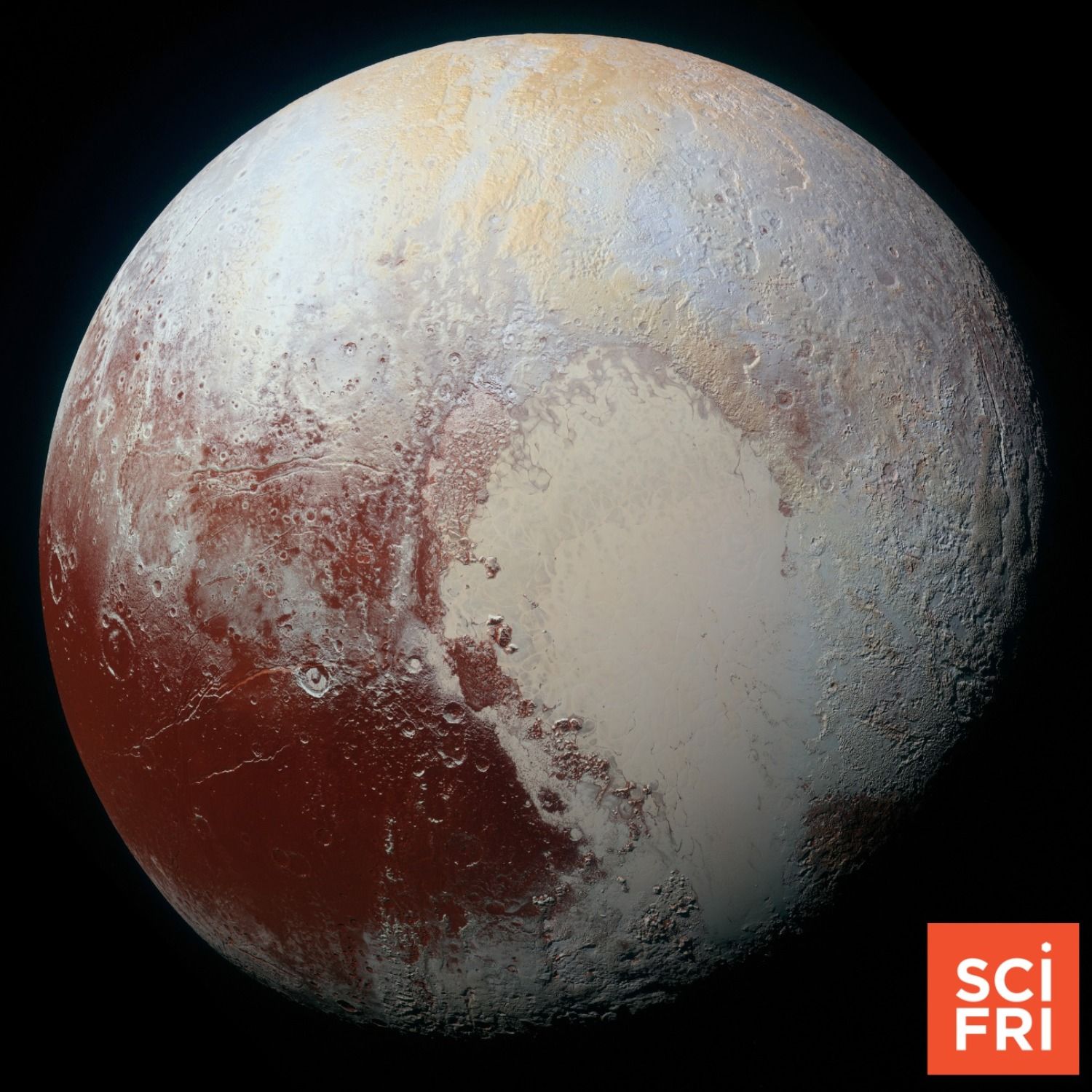
- New Horizons (2015) revealed Pluto as an active, complex world (mountains, glaciers, atmosphere, moons), strengthening the argument among many scientists and the public that Pluto “looks and behaves” like a planet.
- Official naming/definition authority rests with bodies like the IAU; political or executive proclamations (e.g., a president’s decree) would be symbolic and would not change the IAU’s classification or how the scientific community proceeds.
Why Pluto was reclassified in 2006
The IAU definition
- The IAU adopted a three-part definition: 1) orbits the Sun, 2) massive enough to be rounded by self-gravity, 3) has cleared its orbital neighborhood.
- Pluto meets 1 and 2 but not 3 — it shares its region with other Kuiper Belt objects (and is in a resonance with Neptune) — so it was classed a “dwarf planet.”
Controversy around the vote
- The decision was reached at a general assembly where only a minority of IAU members were present (~5% of membership cited in the episode).
- Critics (including Stern and Bosch) argue that voting on taxonomy is unscientific and gave the public the impression that scientific truth is decided democratically rather than by evidence and consensus-building.
Scientists’ perspectives
Dr. Alan Stern
- Argues the IAU process was flawed; scientists reach consensus through evidence and debate, not ballots.
- Says the best scientific definition of “planet” is an object rounded by self-gravity and not a star (i.e., no fusion).
- Points out the term “dwarf planet” existed in literature before 2006 (he says he coined the scientific usage in 1991) as a size descriptor, analogous to “dwarf star.”
Dr. Amanda Bosch
- Welcomes the renewed public attention to Pluto and emphasizes its cultural and scientific importance (Lowell Observatory discovered Pluto in 1930).
- Supports treating dwarf planets as planets in a broader categorization and stresses the educational and outreach value of calling Pluto a planet.
- Notes that planetary science should focus on planetary diversity (size, atmosphere, satellites, composition) rather than a narrow gatekeeping definition.
New Horizons and Pluto’s planetary qualities
- New Horizons (2015) provided close-up data showing Pluto is geologically active, with varied terrains, a tenuous atmosphere that changes with distance from the Sun, moons, and striking surface features (e.g., the “heart” region).
- These discoveries reinforced public and scientific views of Pluto as a dynamic, planet-like world rather than a mundane small body.
The politics question: can a president or NASA administrator rename/reinstate Pluto?
- Naming and classification are governed by bodies like the IAU; a presidential executive order would be symbolic and would not alter the IAU’s official taxonomy or the consensus of planetary scientists.
- The episode clarifies that scientific classification is not determined by political decree — though public and political interest can rekindle debate.
Broader scientific implications
- The debate highlights how scientific classifications evolve as new data arrive (e.g., many Kuiper Belt objects discovered after Pluto).
- It underscores tensions between public sentiment, outreach, and the formal processes within scientific organizations.
- Scientists suggest focusing less on label disputes and more on studying planet types, their habitability, and comparative planetology (including exoplanet diversity).
Notable quotes / concise insights
- “Votes don’t work very well in science.” — critique of the IAU’s ballot-style decision.
- Suggested scientist-friendly planet definition: “An object large enough to be rounded by its own gravity, but not so large that it ignites fusion.”
- Pluto demonstrates that even small, distant worlds can have complex geology and atmospheres.
Fun Pluto facts from the guests
- Pluto has a tenuous atmosphere that changes with its distance from the Sun — and scientists are still studying how it evolves as Pluto moves in its orbit.
- New Horizons revealed mountains, glaciers, diverse surface compositions, and surprising geological activity, showing Pluto is more than a frozen, inert rock.
Bottom line
The IAU’s 2006 demotion of Pluto to “dwarf planet” remains officially in place, but many planetary scientists and members of the public view that label as overly narrow or misapplied. The episode argues for a science-first approach to classification (based on physical characteristics) and celebrates Pluto as an intriguing, planet-like world regardless of the label.