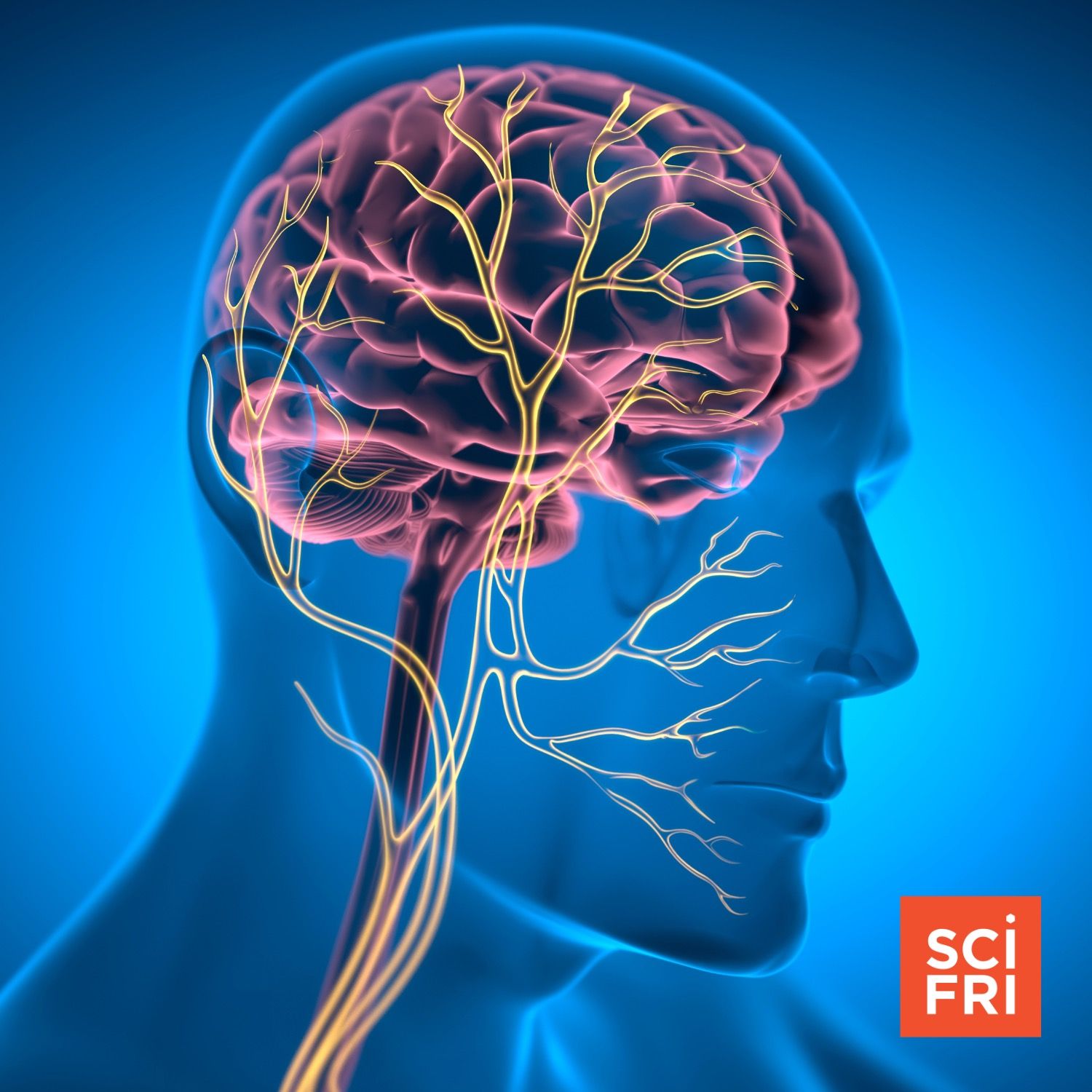
Overview of Is There Science Behind The ‘Nervous System Reset’? (Science Friday)
This Science Friday episode (host Flora Lichtman) features neurosurgeon and researcher Dr. Kevin Tracy (Feinstein Institutes for Medical Research) discussing the vagus nerve, its role in controlling inflammation, how that discovery led to clinical devices, and how to separate legitimate science from overhyped wellness claims on social media.
Key takeaways
- The vagus nerve is a major mixed nerve (two main trunks, each containing ~100,000 fibers) running from the brainstem through the neck to the chest and abdomen. It carries both sensory signals to the brain and motor signals to organs.
- In the late 1990s Dr. Tracy and colleagues discovered that stimulating certain vagus fibers can suppress inflammatory cytokines — essentially an “inflammatory reflex.” This led to the idea that the vagus nerve acts like the brakes on inflammation.
- The mechanism for vagus control of inflammation is well understood: brainstem neurons send electrical signals down the vagus; in the spleen these become chemical signals (e.g., norepinephrine, acetylcholine) that reduce cytokine production by immune cells.
- Vagus nerve stimulation (VNS) is an established therapy for epilepsy (approved in the 1990s). More recently, an implanted VNS device (SetPoint Medical) was FDA‑approved for rheumatoid arthritis; small implanted devices activated ~1 minute/day have shown substantial benefit in patients not responding to biologic drugs.
- Social media “hacks” (gargling, humming, particular breathing techniques, ear massages, consumer neck devices) may activate some vagal fibers and can be calming, but they are non‑specific and not equivalent to targeted implanted stimulation. Controlled clinical evidence is required to validate claims for disease treatment.
- VNS is being investigated for many inflammation-related conditions (IBD, MS, diabetes, obesity, heart disease, cancer-related inflammation, long COVID and autonomic dysfunction, etc.). Results vary and are still emerging.
- Semantic confusion (terms like “nervous system reset” or “overactive nervous system”) and oversimplified messaging fuel misinformation and unproven product marketing.
What the vagus nerve is and why it matters
- Anatomy & function
- Two main vagus nerves (left and right) originate near the ears and branch widely to heart, lungs, gut, spleen, pancreas, and more.
- Each trunk contains many distinct fibers with specific sensory or motor roles; effects can be organ‑specific.
- Role in inflammation
- Activation of certain vagal pathways sends signals that ultimately suppress pro‑inflammatory cytokine production.
- This pathway was discovered via experiments where tiny amounts of a brain molecule (named 1493) unexpectedly reduced systemic inflammation; follow‑up work traced the effect through vagal signaling to immune cells.
Clinical developments and evidence
- Epilepsy and depression
- VNS approved for epilepsy since the 1990s; some patients also report mood benefits, though mechanisms are not well understood.
- Rheumatoid arthritis (recent approval)
- A small implanted device (SetPoint Medical) placed on the left vagus in the neck and activated briefly each day was FDA‑approved for RA.
- Dr. Tracy reports ~80% of patients not responding to drug therapy had significant improvement after one year in trials — promising but still early days.
- Ongoing research areas
- VNS is under study for PTSD (paired with behavioral therapy to enhance neuroplasticity), multiple autoimmune and inflammatory diseases, metabolic disorders, cardiovascular disease, and long COVID/autonomic dysfunction.
- Mechanistic clarity
- The inflammation pathway is well mapped (electrical → chemical signaling → cytokine suppression). Many other indications remain mechanistically less clear.
Social media claims vs. scientific reality
- Common consumer claims: gargling, humming, singing, specific breathing, ear massages, wearable neck devices — all touted as “stimulating the vagus nerve.”
- What’s true:
- Those activities can activate vagal sensory fibers and may influence heart rate, respiration, and produce calming effects.
- They are generally safe and may help with relaxation or stress reduction.
- What’s misleading:
- These actions are non‑selective (they don’t target the specific fibers or spleen circuits shown to suppress systemic inflammation).
- They are not equivalent to precise, device‑mediated stimulation used in clinical trials.
- Small-scale vendor claims or anecdotes are not substitutes for randomized clinical evidence.
Risks, limitations, and open questions
- Not a panacea: VNS won’t work for everyone; effects differ by condition and individuals.
- Damage vs. overstimulation confusion: Some illnesses (e.g., severe COVID, long COVID) may involve vagal dysfunction or damage — not simply an “overactive nervous system.” Messaging often conflates distinct phenomena.
- Mechanisms unknown for many outcomes: Epilepsy and depression responses are incompletely understood.
- Consumer devices and unregulated treatments: Lack of large-scale randomized trials for many marketed products — buyer beware.
Practical recommendations and action items
- If you have an inflammatory or autoimmune condition, discuss VNS and clinical trials with your specialist; it’s a legitimate research and therapeutic pathway for some patients (e.g., RA).
- Be skeptical of devices or treatments marketed directly to consumers with broad claims; check for peer‑reviewed studies and FDA approvals.
- Low‑risk practices (deep breathing, humming, singing, gargling) can be used for stress relief and might modestly engage vagal pathways — but they are not replacements for clinically validated therapies.
- Consider enrolling in reputable clinical trials if interested in cutting‑edge VNS therapies.
Notable quotes from the episode
- “The vagus nerve was like the brakes on your car. When you turn on the vagus nerve, you can slow down inflammation.”
- “We understand the mechanism of the vagus nerve control of cytokines better than we understand how many drugs actually work.”
- “It’s not specific and it’s not selective and it’s not the same as putting an electrode on the vagus nerve.”
Who’s speaking / sources
- Guest: Dr. Kevin Tracy — neurosurgeon, researcher, president & CEO of the Feinstein Institutes; co‑founder of SetPoint Medical; author of The Great Nerve.
- Host: Flora Lichtman, Science Friday (WNYC Studios).
- Mentioned: SetPoint Medical device (FDA approval referenced in the episode).
If you want a one‑sentence summary: The vagus nerve is a key regulator of inflammation with well‑mapped mechanisms and emerging clinically approved therapies (notably for RA), but many social‑media “vagus hacks” are non‑specific and should not be conflated with targeted, evidence‑based vagus nerve stimulation.