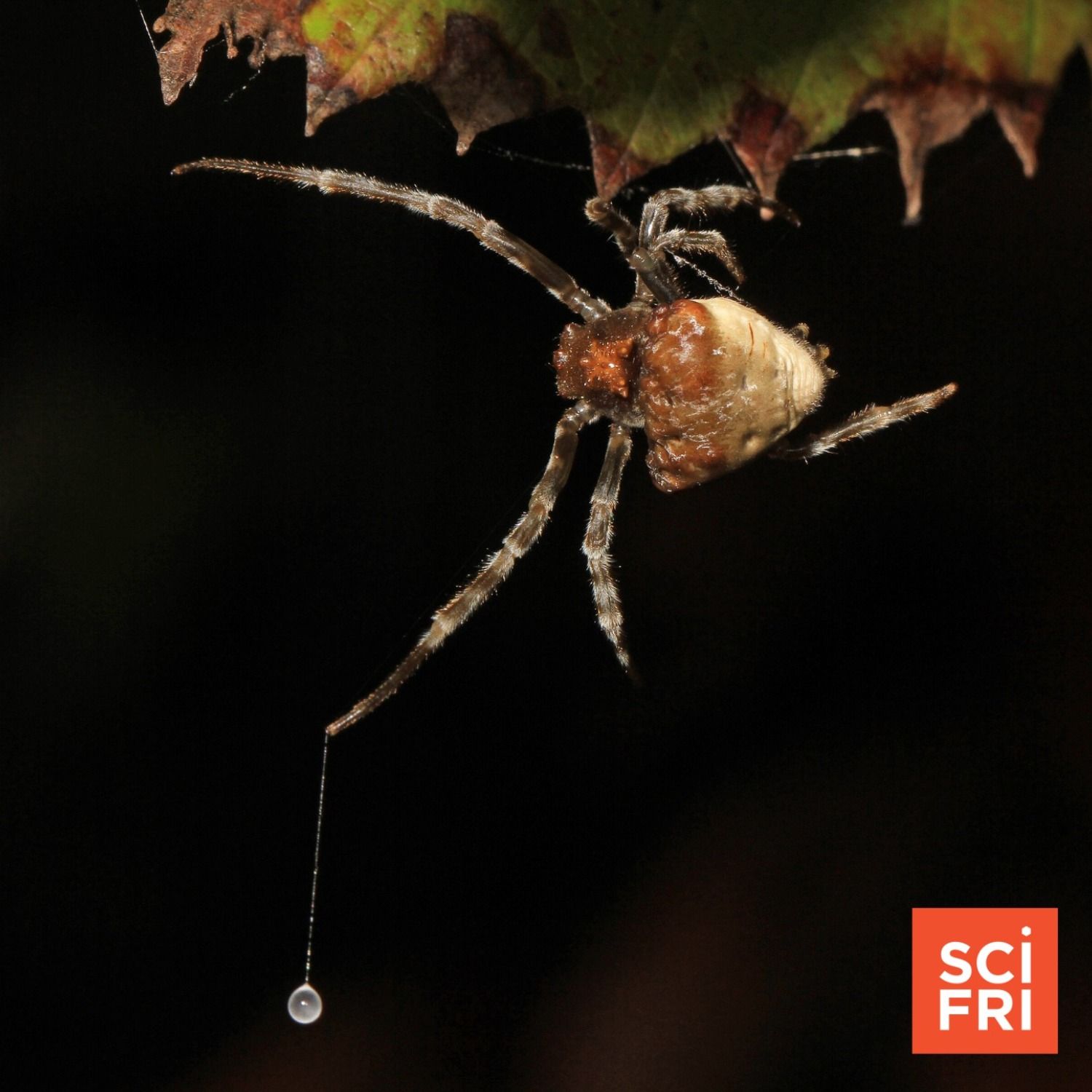
Overview of Harnessing the superpowers of silk
This Science Friday episode (host Flora Lichtman) explores the biology, material properties, and engineering applications of spider and silkworm silks. Two experts—spider-silk biologist Dr. Cheryl Hayashi (American Museum of Natural History) and biomedical engineer Dr. Fiorenzo Omenetto (Tufts University Silk Lab)—explain how spiders make multiple specialized silks, the remarkable mechanical and functional properties of these fibers, and how researchers are trying to harness silk (mostly from silkworms) for sensors, medical devices, preservation, and other novel technologies.
Key takeaways
- "Spider silk" is not a single material but many different silks: spiders produce multiple silk types (each with distinct protein recipes) for different web elements and functions.
- Some spider silks are stronger and tougher (on a per-weight basis) than steel or Kevlar; their thin fibers yield exceptional strength and toughness.
- Spiders use silk for diverse purposes beyond webs: aerial "ballooning," draglines for movement, waterproof burrow doors, and specialized hunting tools (e.g., the bolas spider’s sticky swinging lasso).
- Reproducing spider silk’s combination of protein sequence, microstructure, and spinning process is difficult; fabrication and scaling are major challenges.
- Much current applied work uses silkworm silk (abundant commodity material) reprocessed into liquid formats, then reformed into films, inks, scaffolds, and devices.
- Silk can stabilize and preserve biological molecules—enzymes, blood samples, vaccines—at room temperature, enabling biosensors, diagnostics, and other biomedical applications.
Guests and credibility
- Dr. Cheryl Hayashi — Senior Vice President and Provost for Science, American Museum of Natural History; spider silk biologist with expertise in silk diversity, synthesis, and spider behavior.
- Dr. Fiorenzo Omenetto — Biomedical engineer; director of the Silk Lab at Tufts University; develops silk-based materials and devices (sensors, preservation matrices, biomedical scaffolds).
Biology: how spiders make and use silk
- Silk production: spiders synthesize silk proteins in glands in the abdomen and extrude fibers through spinnerets. The spinnerets plus leg choreography let spiders form complex webs.
- Multiple silk types: different glands produce silks with distinct protein compositions and mechanical properties (strong frame silks, stretchy capture spirals, sticky glues).
- Uses beyond webs:
- Draglines for movement and descent (spiders may attach a line and drop).
- Ballooning: tiny spiders release silk to be carried by wind, enabling long-distance dispersion—even at high altitude.
- Bolas spider: uses a single swinging sticky ball to catch prey (a literal lasso).
- Aquatic or shoreline spiders: build silk-based air chambers or waterproof doors—silk functions like a scuba tank or waterproof seal.
Material properties and "superpowers"
- Strength and toughness: on a per-weight basis, some spider silks outperform steel and synthetic fibers like Kevlar.
- Versatility: silk fibers can be extremely fine, highly elastic, sticky, or combinations thereof depending on protein composition and microstructure.
- Biological compatibility: silk is biocompatible and benign, making it attractive for medical uses.
Human engineering and applications
- Why silkworm silk is used: abundant, commodity-scale source, easily deconstructed into a liquid state and reformed into films, fibers, inks, scaffolds, and implants.
- Stabilization/preservation: silk matrices can trap and preserve active biomolecules (e.g., enzymes, vaccine antigens, blood analytes) at room temperature for months, enabling off-grid diagnostics and transport.
- Example from the episode: dried silk films can preserve blood samples such that later analyses perform as well as fresh samples.
- Sensors and devices:
- Silk inks can embed enzymes or sensors that remain stable outside lab conditions, enabling printed biosensors (patches, textiles, tapestries).
- Silk can interface with electronics and be formed at nano- to macroscale for biomedical implants and scaffolds.
- Current commercial / scaled uses: vaccine stabilization, food preservation, and other industrial applications are being developed and scaled.
Challenges and limitations
- Fabrication complexity: reproducing spider silk’s mechanical performance requires not only the right proteins but also precise spinning/processing conditions—this is difficult to replicate artificially.
- Species difference: true spider silks (with certain top-performing properties) are difficult to harvest at scale—silkworm silk is more practical but compositionally different.
- Engineering trade-offs: tuning strength, elasticity, and adhesiveness requires careful control of protein composition and processing; not a one-size-fits-all material.
Notable quotes and insights
- “It’s not really spider silk — it’s spider silks.” — Dr. Cheryl Hayashi (emphasizes diversity of silk types)
- “Silk will stabilize chemistries that otherwise are confined to laboratories.” — Dr. Fiorenzo Omenetto (on silk as a preservation matrix)
- “You can hide superpowers in materials.” — Dr. Fiorenzo Omenetto (metaphor for silk’s enabling capabilities)
Practical suggestions / where to learn more
- Search terms to explore further: “spider silk properties,” “silk biomaterials,” “Fiorenzo Omenetto Silk Lab,” “Cheryl Hayashi spider silk,” “recombinant spider silk production.”
- Look for silk-based products/efforts in vaccine stabilization and room-temperature diagnostics, or academic work from Tufts’ Silk Lab and AMNH research groups.
- For curious listeners: Science Friday encourages sending questions to their listener line (they investigate curious, listener-submitted science questions).
Bottom line
Silk—especially spider-derived silks—combines remarkable mechanical diversity and biological compatibility. While direct “web-shooters” like Spider-Man remain fictional, silk’s real “superpowers” (strength, elasticity, adhesive variants, and exceptional ability to stabilize biomolecules) are being harnessed in sensors, preservation technologies, and biomedical devices. The main engineering hurdle is replicating the natural spinning process and scaling materials with spider-like performance; silkworm silk provides an accessible route to many practical applications today.