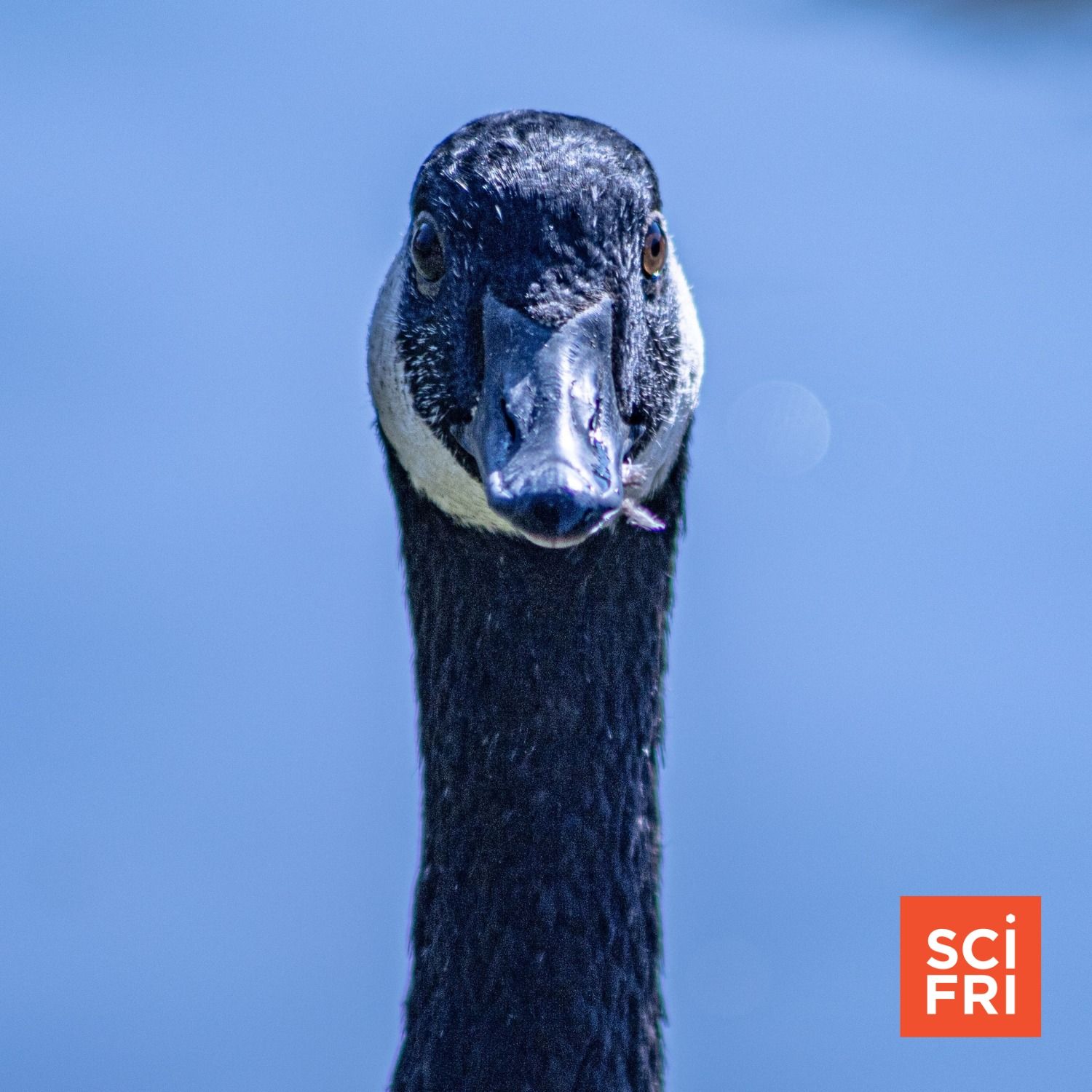
Overview of Could bird flu still spark a pandemic? (Science Friday / WNYC Studios)
This episode features host Flora Lichtman interviewing Dr. Seema Lakdawalla (co‑director, Center for Transmission of Airborne Pathogens, Emory University) about the current status and risks of H5N1 avian influenza in the U.S. The conversation summarizes where the virus is circulating, new findings from on‑farm sampling, gaps in surveillance and policy, and practical precautions for the public and people who work with animals. Dr. Lakdawalla characterizes her pandemic risk level as “moderate” and emphasizes that continued animal circulation gives the virus more chances to adapt to humans.
Key takeaways
- H5N1 (avian influenza) has not gone away. It remains prevalent in migratory birds, backyard flocks, and commercial poultry farms across multiple U.S. flyways.
- Human cases remain relatively few and generally mild (conjunctivitis, mild respiratory symptoms), but documented severe cases and deaths have occurred following close contact with infected birds.
- Surveillance has declined in some areas (fewer high‑profile cattle testing reports), making the true extent of spread—especially in wildlife and asymptomatic cattle—harder to know.
- New on‑farm research detected infectious H5N1 virus not only in milk and environmental samples but also in the air and in manure lagoons on dairy farms—suggesting airborne and waterborne exposure routes that can bridge to wild birds and other animals.
- Aquatic mammals (seals, sea lions) have experienced outbreaks, increasing interfaces where humans might encounter infected mammals.
- Vaccines for poultry exist; similar vaccines could be developed for cattle/swine, but rollout depends on regulatory, economic, and political will.
- Dr. Lakdawalla’s current assessment: moderate pandemic concern—because the virus is still circulating widely and getting many “shots on goal” to adapt, but there is not (yet) sustained efficient human-to-human spread.
Topics discussed
Current epidemiology and surveillance
- Continued detections in migratory birds and poultry; fewer reported symptomatic dairy cattle cases this year, but some farms still test positive via milk surveillance.
- Difficulty assessing true prevalence due to reduced/fragmented surveillance and variability in testing programs (e.g., milk testing frequency unclear).
On‑farm findings (preprint research)
- Collaboration with California Milk Producers Council and state agriculture department.
- Detected infectious H5N1 viral RNA and viable virus in air samples on dairy farms and in manure lagoons.
- Manure lagoons may preserve virus (milk fat) and act as watering/feeding sites for wild birds, enabling fecal‑oral transmission.
Animal hosts and cross‑species spread
- Extensive spread across multiple migratory flyways in recent years (unusual breadth compared with prior outbreaks).
- Spillovers into aquatic mammals (seals, sea lions) reported in South America and the U.S., likely from interactions with infected birds.
- No established outbreaks in pigs so far—a key concern if it changes.
Policy, implementation, and barriers
- U.S. federal agencies (USDA, CDC) have limited authority to mandate practices for private businesses; state departments of agriculture have more direct regulatory power.
- Gaps include fragmented governance, limited political appetite to implement large‑scale interventions (vaccination, enhanced biosecurity), and variable farmer willingness (though many farmers would support measures that prevent major losses).
Notable quotes / insights
- “We are letting this virus have a thousand shots on goal every day.” — summarizes the risk of continued widespread circulation.
- Detection of infectious virus in manure lagoons and air on dairy farms highlights nonobvious environmental reservoirs and exposure routes.
Practical recommendations & action items
For members of the public
- Do not touch dead birds; call animal control or wildlife authorities. If professional handling is required, trained personnel should use PPE including respiratory protection.
- Do not drink raw (unpasteurized) milk. Pasteurization prevents many milkborne infections; it remains recommended.
For backyard flock owners and farm workers
- Be vigilant about biosecurity, use appropriate PPE, avoid contact with sick birds, and report suspicious poultry deaths to state agriculture authorities.
- Employers should provide PPE and training for workers with close animal contact; encourage testing and care without immigration enforcement fears for vulnerable workers.
For policymakers and industry
- Maintain and expand surveillance (including milk testing and environmental sampling).
- Consider targeted vaccination strategies for poultry and vulnerable livestock sectors where scientifically appropriate and economically feasible.
- Improve coordination across federal and state agencies to enable proactive (not just reactive) interventions.
Bottom line
H5N1 remains an active and geographically widespread animal health problem in the U.S. New environmental evidence (air and manure lagoon detection) raises concerns about transmission interfaces between livestock, wildlife, and humans. While immediate human pandemic risk is assessed as moderate, persistent circulation plus gaps in surveillance, policy, and implementation increase the chances the virus could adapt for more efficient human transmission. Practical precautions (don’t touch dead birds, don’t drink raw milk, PPE for animal workers) and stronger, coordinated prevention measures would reduce that risk.