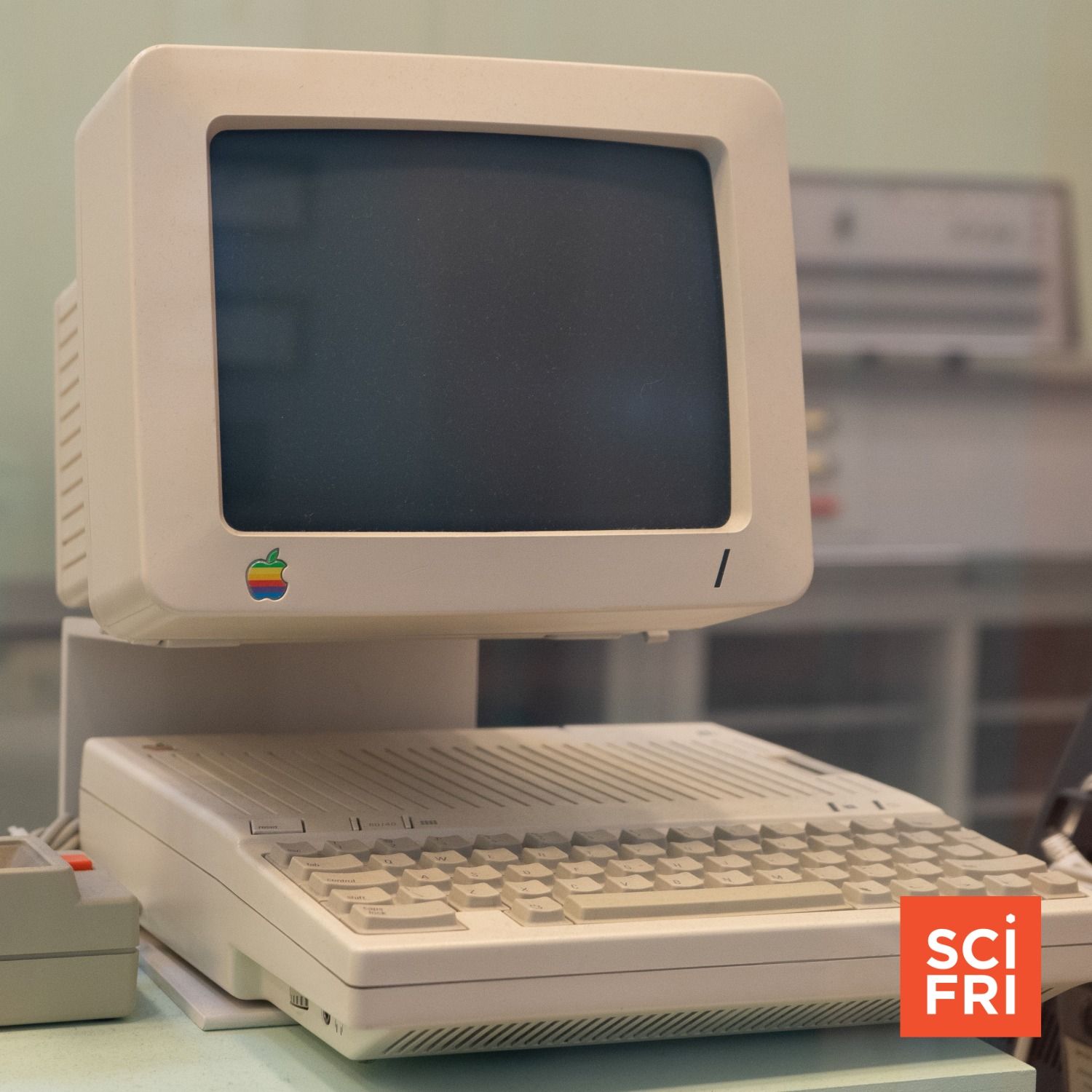
Overview of Apple: trying to think different for 50 years
This Science Friday episode (host Ira Flatow) is a 50-year retrospective on Apple with tech journalist and author David Pogue, whose new book is Apple, The First 50 Years. The conversation covers Apple’s origins, the personalities (especially Steve Wozniak and Steve Jobs), key product decisions and design philosophies, the company’s evolution under Tim Cook, failed projects and skunkworks, and hints about Apple’s next moves (e.g., smart glasses).
Key takeaways
-
Founding and myth-busting:
- Apple was registered April 1, 1976. The “garage founding” myth is overstated—its real origin centers on Wozniak’s engineering and Jobs’ marketing instincts.
- Ronald Wayne was a brief third co‑founder; he sold his 10% for about $800 after 12 days and does not express regret given his situation then.
-
The Wozniak–Jobs partnership:
- Wozniak: brilliant, shy engineer who designed efficient, low-chip-count hardware (early Apple I).
- Jobs: charismatic, obsessive product visionary and marketer who pushed for polish, secrecy, and focus.
-
Apple’s product strategy:
- Apple often didn’t invent core technologies but identified promising ideas, perfected user experience and industrial design, and marketed them aggressively.
- Design principles and culture from Jobs persist: secrecy, limited product focus, obsessive attention to detail (e.g., rounded corners).
- Examples: bringing the graphical user interface and mouse (inspired by Xerox PARC) to the mainstream via Lisa and then the affordable Macintosh.
-
Transformational product decisions:
- Jobs saw Xerox PARC’s GUI and mouse, simplified and refined them (one-button mouse, ball mechanism) and popularized the desktop metaphor.
- The iPhone resulted from an internal “bake-off” between an iPod-with-phone concept and an all-glass multi-touch phone; Jobs chose multi-touch.
- The iPad concept existed before the iPhone; the phone was prioritized because of business urgency.
-
Leadership shift and business model evolution:
- After Jobs’ death in 2011, Tim Cook shifted Apple toward services (Apple Music, Apple TV+, subscriptions), growing revenue and headcount substantially—often at the expense of the cadence of disruptive hardware platforms that marked Jobs’ era.
- Cook’s Apple is more focused on software/services and recurring revenue streams (e.g., embracing subscription models Jobs disliked).
-
Skunkworks, failures and cancellations:
- Apple constantly explores side projects; most don’t reach market.
- Project Titan (the car): roughly a decade, ~$10 billion, ~1,200 engineers—eventually scaled back/killed because self-driving wasn’t flawless and margins were unfavorable.
- Other experiments (e.g., an Apple fax product) never became mainstream.
-
Looking forward:
- Apple is reportedly working on smart glasses—two general approaches exist industrywide (no-screen audio/camera vs. single-eye display). Glasses are a plausible next platform.
Notable quotes & anecdotes
- On the Jobs–Wozniak dynamic: “Woz was the brains behind the hardware and Jobs was the marketing person.”
- Ronald Wayne: sold his stake for $800; “At the time with the information I had, it was a good move. And I’ve never starved.”
- Jobs to Tim Cook (reported): “Don’t ask what would Steve do, just do what’s right.”
- Jobs’ “reality distortion field” illustrated: Jobs called David Pogue to argue people wouldn’t edit movies themselves anymore—Jobs turned out to be right about the mainstream behavior shift.
Topics discussed (quick list)
- Apple origin story and founders
- Steve Jobs’ personality and leadership style
- Steve Wozniak’s engineering role
- Xerox PARC influence (GUI, mouse) and how Apple refined it
- Lisa vs. Macintosh product strategy
- iPod → iPhone → iPad development path and internal decisions
- Post‑Jobs era under Tim Cook: services, subscriptions, company growth
- Failed/abandoned projects (Project Titan car, Apple fax, many skunkworks)
- Future hardware: smart glasses
- Design and product philosophy (secrecy, focus, polish)
Timeline / Highlights
- April 1, 1976: Apple Computer founded.
- Early products: Apple I (Woz’s design), Apple II, Apple III, Lisa (GUI, expensive), Macintosh (mass-market GUI).
- 2000s: iPod → iPhone (multi-touch chosen over iPod-phone prototypes) → iPad concept existed prior to iPhone.
- 2011: Steve Jobs dies; Tim Cook becomes CEO and shifts strategy toward services.
- 2010s–2020s: Project Titan explored for ~10 years then curtailed.
- Present: Apple emphasizing services and researching AR/smart glasses.
Practical insights / implications
- Apple’s competitive edge is not just inventing tech but refining UX, hardware design, and mass-market readiness.
- Major product wins often come from internal tradeoffs and leadership decisions (e.g., choosing multi-touch for iPhone).
- Apple’s culture of secrecy and intense focus enables both blockbuster products and many quietly abandoned experiments.
- For followers of Apple, expect continued service monetization and potential movement into AR/smart glasses next.
About the guest & source
- Guest: David Pogue — longtime tech journalist, author, CBS Sunday Morning correspondent.
- Book referenced: Apple, The First 50 Years.
- Program: Science Friday (host Ira Flatow).