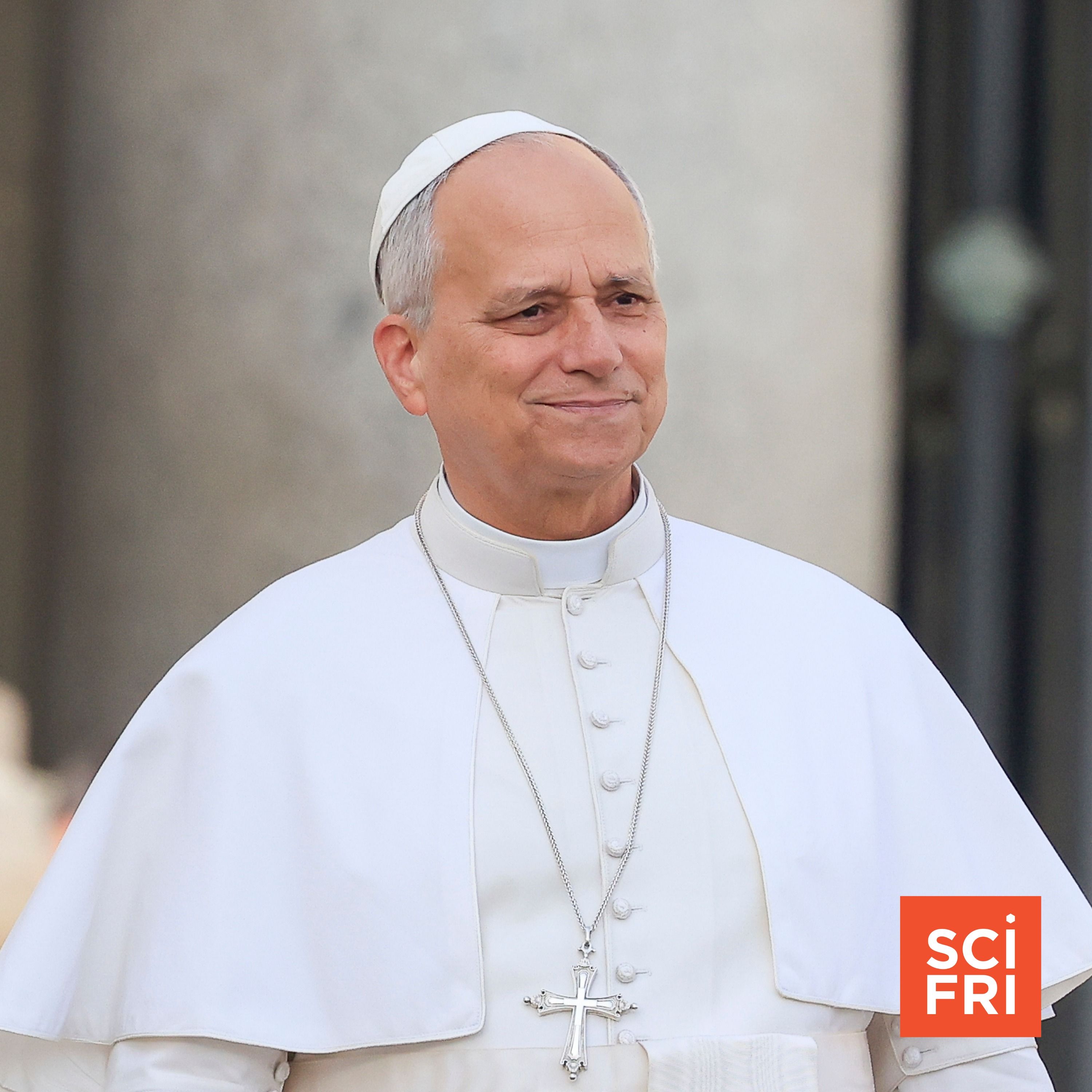
Overview of Pope Leo's encyclical on AI, and the Vatican science advisors
This Science Friday episode explores Pope Leo’s new encyclical on artificial intelligence, a wide-ranging church document focused on protecting human dignity in the age of AI. The conversation centers on how the Vatican is thinking about AI not just as a technical issue, but as a moral, social, and human one—and on the role of the Pontifical Academies, a long-standing group of scientists and scholars that advises the pope on emerging challenges.
Main themes of the encyclical
AI as a human dignity issue
The encyclical, titled Magnifica Humanitas (“safeguarding the human person in the time of artificial intelligence”), argues that AI should be “disarmed” in the sense that it must be guided and constrained by human values rather than allowed to dominate them.
Broad concerns beyond the technology itself
The document reportedly covers:
- screen time and human development
- resource extraction and environmental costs
- job displacement and labor dignity
- the risk of dehumanization when machines replace human judgment
A warning about human arrogance
Pope Leo frames AI in part as a modern “Tower of Babel” moment: a sign of human overreach and the danger of building powerful systems without sufficient ethical restraint.
Why the Vatican is weighing in
The church sees AI as a social, not just technical, problem
Anthropologist Marcelo Suarez-Orozco explains that the Vatican is responding to a world where private tech companies increasingly shape the future. Unlike earlier eras, when major social questions were mostly in the hands of states, AI is being driven by corporations with global influence.
The Vatican wants to keep the human in the driver’s seat
A central concern in the encyclical is that human judgment, emotion, and responsibility must remain primary. AI may be powerful, but it should not displace the human heart or moral agency.
The Pontifical Academies and their role
A long scientific tradition
Suarez-Orozco describes the Pontifical Academy of Sciences as a secular scholarly body with roots going back to Galileo. Its members come from many faiths, nations, and disciplines, and the academy includes more than 50 Nobel laureates.
How the academies inform the pope
These academies organize conferences and provide expertise on issues such as:
- immigration and refugee flows
- climate resilience
- AI and automation
- the future of education and governance
Why the church listens to scientists
The academies work within the church’s broader principle of “faith and reason.” Their role is not to replace science, but to bring scholarly insight into the church’s moral reasoning.
Key insights from Marcelo Suarez-Orozco
Three major AI debates
He says the most intense discussions tend to focus on:
- whether AI will augment humans or make them redundant
- how AI will be embedded in industry, education, and governance
- how to prevent a “techno-panic” response while still acknowledging real risks
Tech optimism vs. tech anxiety
He describes today’s moment as a clash between:
- “techno-effervescence” in places like Silicon Valley
- widespread public concern about AI’s consequences
AI’s promise and danger
He notes that AI is already helping science, including vaccine development and medical breakthroughs, but warns that it can also:
- dehumanize workers
- reduce people to components in a machine
- accelerate change faster than human systems can adapt
Notable moments and quotes
Pope Leo’s framing
- “Artificial intelligence needs to be disarmed.”
- “We bring a wisdom concerning the human that our present time desperately needs.”
Suarez-Orozco on the encyclical
- He calls it a “magnificent document” and says it is deeply rooted in Catholic social teaching, especially the tradition of protecting workers and human dignity.
A human anecdote
Suarez-Orozco shares a personal memory of Pope Francis encouraging him to keep moving forward: “Marcelo adelante, siempre adelante” (“forward, always forward”).
Bottom line
This episode presents Pope Leo’s AI encyclical as both a theological statement and a practical intervention in one of the most important debates of the era. The Vatican’s message is clear: AI may be transformative, but it must remain subordinate to human dignity, social responsibility, and the common good. The Pontifical Academies help supply the scientific and ethical grounding for that message.