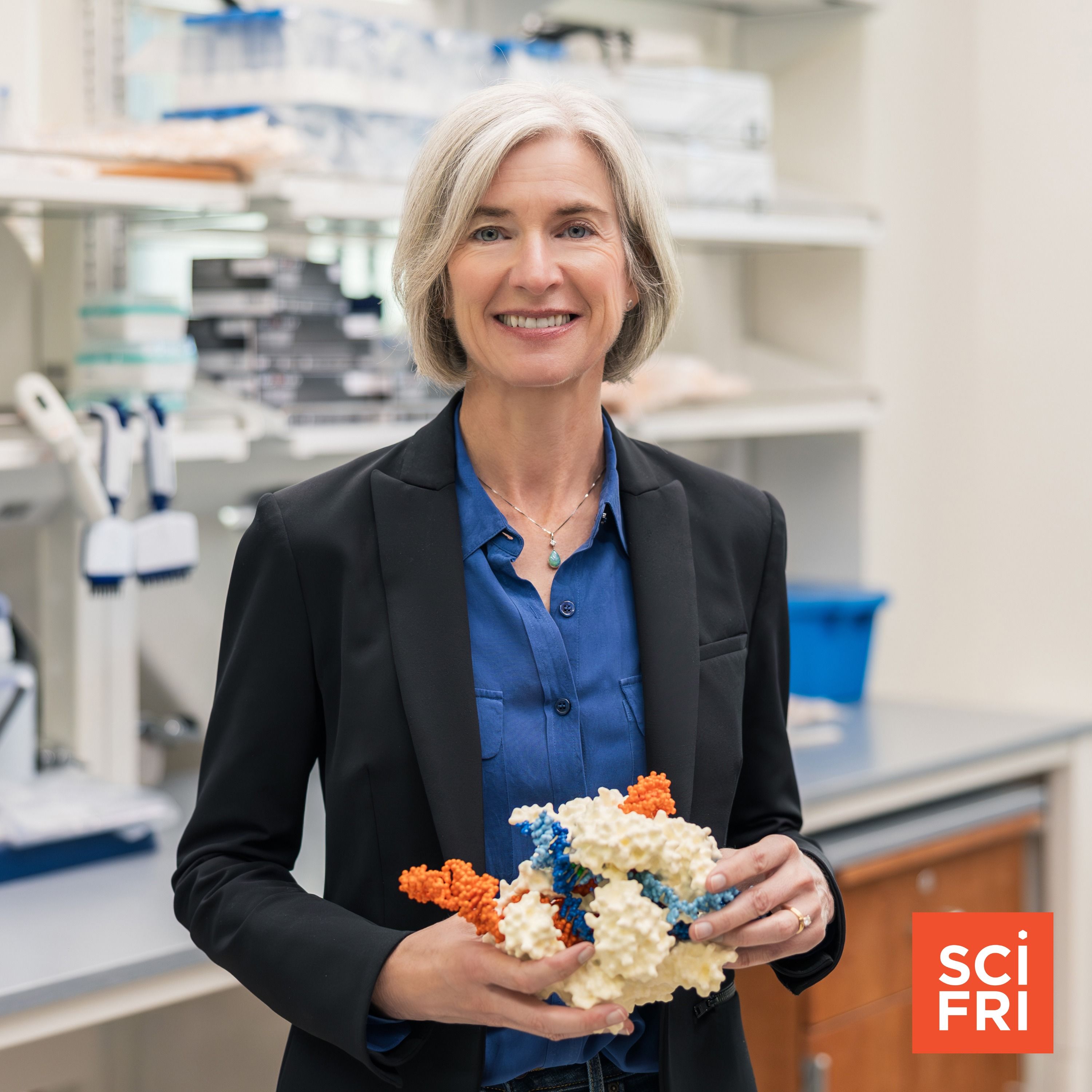
Overview of Jennifer Doudna on what it takes to be a good scientist
In this Science Friday conversation, Nobel Prize–winning biochemist Jennifer Doudna reflects on her path into science, the long and indirect road to CRISPR, and the traits she believes matter most in scientific work. Her answer to “what makes a good scientist?” is less about genius and more about curiosity, persistence, teamwork, openness to failure, and the willingness to take risks on ideas that may initially seem unusual.
How Doudna Became a Scientist
Doudna says her interest in science began in high school, when an aptitude test suggested she might be suited for civil engineering. That nudge pushed her to think more seriously about science as a career.
Early influences
- She did not grow up in a family of scientists.
- A family connection led her to early research exposure in a biology lab while still in high school.
- That experience showed her the difference between textbook lab exercises and real research, where the answer is unknown.
Academic path
- Graduate work on the origin of life sparked her long-term interest in RNA.
- Her postdoctoral and faculty work deepened that focus, eventually leading to CRISPR research.
- She emphasizes that her career was shaped by strong mentors and by watching how great scientists think and work.
What It Takes to Be a Good Scientist
Doudna’s view is that good science is a mix of personal drive and collaborative openness.
Core traits she highlights
- Curiosity: pursuing questions that feel genuinely exciting
- Persistence: sticking with hard problems through repeated failure
- Stubbornness, in moderation: knowing when to keep going and when to pivot
- Risk-taking: being willing to test ideas that others might dismiss
- Joy in the work: finding the process rewarding, not just the result
The role of failure
She says failure is not only common in science, but essential. Most meaningful projects involve many false starts, wrong turns, and experiments that do not work as expected. The challenge is deciding whether a problem is one experiment away from success or whether it’s time to change course.
The CRISPR Story: From Basic Research to a Game-Changing Tool
Doudna traces CRISPR to basic questions about RNA and the origins of life, not to a plan to create a gene-editing revolution.
How CRISPR emerged
- Her lab’s RNA research connected to discoveries about bacterial immune systems.
- Working with collaborators, including Emmanuelle Charpentier, her team studied how the Cas9 enzyme uses RNA to target and cut DNA.
- Early experiments failed because one key RNA component was missing.
- Once they identified that CRISPR RNA actually comes in two segments, the system began to work in the lab.
Why it mattered
A major insight was that the RNA guide could be engineered into a single synthetic molecule, making CRISPR much easier to use as a programmable genome-editing tool.
Teamwork, Mentorship, and Diverse Perspectives
Doudna stresses that science is not a solo endeavor.
What strong teams contribute
- Different points of view help determine whether to persist or pivot
- Younger or less experienced researchers often bring the most unexpected and valuable ideas
- Cross-disciplinary thinking can unlock breakthroughs
She says she enjoys running an academic lab partly because the next great idea may come from someone new to the field or from an unexpected connection between disciplines.
Serendipity, Timing, and “Prepared Mind” Luck
Doudna believes luck plays a real role in discovery, but only when paired with preparation.
- She notes that CRISPR emerged at a moment when genome sequencing was accelerating and the world needed tools to edit DNA.
- She cites Louis Pasteur’s idea that “luck favors the prepared mind.”
- In her view, scientific success often depends on being ready to recognize opportunity when it appears.
CRISPR’s Impact and Ethical Limits
Doudna says CRISPR has exceeded what she could have predicted, including its use in FDA-approved therapies for sickle cell disease.
Big concerns she raises
- Germline editing: heritable changes in humans
- Environmental use: deploying gene editing to alter populations such as mosquitoes
She argues that powerful technologies must be managed carefully because society’s current ethical and regulatory infrastructure may not be ready for all possible applications.
Beyond Medicine: The Innovative Genomics Institute
Doudna helped create the Innovative Genomics Institute to expand CRISPR’s potential beyond human health.
Broader goals
- Agricultural improvement
- Microbial and ecosystem engineering
- Climate-related applications
She points to work on:
- reducing methane emissions from cattle
- carbon sequestration
- planetary health challenges tied to climate change and population growth
AI, New Tools, and the Future of Biology
Doudna is optimistic about AI as a scientific tool, but skeptical that it will replace human creativity in hypothesis generation.
What AI can do well
- Predict protein structures
- Help identify new proteins with useful functions
- Assist in modeling molecular interactions
What it cannot yet do
- Generate truly novel scientific ideas
- Fully account for the complexity of biological systems
- Replace the intuition and imagination of scientists
Her view is that AI is valuable for analysis, but not yet a substitute for the creative leaps that drive major breakthroughs.
Funding, Communication, and the Public Role of Scientists
Doudna expresses concern about declining support for basic science, especially at a time when technology is making research more powerful and productive.
Her main points
- Much of U.S. scientific progress has been funded by taxpayers
- Weakening that support could slow discovery
- Scientists need better science communication
- Public understanding of science matters for maintaining support and trust
She says scientists are often better in the lab than in public advocacy, so organizations like Science Friday play an important role in translating science for broader audiences.
Advice for Young Scientists
Doudna encourages students to see science as a deeply rewarding career.
Her guidance
- Follow your interests and passions
- Be willing to take intellectual risks
- Expect setbacks and learn from them
- Value the process, not just major breakthroughs
- Enjoy the collaboration and shared curiosity that science fosters
Her overall message is that science is both practical and inspiring: it advances knowledge, can change lives, and offers the joy of working with others to solve meaningful problems.