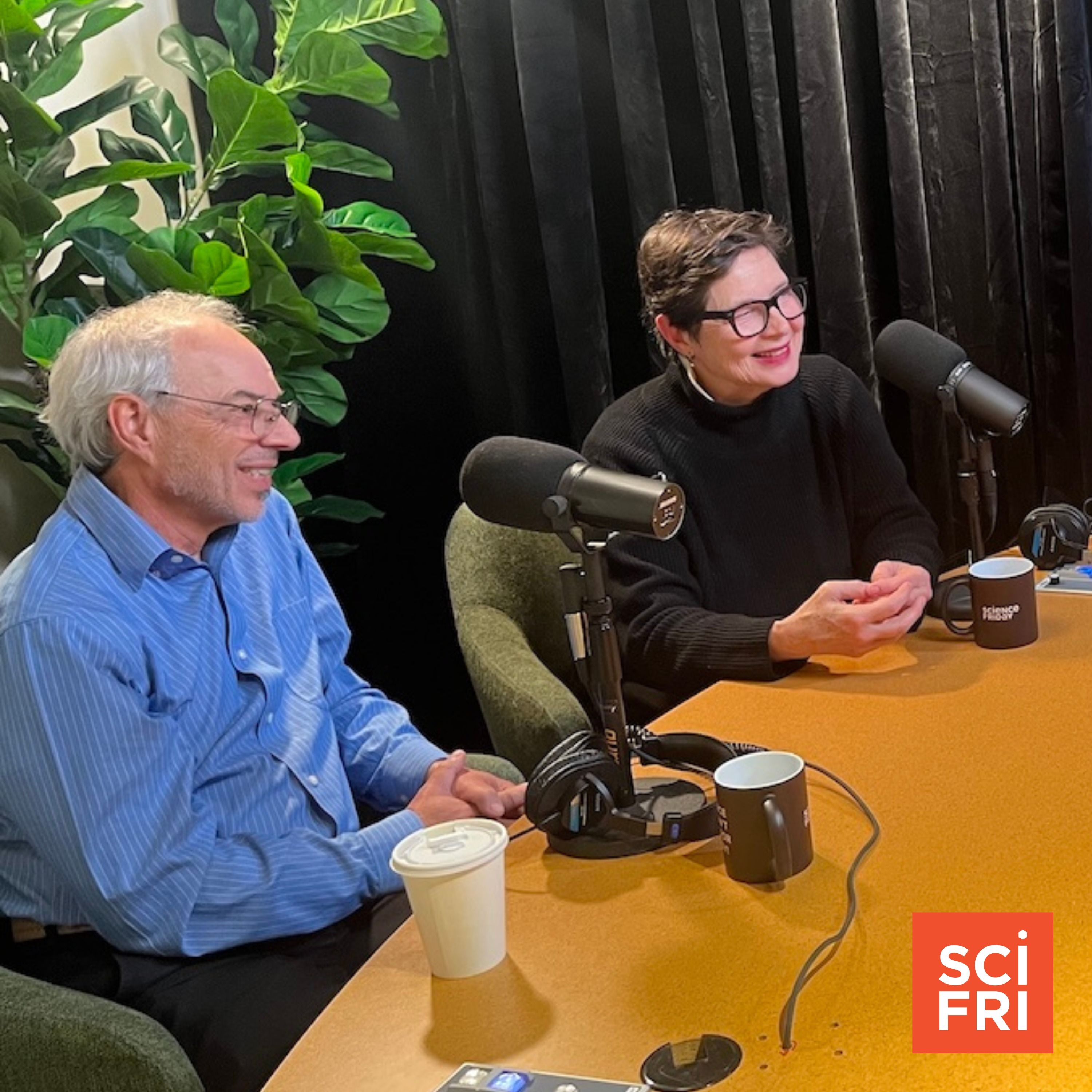
Overview of Science Friday with Isabella Rossellini and Carl Safina
This episode brings together Isabella Rossellini and ecologist Carl Safina for a wide-ranging conversation about animal cognition, empathy, and why both science and acting rely on close observation. Rossellini explains how her lifelong fascination with animals led her back to school for a master’s in animal behavior, while Safina argues that modern science has largely overturned the old idea that animals are “just machines.” Together, they explore how body language, intuition, and creativity help humans better understand animal minds and emotions.
Key Topics Discussed
Why Isabella Rossellini Studied Animal Behavior
- Rossellini says her interest began as a teenager after reading King Solomon’s Ring by Konrad Lorenz.
- She pursued the degree later in life, in her 50s, partly because she no longer felt as intimidated by science.
- She emphasizes that she was studying for her own curiosity, not for a career change.
How Science Has Changed on Animal Cognition
- Safina notes that the field has shifted dramatically from the belief that only humans think or feel.
- New tools like neurobiology and brain imaging now show striking similarities between human and animal brains.
- Examples mentioned:
- Rat brains lighting up during dreaming in ways similar to humans.
- Dogs’ brains responding differently to familiar people versus strangers.
Anthropomorphism: Caution vs. Insight
- The conversation tackles the debate over anthropomorphism—projecting human feelings onto animals.
- Safina argues that observing emotion-like behavior in animals is not “projection” if it is grounded in biology and context.
- He says all vertebrates share similar nervous systems and chemical systems tied to mood and motivation.
- Their shared view: calling an animal’s fear, attachment, or joy “real” is often an informed observation, not wishful thinking.
Acting, Empathy, and Animal Behavior
- Rossellini draws a direct connection between acting and understanding animals.
- She explains that good acting comes from the inside out—drawing on real emotion rather than merely performing facial expressions.
- She sees a parallel with animals: reading them requires listening, reacting, and sensing what they are communicating through behavior.
- Safina agrees that empathy is essential to good science.
Personal Examples and Stories
Georgia O’Keeffe the Sheep
- Rossellini introduces one of her sheep, Georgia O’Keeffe, a Lincoln Longwool and a threatened breed.
- She describes how domestication has shaped sheep toward docility and tameness.
- She notes that individual animals still have distinct personalities; some are affectionate, others shy.
Alfie the Screech Owl
- Safina shares the story of Alfie, a rescued screech owl who survived as a chick and later stayed with his family.
- Alfie has lived with them for years, raised wild babies, and displayed a strong, recognizable personality.
- Safina says their close contact with Alfie and other rescued animals has shown him that wild animals are far more individual than old scientific stereotypes allowed.
Main Takeaways
- Animals likely experience emotions and social bonds in ways that are more similar to humans than traditional science once admitted.
- Watching animals carefully in context can reveal meaningful behavior without needing to “project” onto them.
- Acting and science overlap more than people might expect: both depend on observation, intuition, and responsiveness.
- Safina and Rossellini both argue that science needs imagination as much as calculation.
- A major theme of the episode is “permission”:
- permission to observe,
- permission to ask questions,
- permission to say, “this animal seems joyful, fearful, or attached.”
Notable Insight
- Safina’s central idea is that science is valuable not because it has all the answers, but because it gives us better questions.
- Rossellini and Safina both suggest that being open to what animals are actually communicating is a more scientific posture than rigidly refusing to see emotion in them.
Bottom Line
This conversation blends science, memoir, and philosophy to make a case for seeing animals as sentient individuals rather than instinct-driven automatons. Through stories about dogs, sheep, and owls, Rossellini and Safina argue that empathy, creativity, and close attention are essential tools for understanding the natural world.