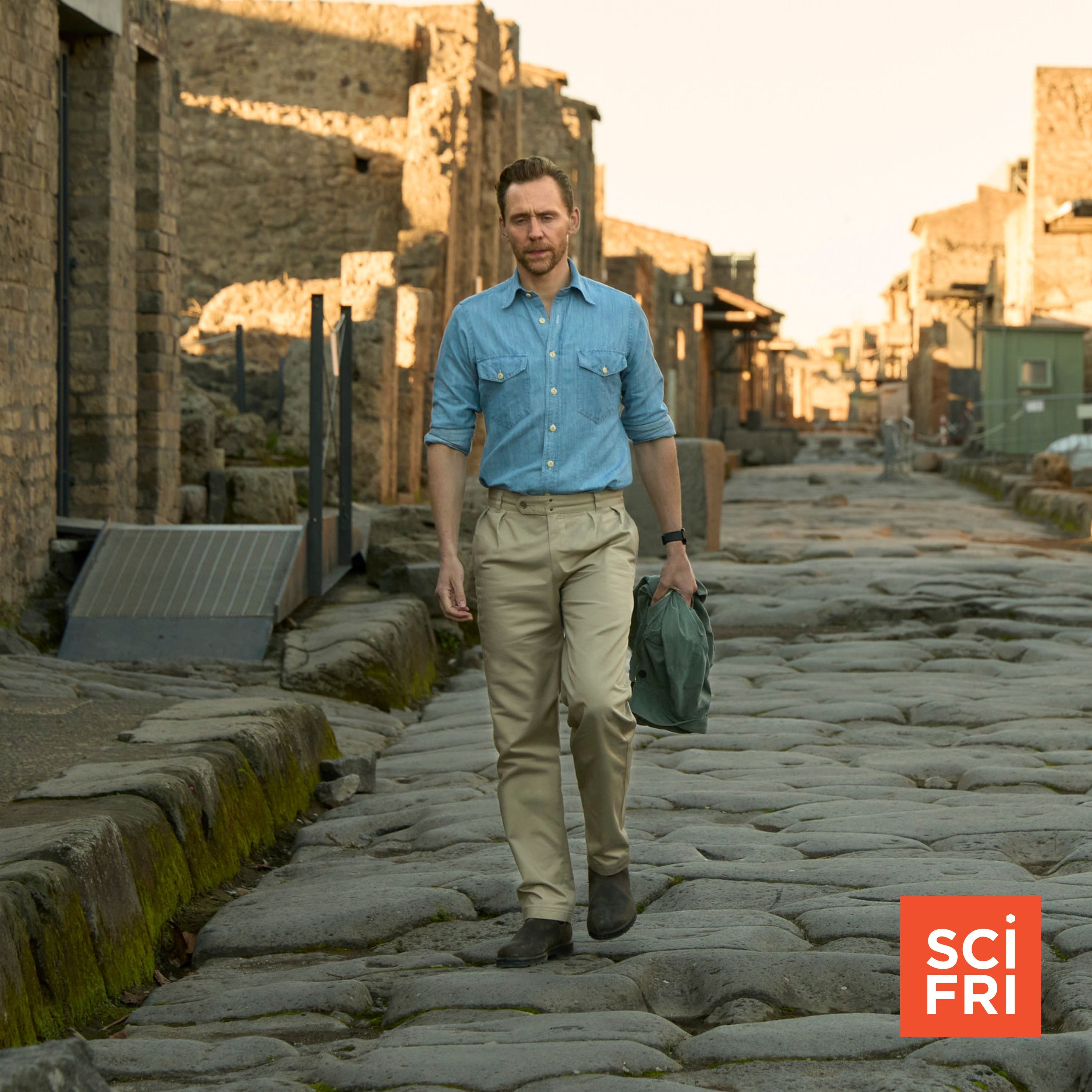
Overview of How do you piece together what life was like in Pompeii?
This Science Friday episode explores how archaeologists reconstruct everyday life in Pompeii, the Roman city preserved by the eruption of Mount Vesuvius in 79 AD. Host Flora Lichtman speaks with archaeobotanist Dr. Jess Venner, author of The Lost Voices of Pompeii, about how artifacts, plant remains, buildings, and archives reveal the lives of ordinary residents. The conversation later expands with actor and Pompeii enthusiast Tom Hiddleston, who discusses why the ancient world continues to fascinate him and how storytelling helps bring history to life.
Key Takeaways
-
Pompeii’s appeal is its ordinary humanity
- Unlike many ancient sites, Pompeii offers a vivid snapshot of daily life: homes, shops, baths, bakeries, streets, and personal objects.
- The city feels relatable because individual people can be identified by name, occupation, family ties, and social status.
-
Archaeology reconstructs lives from small clues
- Venner explains that archaeologists piece together the past using:
- plant and seed remains
- fish scales and food residue
- architecture and room layouts
- pottery, perfume bottles, and household objects
- archives of excavation records
- These details allow scholars to infer how spaces were used and how people moved through the city.
- Venner explains that archaeologists piece together the past using:
-
Pompeii also reveals overlooked social roles
- The episode highlights businesswomen and freedwomen, showing that women’s economic roles in Roman society may have been more significant than traditionally assumed.
- Pompeii preserves evidence of independent female entrepreneurship, property management, and trade.
Notable People and Stories Discussed
Aulus Umbricius Scaurus
- A major producer of garum, the fermented fish sauce that was a Roman staple.
- His product was exported widely, even reaching Britain.
- The episode uses him to show how elite and ordinary commerce shaped Pompeii’s economy.
Umbricia Fortunata
- A freedwoman connected to Scaurus’s business.
- She is noted for selling a specialized version of garum, including a kosher garum niche.
Julia Felix
- A prominent female business owner whose large estate near the amphitheater advertised rentals, baths, shops, and apartments.
- She is presented as a self-made, independent figure who rebuilt business opportunities after the earthquake of AD 62.
The Eruption Date Debate
- A major scholarly dispute centers on whether Vesuvius erupted on August 24, October 24, or even later in the year.
- The traditional date comes from Pliny the Younger’s letters, but Venner argues the evidence points more strongly toward an autumn eruption.
- Clues supporting a later date include:
- completed wine harvests
- pomegranates that would not have been in season in August
- circulation of coins and other contextual evidence
- The debate remains active and, as Venner jokes, can get surprisingly heated among Pompeii scholars.
What’s Still Unknown
- Roughly one-third of Pompeii remains unexcavated.
- Scholars are still discovering new evidence about:
- urban agriculture
- rebuilding after the earthquake of AD 62
- how property owners repurposed land for gardens, vineyards, orchards, and vegetable plots
- Venner describes archaeology as ongoing detective work: each new find can change the story.
Tom Hiddleston’s Perspective
- Hiddleston shares that he has loved the ancient world since childhood and began learning Latin at age 10.
- He sees history as fundamentally a storytelling exercise:
- historians and actors alike must infer emotion, motivation, and lived experience from incomplete evidence.
- He describes Pompeii as a place where the past feels almost physically present, especially through haunting images like:
- the plaster cast of an adult and child
- the chained dog cast
- For him, Pompeii is powerful because it compresses 2,000 years into something emotionally immediate.
Main Themes
- Historical empathy: Pompeii helps modern audiences feel connected to ancient people.
- Evidence-based imagination: Scholars must combine hard data with careful inference to rebuild lost lives.
- Everyday life matters: The most compelling insights often come from mundane objects, food, homes, and workplaces.
- Pompeii as a time capsule: The city’s preservation makes it one of the best places in the world to study Roman domestic life.
Recommended Follow-Up
- Read: The Lost Voices of Pompeii by Jess Venner
- Watch: Pompeii: The New Dig / Pompeii: Out of Time with Tom Hiddleston for a visual companion to the archaeology discussed