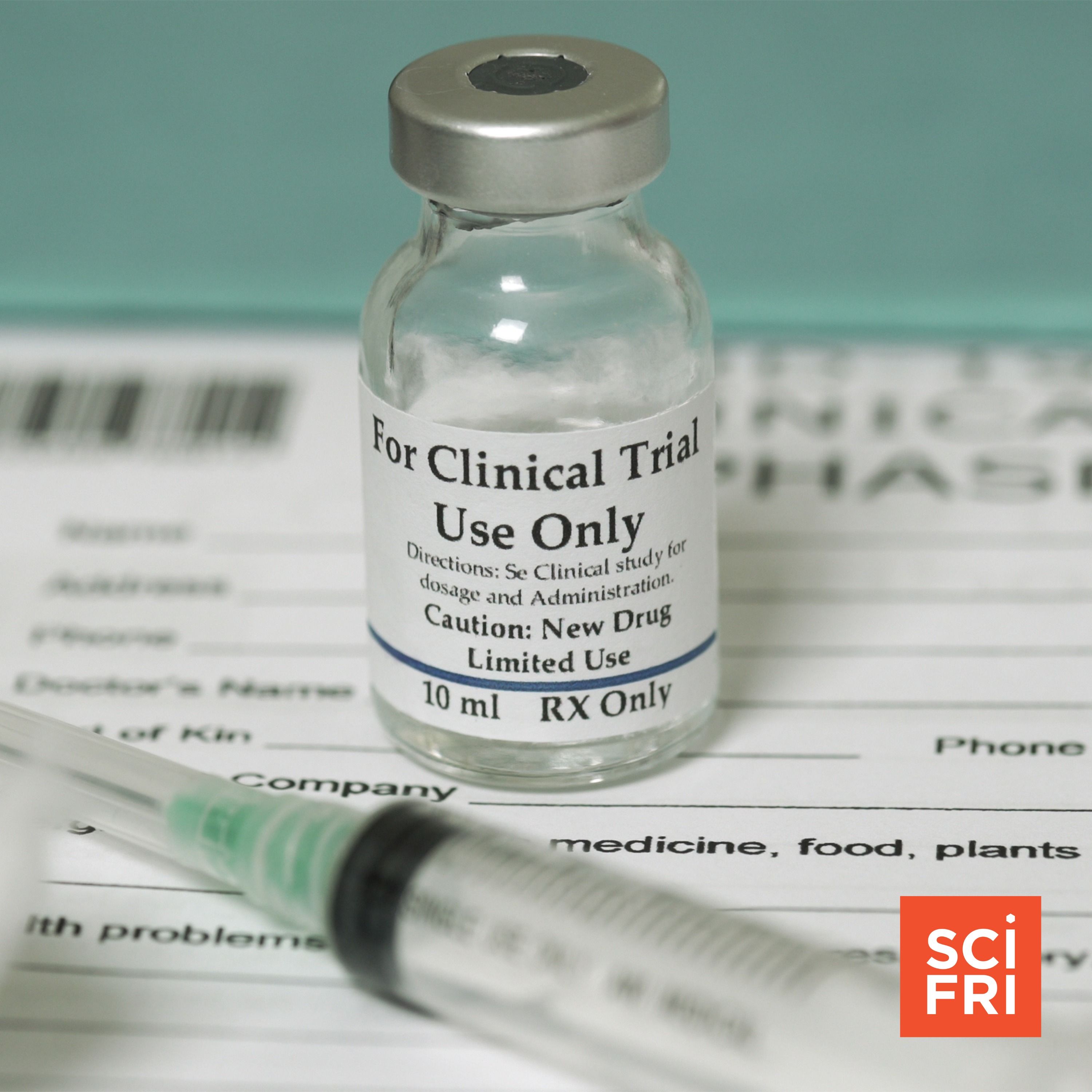
Overview of How do clinical trials work, and who can participate?
This Science Friday segment explains why clinical trials often exclude people who might seem like the best candidates for a new treatment, using a listener’s experience with autoimmune arthritis as the starting point. Bioethicist Dr. Holly Fernandez-Lynch breaks down how trials are designed, who decides who can join, how the FDA evaluates drugs, and why some approvals become controversial when evidence is based on indirect measures rather than clear patient benefit.
Why some patients are excluded from clinical trials
Clinical trials use inclusion and exclusion criteria to keep the study scientifically clean.
- Inclusion criteria define who should be in the study, such as people who have the disease being treated.
- Exclusion criteria remove factors that could distort results, such as:
- age
- BMI
- language/consent limitations
- other diseases or medications
- prior treatment history
In the example discussed, the listener was rejected because he had already tried many drugs. That can make sense scientifically, since prior treatments may change how a disease behaves and make it harder to tell whether the new drug is working.
Main takeaway
A person can be excluded not because they don’t need help, but because researchers are trying to isolate the effect of the drug as cleanly as possible.
What clinical trials are trying to prove
The episode emphasizes that the right trial design depends on the scientific question.
- If the question is “Does this drug work?”, researchers may study it against placebo or standard care.
- If the question is “Does this drug help after other treatments fail?”, then the trial may focus on later-line patients, such as in oncology.
This means trials are not always meant to test the “best” patient use case first. They often start by asking the most basic approval question.
How the FDA approves drugs
For a new drug to be approved in the U.S., the FDA generally requires evidence that it is:
- safe
- effective for its intended use
- manufactured consistently
Importantly, a drug does not have to be proven better than every existing treatment on the market. Often, it only has to show that it works better than nothing, or better than the accepted standard of care.
Clinical endpoints vs. surrogate endpoints
The conversation distinguishes between two kinds of evidence:
Clinical endpoints
These measure outcomes that directly matter to patients:
- how they feel
- how they function
- whether they survive
Surrogate endpoints
These are indirect measures believed to predict real benefit, such as:
- viral load or CD4 counts in HIV
- tumor shrinkage in cancer
- progression-free survival
- brain plaques in Alzheimer’s research
FDA can approve drugs based on surrogate endpoints, especially through accelerated approval, but in those cases companies must keep studying the drug after approval.
The Alzheimer’s drug example: Aduhelm
The episode uses Aduhelm (aducanumab) as a cautionary example.
- It was approved in 2021 through accelerated approval
- Approval was based on its effect on amyloid plaques in the brain
- It did not clearly show benefit on the clinical outcomes that matter most to patients
- The FDA advisory committee largely advised against approval
- The drug was later voluntarily withdrawn by its manufacturer
Why it mattered
This case showed the tension between:
- wanting flexibility for serious diseases with few treatment options, and
- ensuring approvals are based on strong evidence that a drug truly helps patients
Who oversees clinical trials
Several groups shape a trial before it begins:
Drug sponsor / manufacturer
The company developing the drug must submit the trial plan to FDA, including:
- study design
- participant protections
- how the evidence will answer the approval question
Institutional Review Board (IRB)
An IRB reviews the study to protect participants’ rights and welfare.
Its job is to judge whether:
- the risks are reasonable
- the expected benefits outweigh the risks
- the study is ethically acceptable
IRBs can be:
- university-based
- independent/commercial
- in some cases, backed by private equity
Do different IRBs behave differently?
Yes, potentially.
The transcript notes that the regulations are broad, so two IRBs can both be compliant while interpreting the rules differently.
- Some may take a minimum-standard approach
- Others may demand stronger ethical protections
Commercial IRBs may offer speed and specialization, while academic IRBs may bring broader institutional oversight. But the episode notes there is not enough robust comparison data to fully evaluate which model works best.
Key concern
Because sponsors choose the IRB, the participant has no say in which board reviews the study, even though the IRB is supposed to protect the participant.
Recent concerns about FDA review
The episode also touches on changes in FDA practice and the risk of political pressure.
Faster review timelines
A program allowing very rapid review windows could reduce the time FDA staff have to analyze applications carefully.
- Sponsors benefit from getting products to market sooner
- But shorter review time can increase the risk that safety or effectiveness issues are missed
Political interference
The guest warns that approval decisions should remain scientifically grounded and insulated from political influence.
The concern is that if drugs are seen as approved because of politics rather than evidence, public trust in FDA-approved medicines could erode.
Bottom line
This episode explains that clinical trials are designed to answer specific scientific questions, not necessarily to maximize access for every patient who might benefit. Exclusion criteria are often used to make results clearer, while FDA approval focuses on whether a drug is safe and effective for its intended use—not whether it is the best available option.
At the same time, the conversation highlights an important ethical challenge: the people most in need of new treatments are not always the easiest to include in trials, which makes transparency, oversight, and strong evidence standards especially important.
Notable insight
“What we’re trying to do when we’re doing a clinical trial is to get out all of the extraneous detail to really drill down to see: is this result coming because of the intervention?”
Listener takeaway
If you’re trying to join a clinical trial and get excluded, it may be because the trial is designed to answer a very narrow question—not necessarily because you wouldn’t benefit from the drug.