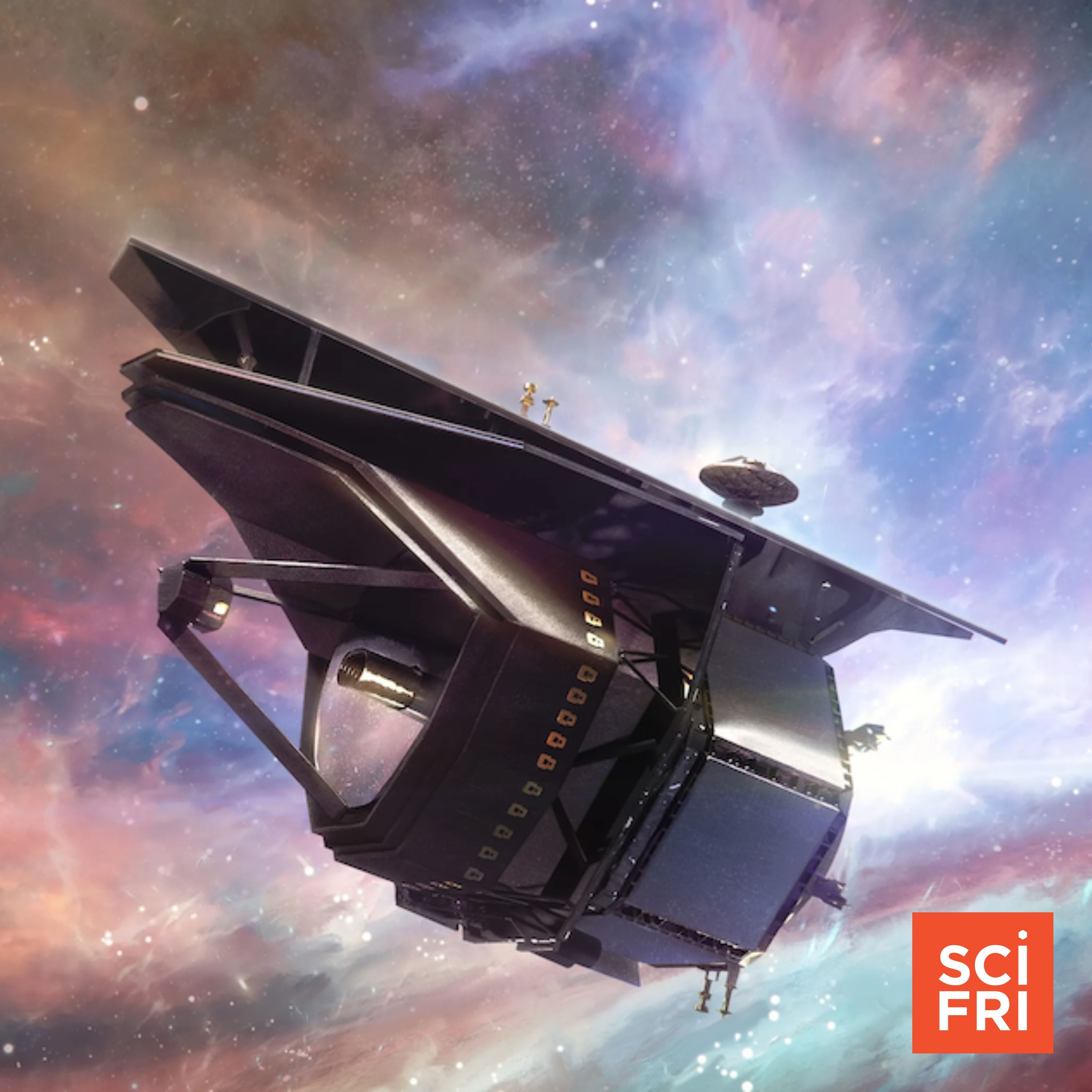
Overview of Getting the billion-dollar PRIMA space telescope off the ground
This episode of Science Friday explores NASA’s newly approved PRIMA space telescope and what it takes to move a billion-dollar mission from an idea to a real spacecraft. Host Flora Lichtman speaks with Dr. Jason Glenn, who led the concept study for PRIMA, about the telescope’s science goals, the long and competitive NASA selection process, and the many engineering and management hurdles still ahead before launch.
What PRIMA Is Designed to Do
PRIMA is a next-generation far-infrared observatory intended to answer major astrophysics questions that current telescopes cannot fully address.
Key science goals
- How planets form
- PRIMA will help scientists study the role of water in planet formation.
- It can also measure the abundance of elements like carbon and oxygen in planetary systems.
- How supermassive black holes formed
- Modern galaxies almost all have supermassive black holes at their centers.
- PRIMA is designed to make observations that could help explain how these black holes came to exist.
- Why it matters
- NASA has already confirmed more than 6,000 exoplanets, but PRIMA targets the deeper physical processes behind their origins.
Why This Telescope Is a Big Deal
Glenn emphasized that PRIMA brings new observational capability in a part of the spectrum that has lagged behind others: the far infrared.
Why the technology lagged
- Far-infrared tools have had less commercial demand than other technologies.
- Because of that, progress depended heavily on long-term investment by the astrophysics community.
- PRIMA represents decades of technological maturation finally paying off.
How a NASA Mission Gets Built
A major theme of the conversation was that building a telescope is as much about project management and engineering discipline as it is about science.
Mission phases explained
- Phase A
- The concept and design study stage.
- Scientists build the science case and sketch out the observatory architecture.
- Phase B
- Detailed design and technology maturation.
- Teams create highly specific plans, down to the level of mass for every nut and bolt.
- Final review after Phase B
- NASA evaluates whether the mission is truly ready on:
- schedule
- budget
- technical readiness
- science requirements
- NASA evaluates whether the mission is truly ready on:
- Implementation phase
- If approved, the project moves into construction, or as Glenn put it, “cutting metal.”
The Competition Was Fierce
PRIMA did not advance easily.
Selection process
- The probe-class mission idea was first floated in 2016.
- 38 concept studies were initially submitted.
- After NASA’s astrophysics decadal survey recommended a new probe-class mission, the field narrowed further.
- NASA later received 8 proposals in the formal call.
- Those were cut to 2 finalists, with PRIMA chosen as the top contender.
The Human Side of the Project
Glenn described the process as emotionally intense and personally consuming.
Main pressures
- The waiting periods were described as “excruciating” and “painful.”
- He and his team had to keep quiet until NASA made the announcement public.
- Once the news broke, the team celebrated together over Zoom, with “champagne” and global participation.
Leadership challenges
Glenn said the job became especially difficult amid broader disruptions affecting science and government:
- federal workforce shakeups
- a long furlough
- shutdowns at the Jet Propulsion Laboratory due to fires
- concerns from international partners
He said leading the project required reassuring collaborators, solving problems, and maintaining momentum through unstable conditions.
Timeline and What Comes Next
PRIMA is still early in the process.
Where the mission stands
- It has just entered Phase B
- The team still has to complete detailed design and technology maturation
- Another major review comes before construction begins
When it may launch
- Glenn estimated the mission is likely to be ready around 2033
- Even after launch, the telescope must cool down and complete checkout before science operations begin
- He said he won’t fully relax until the observatory is launched, cooled, and working properly
Notable Takeaways
- PRIMA is a major far-infrared telescope aimed at answering foundational questions about planets and black holes.
- The project shows how NASA missions are built through years of phased development, not sudden leaps.
- Scientific vision alone is not enough; success depends on technology readiness, engineering precision, and careful management.
- Glenn’s background in both science and engineering helped him navigate the project.
- The mission has broad community support, with around 200 papers and 400 authors contributing to its science planning.
Bottom Line
This episode explains that PRIMA is not just a telescope proposal — it’s a years-long, highly coordinated effort to build a powerful new observatory capable of unlocking major mysteries in astrophysics. The mission has passed an important milestone, but the hardest work may still be ahead.