Overview of Earth’s Ancient Hydrogen, And Fossilized Vomit
This Science Friday episode explores two very different kinds of ancient evidence: what’s hidden deep inside Earth, and what fossilized remains can reveal about prehistoric life. First, planetary scientist Dr. Anath Shahar discusses lab experiments suggesting Earth’s core may contain far more hydrogen than previously thought, with major implications for the planet’s formation and the origin of Earth’s water. Later, paleontologist Arnaud Rebillard explains how a 290-million-year-old fossilized vomit from Germany is helping scientists reconstruct an ancient ecosystem with unusual precision.
Earth’s Core May Hold a Lot of Hydrogen
How scientists simulate the deep Earth
- Researchers use two diamonds to squeeze tiny samples under extreme pressure.
- A laser heats the sample, recreating the temperature and pressure of Earth’s interior.
- This is necessary because we cannot directly sample Earth’s core.
What the study suggests
- The experiments indicate the core may contain significant hydrogen, mixed into an iron alloy along with elements like silicon and oxygen.
- The hydrogen is not a gas pocket or liquid reservoir, but chemically bound within metal, similar to how steel contains carbon.
Why this matters for Earth’s history
- The findings support the idea that early Earth may have had a hydrogen-rich atmosphere.
- Some of that hydrogen could have been absorbed into the planet’s metallic interior during formation.
- That internal hydrogen may have later contributed to water on the surface, suggesting Earth may have generated much of its own water rather than relying entirely on comets or asteroids.
Key takeaway
- If confirmed, this research suggests water may be a natural outcome of rocky planet formation, not a rare cosmic accident.
What Scientists Still Want to Know
The big challenge
- Hydrogen diffuses very quickly, making it hard to measure directly in iron-bearing materials.
- Scientists cannot yet extract a true sample of the core, though iron meteorites offer indirect clues.
Future goal
- Dr. Shahar says the most valuable next step would be a direct measurement of hydrogen, silicon, and oxygen in core-like metal, which would sharpen our understanding of Earth’s formation and evolution.
Fossilized Vomit from 290 Million Years Ago
A rare paleontological find
- Scientists in Bromacker, Germany identified what may be the oldest known terrestrial regurgitalite — fossilized vomit.
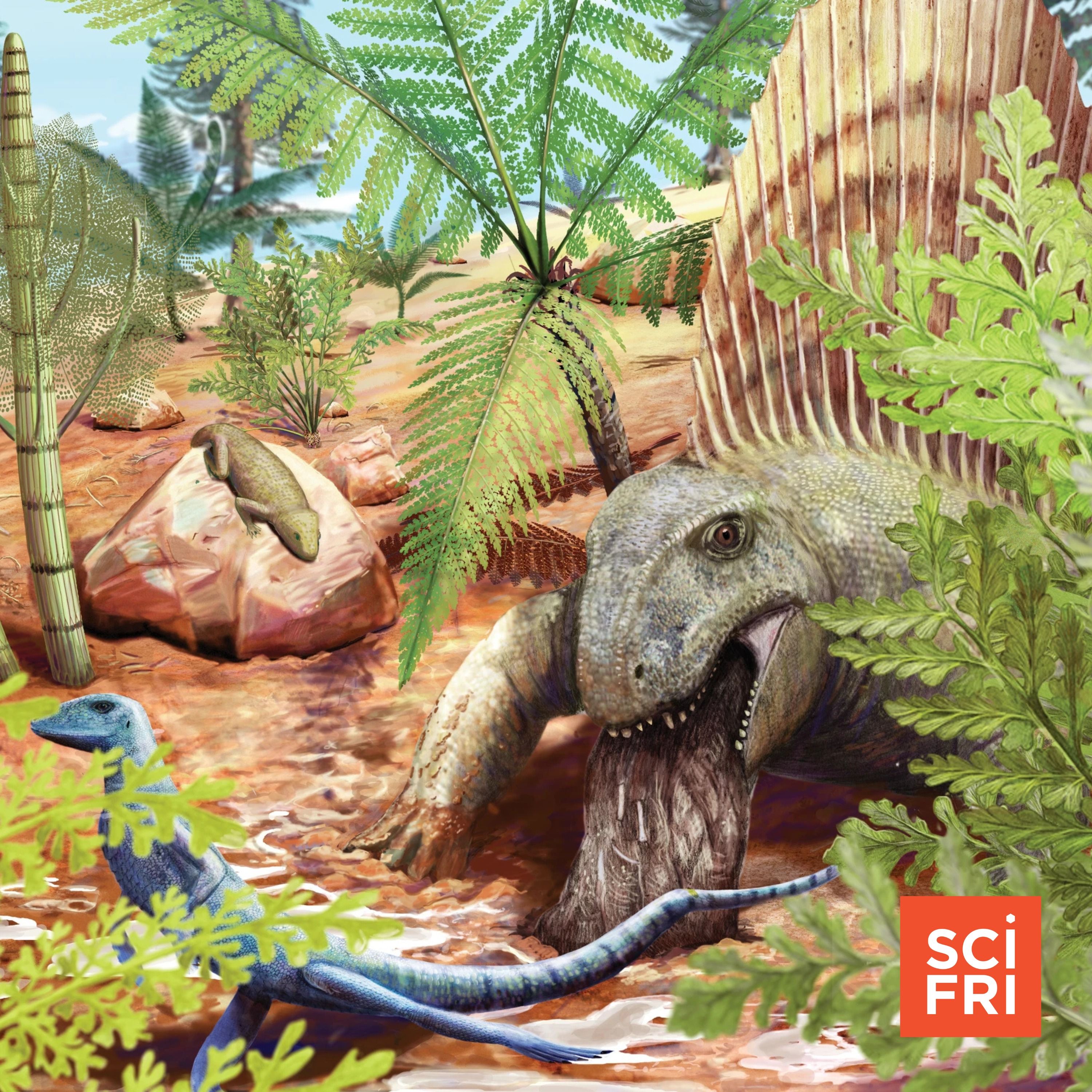
- It came from a Dimetrodon, an ancient synapsid often described as a mammal ancestor.
Why it’s scientifically valuable
- Fossil vomit can preserve evidence of what animals ate and which species coexisted.
- In this case, the cluster contained remains of three animals, all likely eaten by the same predator.
- That gives researchers a remarkably tight snapshot of life in the same place and time.
How it differs from coprolites
- Coprolites are fossilized poop and usually contain more digested bone.
- Regurgitalites are less digested and can lack the phosphorus-rich matrix typical of feces-based fossils.
- They may look like an odd bone cluster rather than an obvious “fossil vomit.”
Why it can fossilize at all
- Predators often regurgitate bone, fur, or feathers in a sticky, mucus-like mass.
- If buried quickly in mud and not destroyed before mineralization, it can fossilize.
The Changing Reputation of “Gross” Fossils
From curiosity to serious research
- Early paleontologists often treated poop and vomit fossils as oddities.
- Modern tools like 3D scanning have made them highly informative.
- These fossils can even preserve soft tissue, offering valuable clues about ancient diets and ecosystems.
Main Takeaways
- Earth’s core may contain much more hydrogen than expected, which could help explain the origin of Earth’s water.
- The study supports the idea that water may form naturally during rocky planet formation.
- A 290-million-year-old fossil vomit provides a rare, high-resolution glimpse into an ancient food web.
- Fossils of excretions and regurgitations are now recognized as important scientific records, not just curiosities.