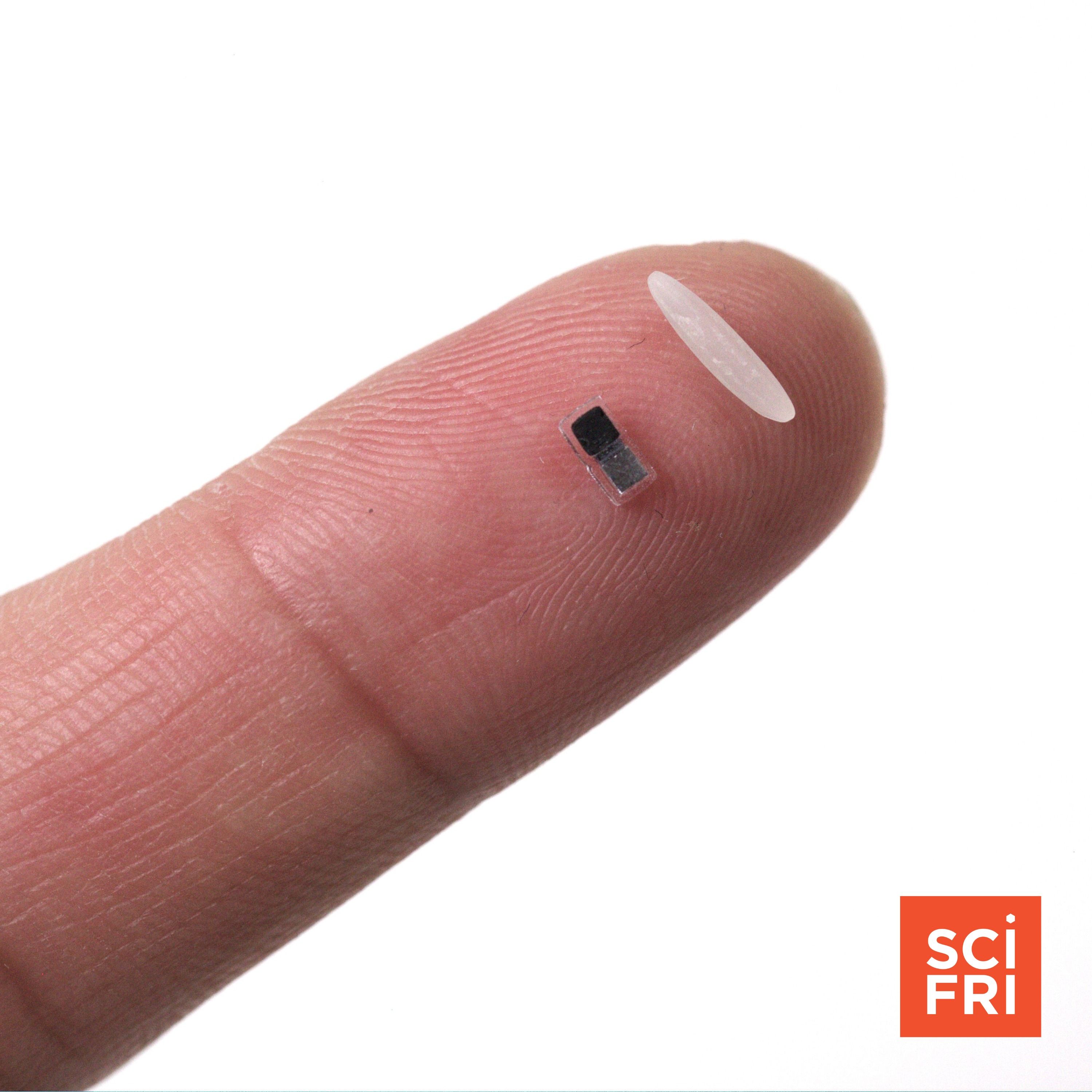
Overview of Bringing hard electronics into soft and squishy bodies
In this Science Friday interview, host Flora Lichtman talks with biomedical inventor and Northwestern professor John A. Rogers about the challenge of making electronics work inside the body. Rogers explains how his lab designs biocompatible, soft, flexible, and sometimes dissolvable electronic devices that can interface with organs like the brain and heart. The conversation covers the engineering and scientific hurdles of matching rigid electronics to living tissue, the role of collaboration with clinicians, and how his group moves from curiosity-driven research to real medical tools.
Main Topics Discussed
Why “squishy electronics” matter
- Human tissue is soft, curved, dynamic, and chemically complex.
- Conventional electronics are rigid, brittle, and built for very different environments.
- Rogers’ work aims to bridge that gap so devices can integrate more naturally with the body.
The core technical challenge
- The main problem is adapting silicon-based electronics into forms that can:
- bend and stretch with tissue
- wrap around organs like the heart
- conform to surfaces like the brain
- communicate with biology’s “language” of ions and biochemical signals
- A big part of the work is designing the interface between man-made systems and living tissue.
Collaboration with medicine
- Rogers emphasizes that this work is deeply collaborative.
- His lab partners with clinicians, neurosurgeons, cardiac surgeons, and other medical specialists.
- He describes his expertise as “T-shaped”:
- deep knowledge in materials science, semiconductor physics, and electronic devices
- broad communication skills to work across disciplines
Notable Innovations and Examples
Dissolvable, wireless temporary pacemakers
- One major project came from cardiac surgeons who wanted a safer temporary pacemaker.
- Traditional temporary pacing leads can:
- tether patients to external hardware
- require risky removal
- cause tissue damage when scar tissue forms around them
- Rogers’ team developed a wirelessly powered, fully implantable temporary pacemaker that can dissolve away after use, eliminating the need for extraction.
- The device was later miniaturized further for:
- infants
- eventually even fetal applications
Other biocompatible devices
Rogers mentions devices such as:
- flexible probes
- wireless sensors that stick like temporary tattoos
- miniature implantable electronics
- systems for real-time body monitoring
How the Lab Chooses Problems
Three types of project requests
Rogers says requests from clinicians generally fall into three buckets:
- Too easy — problems that could be solved with simple tools and should probably be handled elsewhere
- Impossible — requests that would require breaking the laws of physics
- Just right — hard, novel problems that fit the lab’s materials and fabrication strengths
Balancing curiosity and application
- Some projects are blue-sky discovery research.
- Others are driven by clinical needs brought in by doctors.
- The most productive work often sits between those two extremes.
Research Culture and Philosophy
Expect failure
- Rogers says failure is a constant in research.
- Progress comes from persistence, adaptation, and combining existing technologies in new ways.
- He describes himself as highly persistent and “single-minded.”
Motivation comes from students
- At this stage in his career, he says the biggest reward is helping students succeed.
- He values training the next generation as much as publishing papers.
“Knowledge for the ages, technology for today”
- Rogers draws a line between:
- pure science that expands understanding
- applied technology that improves lives now
- He sees both as essential, ideally working together.
Key Takeaways
- Bioelectronics is about making technology compatible with living tissue, not just shrinking devices.
- The field requires deep engineering plus close collaboration with medicine.
- Dissolvable, implantable electronics can solve real clinical problems, especially where removal is dangerous.
- Rogers’ lab is driven by a mix of curiosity, clinical need, and a strong commitment to student development.
- The broader goal is to create technologies that are both scientifically meaningful and immediately useful in healthcare.