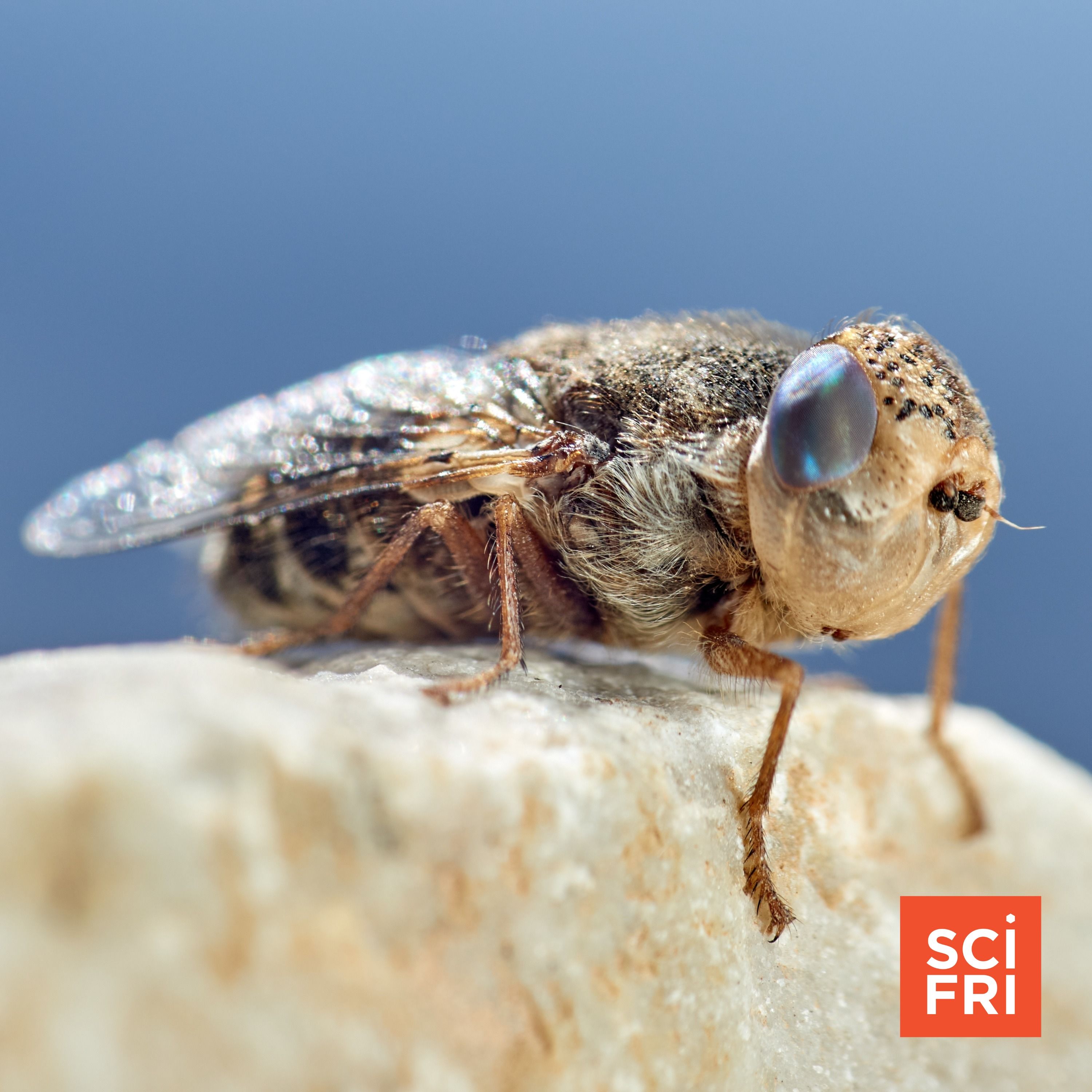
Overview of Beautiful botflies, luscious leeches, and the wonder of parasites
This Science Friday conversation with entomologist Dr. Dino Martins explores the strange, often repulsive, but scientifically important world of parasites. Martins discusses his new book, Hidden Creatures: Luscious Leeches, Bashful Botflies, and the Wonder-Shaping World of Parasites, and argues that parasites are not just disease-causing freeloaders—they are deeply woven into ecosystems, evolution, and even human biology. The episode blends biology, memoir, and a reappraisal of why we should study creatures that make us squirm.
Main Themes and Takeaways
Parasites are more complex than their reputation
- Martins acknowledges that parasites can be disgusting and deadly, but insists they are also essential parts of life on Earth.
- He frames them as organisms that exploit hosts, but emphasizes that the relationship is often more complicated than simple harm.
- Some parasite-host interactions may even offer benefits, especially in the context of immune system development and co-evolution.
Definitions of “parasite” are surprisingly fuzzy
- The episode highlights that biologists do not have a perfectly neat definition of a parasite.
- Martins cites E.O. Wilson’s idea of feeding in “units of less than one”:
- A cow grazing on grass is not a parasite.
- A tick feeding on a cow is.
- The discussion shows how scientific categories often become murky when examined closely.
Parasites may play a role in immune health
- Martins connects parasite research to broader thinking about the microbiome.
- Early exposure to some parasites may help “train” the immune system, potentially reducing vulnerability to later disease.
- This does not mean parasites are harmless, but it suggests they are not always purely negative.
Parasites are evolutionarily ingenious
- Martins emphasizes that parasites are highly adaptive and often one step ahead of humans.
- Human actions—feedlots, fish farming, transporting animals globally—create new opportunities for parasites to thrive.
- He argues that parasite control requires humility and better science, not the fantasy of total eradication.
Dino Martins’ Personal Journey
A childhood shaped by curiosity and wild animals
- Martins grew up in rural Kenya and spent much of his childhood observing insects and animals closely.
- He describes insects as companions and sources of imagination when he was alone.
- His curiosity was reinforced by teachers, veterinarians, and other supportive adults.
A formative experience with a baby zebra
- Martins recounts caring for a baby zebra named “BZ” who had been abandoned during a drought.
- BZ had an eye parasite, which Martins examined under microscopes with intense curiosity.
- Rather than recoil, he wanted to understand what he was seeing—an instinct that shaped his scientific path.
Memorable Parasite Examples
Botflies
- Martins describes botflies as especially cinematic parasites.
- Adult botflies must find a host, lay eggs, and ensure larvae develop in places like nostrils, throats, or stomachs.
- In some cases, larvae trigger sneezing so they can be launched back into the world.
- He presents this as both horrifying and marvelously adapted.
Mosquitoes and ticks
- He mentions unusual mating behavior in mosquitoes and more elaborate reproductive behavior in ticks.
- These examples are used to show that parasite biology can be stranger and more complex than people expect.
Parasites of parasites
- Martins notes that some insects host parasites that themselves become hosts to other parasites.
- This nested complexity is part of what fascinates him: nature is full of layered interactions that are easy to miss.
Bigger Scientific and Ethical Ideas
We can’t fully escape parasites
- Martins argues that no matter how isolated or privileged humans think they are, parasites remain part of life.
- He stresses the need to study them globally, because “for parasites, there are only bodies, there are no borders.”
Eradication is a moral and ecological question
- The conversation touches on diseases like malaria, screw worm infestations, and cyclosporiasis.
- Martins acknowledges that some pathogens have been eradicated in history, but he is cautious about applying that mindset broadly to parasites as species.
- He argues that we should focus on understanding and managing them rather than assuming we have the right to eliminate them all.
Wonder and disgust can coexist
- Martins’ core philosophy is that science should not avoid the disturbing parts of nature.
- He believes real understanding comes from looking closely at everything:
- the beautiful
- the gross
- the terrifying
- the surprising
- For him, disgust is not a reason to look away; it is often the starting point for discovery.
Notable Insight
“If we don’t [look at the disgusting parts], we might miss out on some really cool stuff that’s happening.”
This captures the episode’s central message: studying parasites is not only about disease prevention, but also about appreciating the full, strange complexity of life.
What the Episode Leaves Listeners With
- Parasites are not merely villains; they are deeply embedded in the history of life.
- Studying them can reveal insights into ecology, evolution, behavior, and immunity.
- Curiosity—especially about things that feel gross or unsettling—can lead to meaningful scientific understanding.
- Dino Martins invites listeners to “see the whole picture” of nature, even when that picture includes creatures that make us squirm.
Further Reading / Resource Mentioned
- Science Friday directs listeners to an excerpt from Dino Martins’ book at: sciencefriday.com/parasites