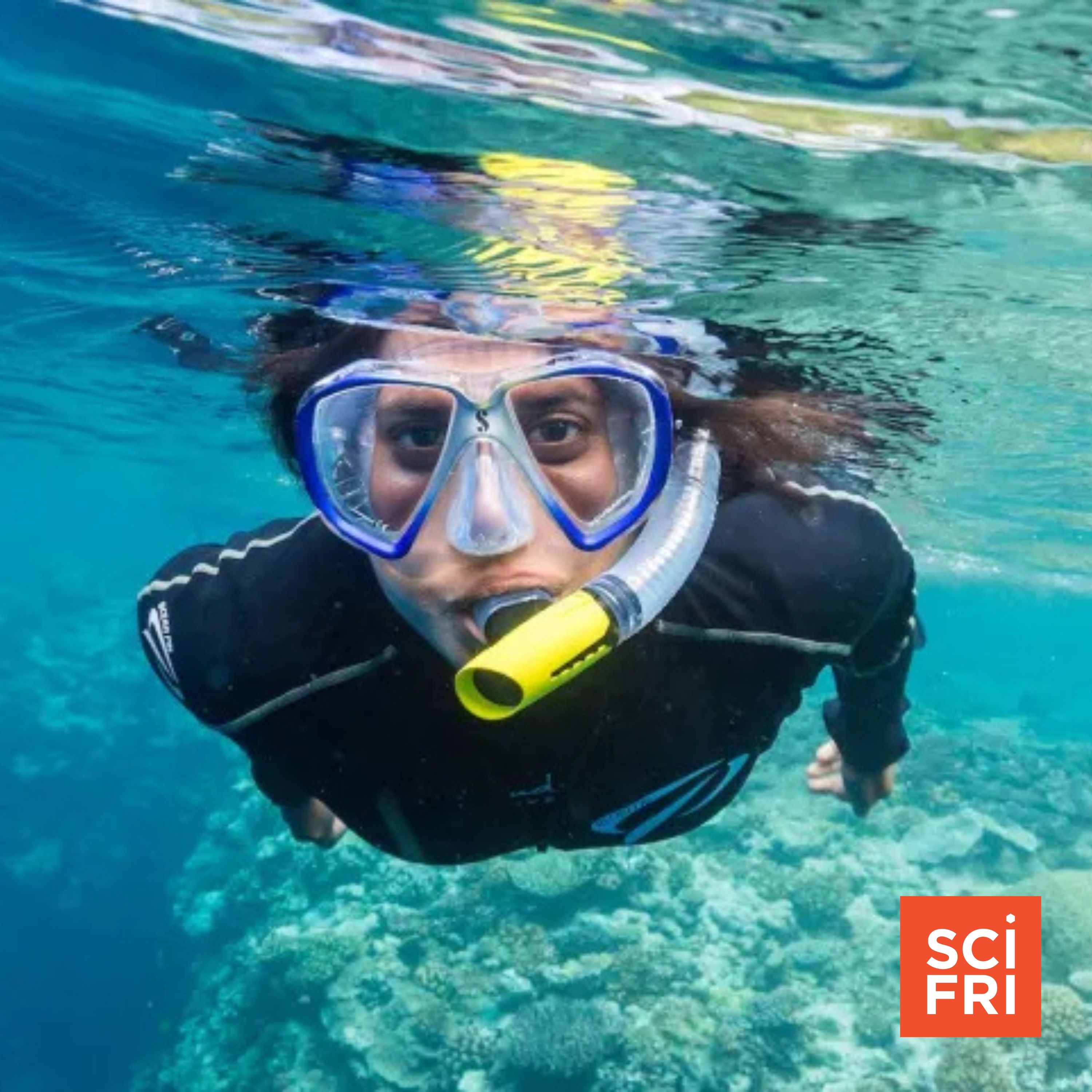
Overview of Asha de Vos’ journey from deck hand to marine science leader
This Science Friday conversation profiles marine biologist Dr. Asha de Vos, whose career began unexpectedly while working as a deckhand on a research vessel off Sri Lanka. While tracking sperm whales in 2003, she spotted multiple blue whales in a small area of tropical water—an observation that challenged textbook assumptions and launched her into a groundbreaking research path. The interview follows how that moment led her to become Sri Lanka’s first PhD in marine mammal research, why she fought to lead the science herself, and how she’s helping build a new generation of ocean researchers and advocates through her nonprofit, Ocean Swell.
Key Moments in Asha de Vos’ Journey
The discovery that changed everything
- While working on deck duties like cleaning toilets and polishing brass, Asha noticed a large whale blow that didn’t look like a sperm whale.
- Her captain redirected the expedition, and she found six blue whales clustered in a soccer-field-sized area.
- Seeing bright red whale poop confirmed they were feeding locally, which was surprising because blue whales were thought to migrate to cold waters to feed.
A career built from curiosity and persistence
- Asha had little local precedent or mentorship in Sri Lanka because whale research had been largely absent since 1983, due in part to war and limited access.
- She contacted marine scientists worldwide, but many initially treated her as a local fixer rather than the lead scientist.
- She refused to hand over the research and chose to build the project herself.
From idea to research program
- She spent years piecing the work together:
- learning from whale-watching boats,
- writing proposals,
- studying research from other regions,
- and slowly developing the project from scratch.
- Her formal research program began in 2008, five years after the original discovery.
Main Themes and Takeaways
“Parachute science” and local leadership
Asha discusses the problem of parachute science:
- Outside researchers enter a country, conduct research, and leave without building local expertise or infrastructure.
- This creates an imbalance where the research benefits outsiders more than the communities where the work happens.
- She argues that talent is evenly distributed, but opportunity is not, and local scientists should be empowered to lead work in their own countries.
Gender and cultural barriers
Asha also faced resistance as a woman in a male-dominated field:
- People questioned why she was working on boats and in marine science at all.
- She was criticized for how she dressed while doing fieldwork.
- She notes that her marital status and appearance were often treated as more important than her achievements.
Visibility and inspiration matter
- A particularly meaningful moment came when young Sri Lankan women defended her online after she was criticized.
- Asha sees this as proof that her work has inspired others to stand up for women in science and to imagine broader possibilities for themselves.
Impact on Sri Lanka’s Marine Science Landscape
A field that barely existed now has momentum
- Since Asha began, Sri Lanka has seen major growth in marine science:
- more university programs,
- more local students entering the field,
- and more organizations focused on marine issues.
- She sees this as a major cultural shift in a country where the ocean was often viewed as a place of work or danger, not recreation or study.
Reframing the ocean’s role
- Historically, many Sri Lankans did not swim or engage with the ocean recreationally.
- Asha emphasizes that public attitudes are changing as people begin to recognize the ocean’s ecological importance and their role in protecting it.
Notable Insights
- Blue whales in Sri Lanka were feeding in tropical waters, defying conventional expectations about their migration patterns.
- Asha’s story highlights how a single observation can reshape scientific understanding.
- She frames her career not just as personal success, but as part of a larger effort to build scientific capacity in Sri Lanka.
- Her approach is grounded in letting her work speak for itself rather than wasting energy on critics.
Closing Message
Asha de Vos’ story is about more than one scientific discovery—it’s about claiming space in science, challenging colonial research dynamics, and creating pathways for others. Her journey from deckhand to trailblazing marine biologist shows how persistence, local leadership, and community inspiration can transform an entire field.