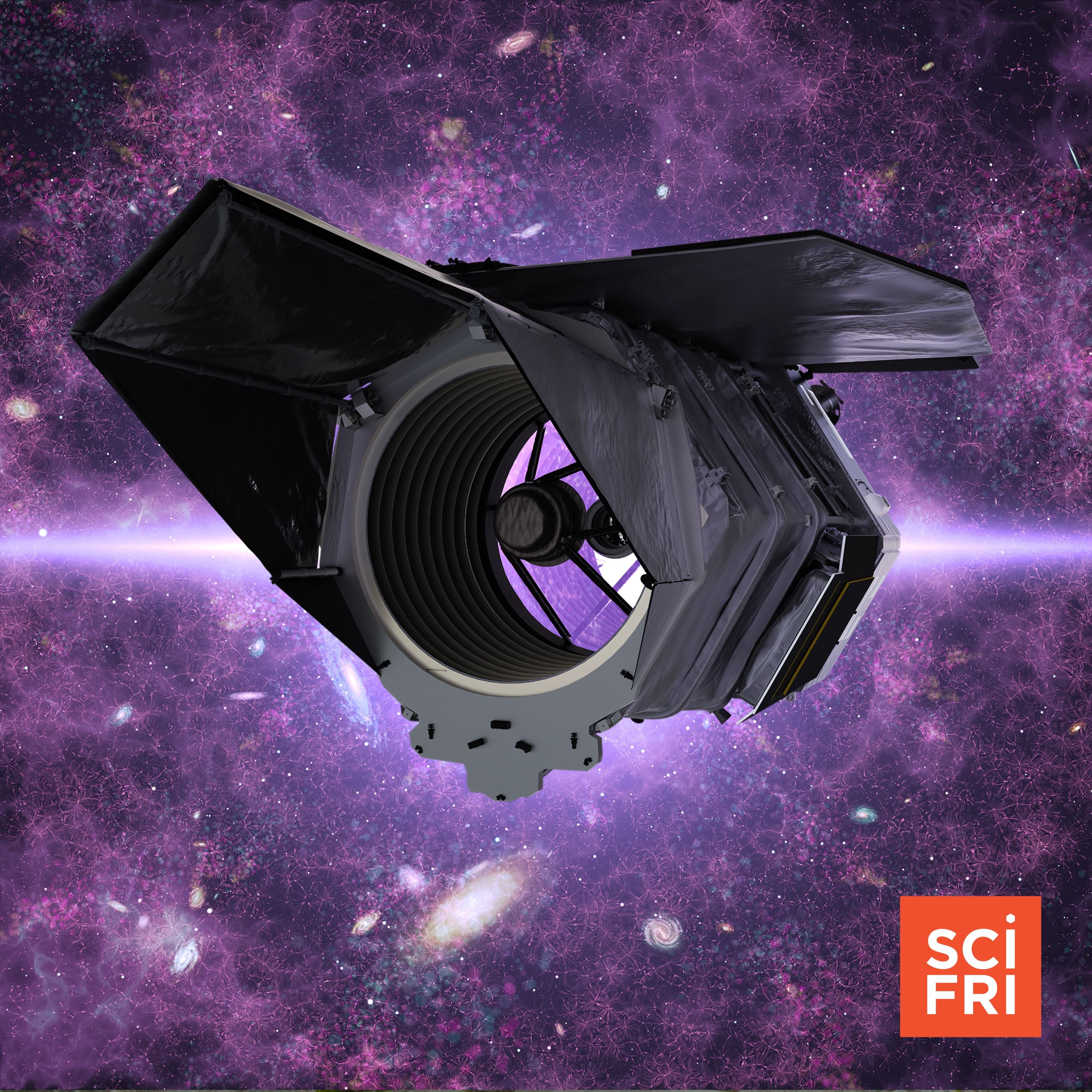
Overview of Science Friday — “A space telescope launch + Alvin submersible check-up”
This episode spotlights two highly engineered scientific vehicles getting ready for their next big chapter: the Nancy Grace Roman Space Telescope, NASA’s wide-field survey observatory slated to launch ahead of schedule, and the Alvin deep-sea submersible, which has returned to service after a major five-year inspection and recertification. The show closes with a listener call for creative ways to break up screen time and get moving.
Nancy Grace Roman Space Telescope: what it is and why it matters
Host Flora Lichtman speaks with Jackie Townsend, project manager for the Roman mission, about what the telescope will do and how it compares with Hubble and JWST.
Core mission goals
- Roman is a survey telescope designed to image a very large fraction of the sky.
- It will help create:
- a 3D map of the Milky Way
- a huge catalog of billions of galaxies
- data for studying the early universe, dark energy, dark matter, and exoplanets
Why Roman is a big deal
- Roman has a very wide field of view and a 300-megapixel camera made from 18 large detectors.
- It is described as 200–300 times larger than Hubble’s field of view and able to image the sky about 1,000 times faster than Hubble.
- Unlike Hubble or Webb, Roman is built to survey and find objects worth follow-up, rather than focus deeply on a few targets.
Science it will target
- Dark energy: to study what is driving the universe’s expansion.
- Dark matter: to help explain galaxy structure and interactions.
- Exoplanets: expected to detect 50,000 to 100,000 planets, mostly indirectly through microlensing surveys.
Coronagraph technology demo
- Roman will also carry a coronagraph, which can block a star’s light so faint nearby planets can be seen.
- This is a technology demonstration, not a full mature planet-imaging mission.
- The system aims to suppress starlight by six to eight orders of magnitude.
Launch and operations timeline
- The mission is on track to launch at the end of August, unusually ahead of schedule and under budget.
- First images are expected around December.
- Science data should begin flowing to the public daily in January.
Backstory of the mission
- Townsend credits the early delivery to:
- daily teamwork and careful execution over many years
- adaptability during the pandemic and supply chain disruptions
- quick pivots when needed, including sourcing parts elsewhere or changing integration plans
- She also notes that Roman’s mirror came from spy-satellite hardware, but had to be reworked to meet the telescope’s infrared science needs.
Alvin submersible: deep-sea maintenance and recertification
The second half of the episode shifts from space to the ocean with Anthony Tarantino, electrical engineer and program manager for the Alvin Group at Woods Hole Oceanographic Institution.
What recertification means
- Alvin is owned by the Office of Naval Research and operated with support from the National Science Foundation.
- Every five years, the vehicle is:
- taken apart completely at Woods Hole
- structurally inspected
- rebuilt piece by piece
- tested with a Navy observer present
- After that process, it is recertified to dive to its maximum operating depth without restrictions.
What the overhaul involves
- “Fully apart” means bare frame, bare sphere, and components on shelves.
- The team swaps out wear items such as:
- filters
- O-rings
- oil and oxygen-related components
- Most parts are reused because Alvin is designed for long-term durability.
Major upgrades and depth capability
- Recent overhauls included major upgrades:
- 2013: replacement of the personnel sphere and other components
- 2022: completion of a broader upgrade from 4,500-meter systems to 6,500-meter systems
- That upgrade increased Alvin’s depth rating substantially.
Future wish list
- Tarantino says the next big upgrade he’d like is:
- a better battery/energy storage system
- a more hydrodynamic, compact design
- a full reconfiguration of the vehicle if possible
Why it matters to him
- He emphasizes the pride of being a steward of a unique scientific tool that helps keep people safe and enables ocean science.
- For him, the work is meaningful because it supports humanity and scientific discovery, not just profit.
Listener prompt and closing
At the end, Science Friday asks listeners to share creative ways to interrupt screen time and get moving—especially unusual or fun “off the device” hacks.
Call to action
- Call in with your best idea for:
- getting off screens
- breaking the scroll cycle
- recognizing when you’ve hit “screen time rock bottom”
Key takeaways
- Roman will be NASA’s next major wide-field survey telescope, built to discover and catalog huge numbers of cosmic objects and phenomena.
- It is launching early, an uncommon achievement for a flagship space mission.
- Alvin has undergone its regular deep maintenance cycle and is back in service at a higher operating capability.
- Both stories highlight the same theme: careful engineering, long-term stewardship, and teamwork make ambitious science possible.