Overview of Brian Lehrer and Malcolm Gladwell Talk Policing and Guns
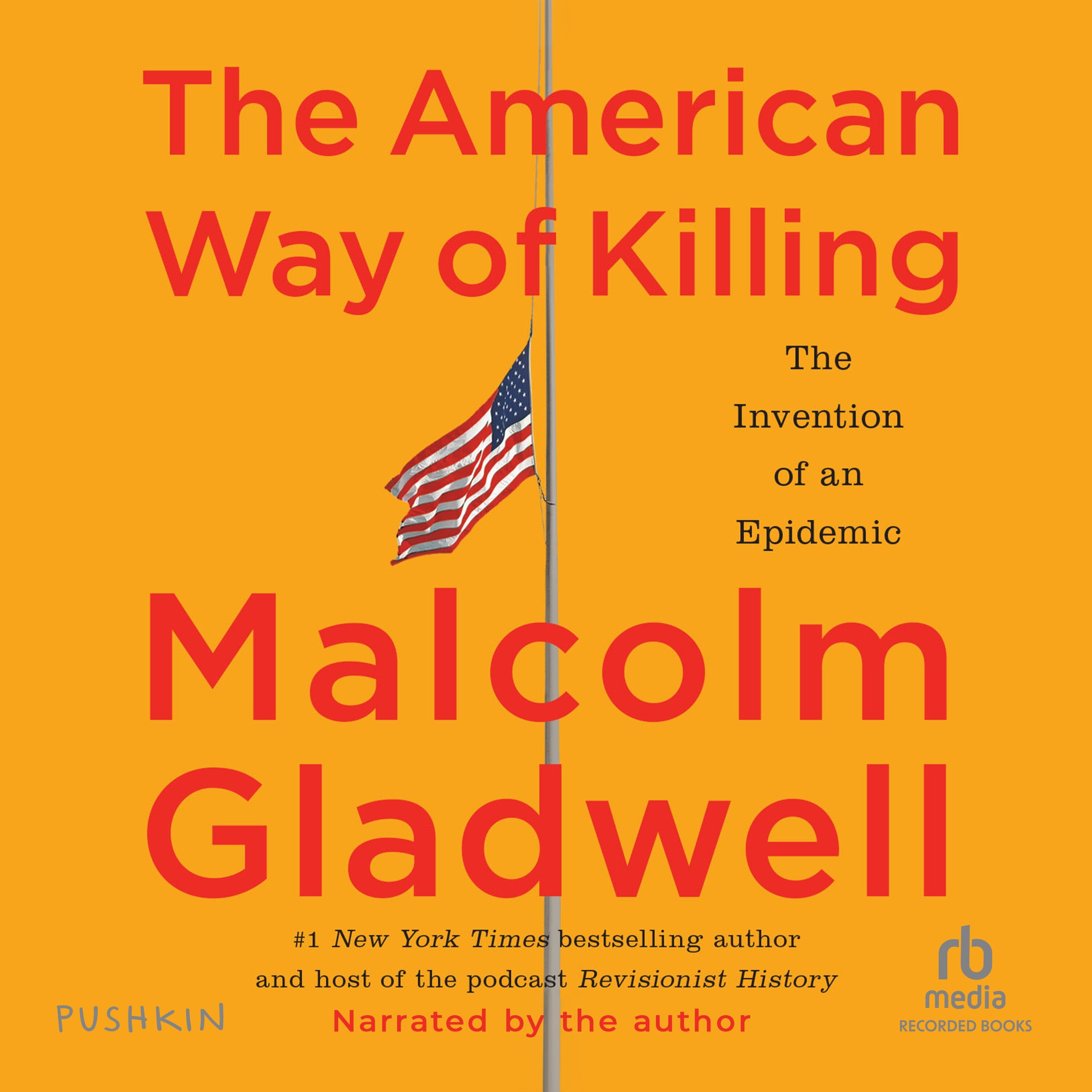
This conversation centers on Malcolm Gladwell’s new book, The American Way of Killing: The Invention of an Epidemic, which argues that the U.S. has a distorted and incomplete understanding of gun violence. Gladwell says the country focuses too heavily on mass shootings and gun control alone, while ignoring the much larger problem of everyday, neighborhood-based interpersonal violence. His core argument is that reducing gun violence requires a broader public-safety strategy: more police capacity, better community trust, and targeted intervention programs aimed at the small number of people most at risk.
Main Arguments
Gun violence is a broader epidemic than mass shootings
- Gladwell argues that public debate is skewed toward headline-grabbing mass shootings.
- He says the bulk of gun violence in the U.S. is ordinary, recurring violence in disadvantaged communities.
- His central claim: the country keeps “missing the real problem” by narrowing the issue to gun ownership and mass-casualty events.
The U.S. is “inventing” its own violence problem
- Gladwell says America’s homicide rate is not inevitable or natural.
- He compares the U.S. to similar countries like Canada and Western European nations, which have far lower homicide rates.
- His point: the U.S. has built a uniquely violent social and political system, rather than simply inheriting one.
More police, not fewer, is part of his solution
- One of the most controversial claims in the interview is that many U.S. police departments are under-resourced, not overstaffed.
- Gladwell argues that having too few officers can make police more aggressive and less trusted because they are constantly overwhelmed.
- In his view, more officers would allow for:
- community engagement,
- proactive work with schools and local leaders,
- better prevention before violence escalates.
Historical and Political Claims
The Second Amendment and slavery
- Gladwell revisits the argument from his earlier chapter “The Slave Owner’s Lament.”
- He says the Second Amendment was shaped in part by slaveholders’ desire to preserve armed patrols that helped control enslaved people.
- He frames the origins of modern gun-rights politics as tied to the maintenance of slavery and racial control.
The “Wild West” myth is exaggerated
- Gladwell argues that the romantic image of the violent, gun-saturated Wild West is misleading.
- In response to revolvers and rising violence in the 19th century, many towns and cities enacted strict gun rules:
- gun surrender requirements,
- taxes on firearms,
- registration laws,
- restrictions on carrying guns into towns.
- He presents this as evidence that Americans once responded to gun violence pragmatically, not ideologically.
Modern gun politics have become polarized and dishonest
- Gladwell says both sides get some blame:
- Democrats can become overly fixated on gun control as the only answer.
- Conservatives and courts have steadily expanded gun rights while narrowing policy options.
- He argues that turning the issue into a partisan identity fight prevents practical solutions.
Key Concepts Explained
Instrumental vs. expressive violence
Gladwell makes a major distinction between two types of violence:
- Instrumental violence: violence used as a means to an end, such as robbery.
- Expressive violence: violence driven by emotion, retaliation, or impulsive conflict.
His claim:
- Most U.S. homicides are expressive, not instrumental.
- That means solutions based only on harsher sentencing or deterrence are limited, because the violence is often impulsive and emotional.
Why enforcement alone is not enough
- Gladwell says stronger sentencing does little to stop a young person acting in anger, fear, or retaliation.
- The real issue is conflict, trauma, and social breakdown.
- He supports interventions that address immediate emotional and social triggers.
What Actually Works, According to Gladwell
Targeted intervention programs
- Gladwell praises violence-prevention efforts that focus on the small number of people at highest risk.
- He points to Baltimore as a strong example, where homicides reportedly dropped dramatically under a focused intervention model.
- These programs often involve:
- outreach to potential retaliators,
- mediation through family, clergy, or community figures,
- support services and de-escalation,
- direct intervention before a shooting happens.
New York City as a model
- Gladwell says New York has become more effective at reducing violence by moving away from mass-arrest strategies.
- He emphasizes that gun violence is concentrated among a relatively small number of people and neighborhoods.
- That concentration makes individualized intervention possible and, in his view, effective.
Police, Trust, and Community Relations
Trust is essential to solving crime
- Gladwell cites a key policing principle: the public must trust police enough to cooperate.
- He says clearance rates for serious crimes are much lower in the U.S. than in parts of Europe because witnesses and communities often do not trust police.
- His argument is that better relationships would improve both safety and crime solving.
Police should look like part of the community
- He endorses the old principle associated with Robert Peel: “the police are the people and the people are the police.”
- In his view, police should function as community members who help maintain order, not as a separate force standing above society.
Militarized policing worsens the problem
- A caller described a crisis situation where police arrived in “war gear,” escalating a woman’s fear.
- Gladwell agreed that when police appear like an invading force, they lose the ability to build trust or defuse crises.
- He sees this as emblematic of the broader breakdown in police-community relations.
Notable Caller Reactions
A challenge to Gladwell’s policing argument
- A caller suggested that U.S. police often act as though they “are the law,” rather than representatives of it.
- Gladwell responded by agreeing with the spirit of the critique but emphasizing that the deeper solution is rebuilding the idea that police are part of the public, not separate from it.
Support for a community-centered approach
- Another caller described how police involvement made a mental-health crisis worse.
- Gladwell used this to reinforce his point that police need different tools, different posture, and stronger community ties.
Core Takeaways
- Gladwell argues that America’s gun violence problem is real, but the public debate about it is too narrow.
- He believes the country needs a mix of:
- more and better-resourced police,
- community trust,
- targeted violence interruption,
- and long-term gun policy reform.
- His main message is that gun violence is not solved by slogans or a single-policy approach.
- The interview’s strongest theme is that the U.S. must stop treating violence as an abstract political argument and start addressing the concrete social conditions that produce it.