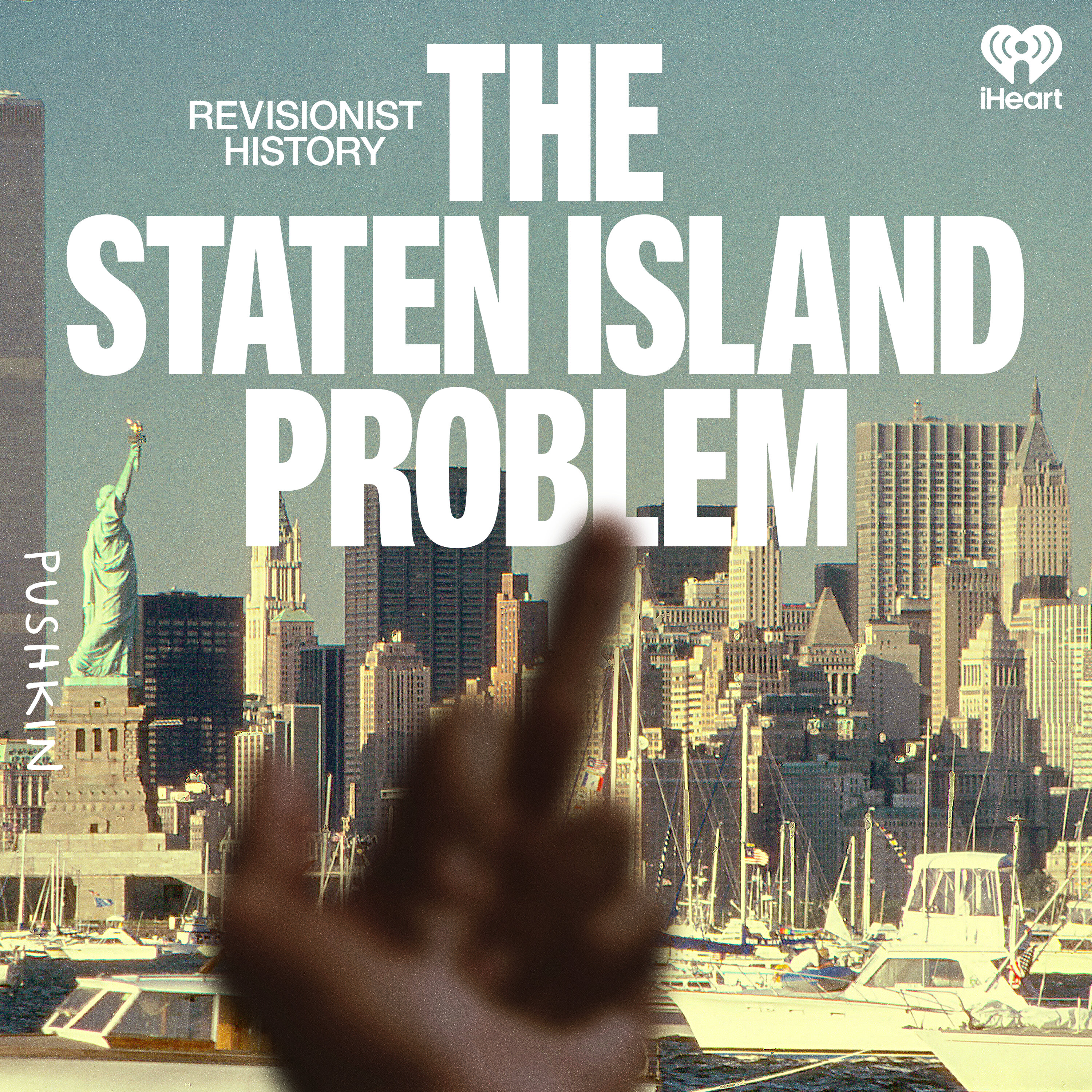
Overview of The Staten Island Problem - Part 3: The Tuvalu Effect
This episode of Revisionist History follows the anti-secession fight on Staten Island in the 1990s, showing how residents who wanted to remain part of New York City organized against the growing push for independence. Through debates, local politics, and island theory, the episode argues that Staten Island secession was not just about taxes or governance, but about identity, distance, resentment, race, and the psychology of living on an “island within an archipelago.”
Main Themes and Argument
Staten Island as a political and psychological outlier
- Staten Island’s secession movement is framed as a reaction to feeling overlooked, burdened, and disconnected from the rest of New York City.
- The episode suggests that the island’s politics resemble broader patterns seen in other archipelago states: islands often pull away from each other rather than unify.
- The narrator connects Staten Island’s mood to modern fragmentation more broadly: people increasingly distrust large institutions and prefer smaller, self-contained identities.
The anti-secession response
- Staten Islanders who wanted to stay in New York City formed Staten Islanders for Unified New York (Saifuni).
- Attorney David Goldfarb emerges as a key anti-secession voice, arguing that independence would be financially and logistically disastrous.
- His central point: Staten Island would still need to pay for major services on its own—police, schools, jails, and other infrastructure—and would lose the benefits of being part of a larger city.
The pro-secession case
- The Vote Yes, Inc. movement argues that Staten Island could govern itself better than New York City could.
- Debaters like Dan Singletary and Robert Scamardella present secession as liberation from bloated bureaucracy, excessive regulation, and city mismanagement.
- Their pitch is emotional as much as economic: Staten Island can do better if it controls its own future.
Key Ideas and Concepts
The “Tuvalu effect”
- The episode introduces the Tuvalu effect, an island-studies concept describing the centrifugal tendency of islands in archipelago states to separate from one another.
- The term comes from Tuvalu, a small Pacific island nation, and is used to explain why islands often develop separatist or insular politics.
- The concept helps explain why Staten Island—despite practical doubts—still developed a powerful secession impulse.
Bridges don’t always unite
- The Verrazzano-Narrows Bridge was supposed to connect Staten Island more fully to the city.
- Instead, the bridge also intensified resentment, especially because tolls made crossing feel like a “mobility tax” for residents who needed to travel for work, school, and family.
- The episode uses this to show how infrastructure can both connect and divide.
Tax arguments versus emotional politics
- Most secession movements are about taxes; this one was unusual because studies suggested Staten Island actually received more from New York City than it contributed.
- The episode argues that facts and fiscal analysis were not enough to overcome the deeper emotional appeal of secession.
- In the end, secession was driven less by economics than by identity, status, and the desire to escape the city’s liberal, multiracial political order.
Notable Figures
David Goldfarb
- Anti-secession lawyer and civic activist.
- Represents the practical case against leaving New York City.
- Warns that secession would create expensive, unavoidable responsibilities and likely make Staten Island worse off.
Guy Molinari
- Staten Island Borough President and a powerful local political figure.
- Initially ambivalent, then ultimately endorses secession.
- His support is presented as a turning point that gave the movement major legitimacy, even if his motives were politically strategic.
Robert Scamardella and Dan Singletary
- Leading pro-secession voices.
- Scamardella makes the case that Staten Island has the wealth and confidence to govern itself.
- Singletary frames the debate as a fight against fear and city overreach.
Godfrey Baldacchino
- Island-studies scholar whose theories give the episode its intellectual framework.
- Explains how islands naturally develop separation tendencies, resentment, and a sense of being marginalized.
Important Takeaways
- Staten Island secession was not just a local dispute; it was part of a broader story about fragmentation in democracies.
- The debate exposed tensions around race, class, and belonging, not just city budgets.
- Even when the anti-secession side had better arguments on paper, the emotional and symbolic appeal of secession was stronger.
- The episode suggests that political movements often succeed by tapping into identity and grievance, not by winning on technical merits.
Ending and Setup for the Next Episode
- The episode closes with Staten Island’s secession vote approaching in November 1993.
- Guy Molinari’s late endorsement strengthens the movement and signals that the issue may reshape borough politics.
- The narrator teases a detour to Shaolin—setting up the next episode’s connection between Staten Island mythology and the rise of Wu-Tang Clan.