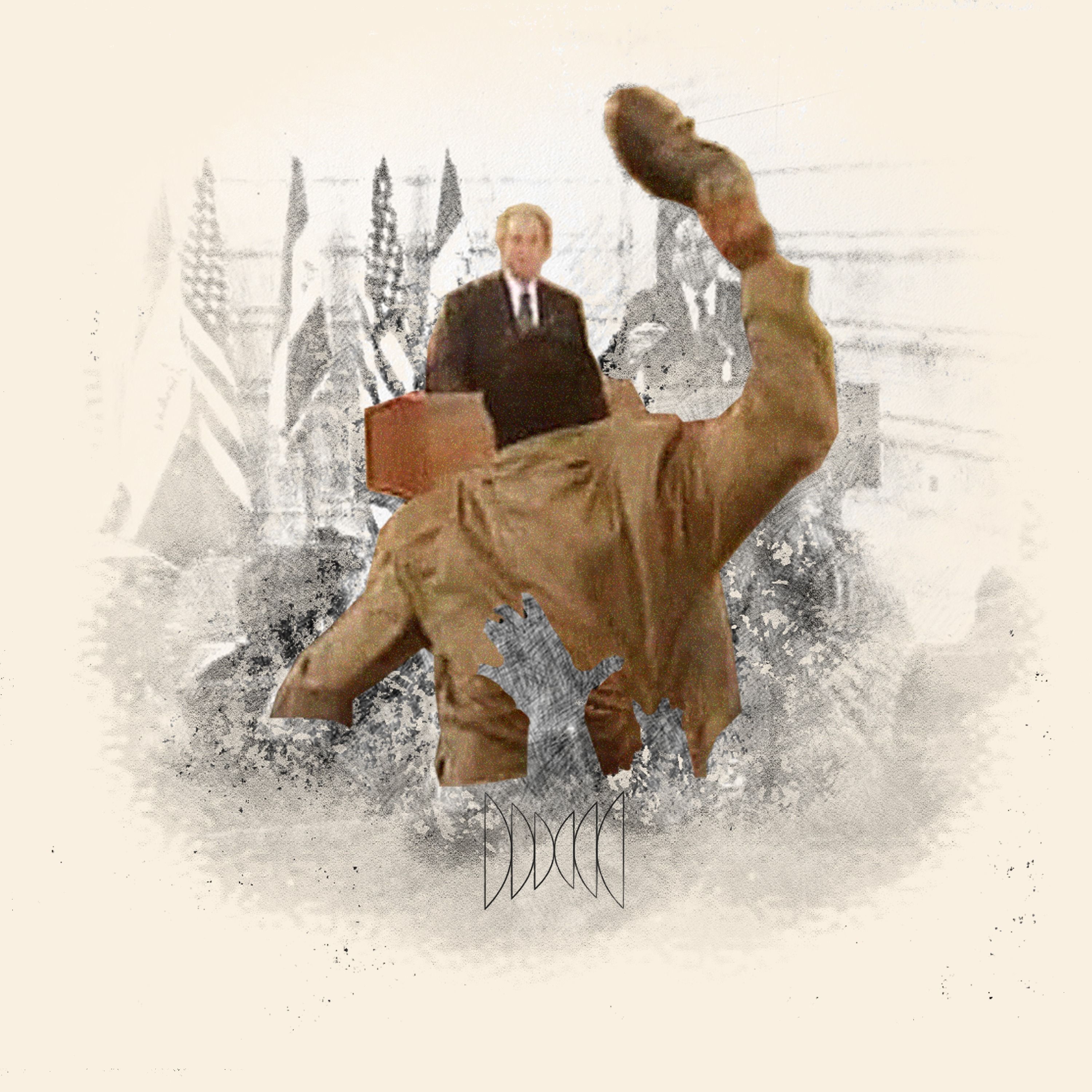
Overview of The Shoe Thrower
This Radiolab episode tells the story behind the infamous 2008 moment when Iraqi journalist Muntadhar al-Zaidi threw his shoes at George W. Bush during a Baghdad press conference. What first looked like a shocking, almost comic act is revealed as a deeply considered expression of rage, grief, and resistance rooted in years of reporting on the devastation of the Iraq War. The episode follows al-Zaidi’s life, the war’s human toll, the symbolism of the shoe throw, and the moment’s surprising afterlife as a global cultural reference.
What the Episode Is About
- Reporter Sarah Qari spends hours interviewing al-Zaidi, who is initially tired of being reduced to “the shoe thrower.”
- The episode reframes the event as the culmination of:
- childhood reading and a love of journalism,
- years of witnessing Iraqi suffering,
- censorship and intimidation,
- and frustration that the world ignored Iraqi civilian deaths.
- It also explores why the shoe throw became so memorable and what it meant politically and emotionally.
Key Story Beats
Al-Zaidi’s background
- He grew up in Iraq, inspired by books and stories his mother read to him.
- Under Saddam Hussein, he became interested in journalism and political writing.
- During the sanctions of the 1990s, he saw firsthand how ordinary Iraqis suffered.
The Iraq War changes everything
- After the 2003 U.S. invasion, al-Zaidi began reporting on civilian harm, including bombings, raids, and deaths of children.
- One especially haunting story involved an eight-year-old girl, Zahra, killed amid a chaotic U.S. military response.
- Al-Zaidi felt that Iraqi suffering was being ignored both inside and outside the country.
Why he threw the shoe
- The shoe was not random; it was chosen as a culturally loaded insult in Arab societies.
- He saw it as the opposite of giving someone roses, and as a non-lethal but highly visible act of resistance.
- He describes it as part of an “intellectual resistance,” even while admitting he briefly considered more violent responses.
The moment itself
- He unexpectedly learns Bush will attend the Baghdad press conference.
- He goes home, changes into the shoes he wants to use, and heads to the Green Zone.
- During Bush’s remarks, he shouts an insult, throws one shoe, then the second.
- Security tackles him immediately.
Aftermath and punishment
- He is beaten, detained, tortured, and sentenced to prison.
- The shoe throw sparks protests and symbolic support across Iraq and beyond.
- He becomes an international figure, but also finds that his career as a journalist is damaged.
Main Themes and Takeaways
1. Journalism as witness, not neutrality for its own sake
- The episode grapples with the tension between journalistic objectivity and moral clarity.
- Al-Zaidi believed reporting was not enough when the world refused to respond.
2. The shoe throw as protest symbolism
- Shoes carry strong cultural meaning: insult, humiliation, and rejection.
- The act sits in a strange space between nonviolence and violence—physical, but not deadly.
3. The power of spectacle
- A single image can break through media fatigue.
- The shoe throw worked because it was simple, visual, and instantly understandable.
4. War’s human cost
- The story repeatedly returns to civilian death, trauma, and the failure of international audiences to fully absorb Iraqi suffering.
- The episode underscores that the Iraq War’s consequences were far broader and more devastating than many public narratives suggested.
5. Legacy is complicated
- Al-Zaidi did not change the war’s outcome.
- But he did challenge the narrative that Iraqis welcomed U.S. forces as liberators.
- His act remains a shorthand for protest against power, especially U.S. power.
Notable Insights
- Al-Zaidi says he was not trying to assassinate Bush or commit a purely violent act; he wanted a dramatic but bounded gesture that would force attention.
- He argues that if Bush had been killed, he would have become a martyr; the shoe avoided that.
- The episode suggests the throw became iconic because it created a rare moment where hierarchy briefly collapsed: a powerful president and a war-torn-country journalist locked in a shared frame of absurdity and defiance.
Where He Ended Up
- After prison and global attention, al-Zaidi’s life did not become easier.
- He struggled to return to journalism and later considered politics.
- In the episode, he says the act was still “worth it” because it expressed the pain he had been carrying.
- The interview closes with a more personal reflection: he still grieves the dead, especially Zahra, but believes the shoe throw delivered a kind of revenge or justice on behalf of Iraqi victims.
Episode Context
- The story is framed with warnings about war, torture, and casualties.
- It is reported by Sarah Qari with help from translators Mace al-Bayati and Maryam Dwedar.
- The episode uses the shoe throw as a gateway into a broader conversation about war reporting, public attention, and what protest can accomplish.