Overview of The Wubi Effect
This Radiolab episode (hosted by Jad Abumrad; produced by Simon Adler) tells the story of how China solved a seemingly impossible problem: how to input tens of thousands of logographic Chinese characters on Western-built computers designed for a 26-letter alphabet. It traces the invention and consequences of the Wubi input method (by Professor Wang Yongmin), the later rise of phonetic (pinyin) input, competitive typing cultures in China, and the modern shift to cloud‑based predictive input — closing with reflections on how input tools shape language, thought, and politics.
Key points and main takeaways
- The fundamental mismatch: Western computers and printers were architected for the Latin alphabet, posing a severe barrier to digitizing Chinese characters (tens of thousands of unique glyphs).
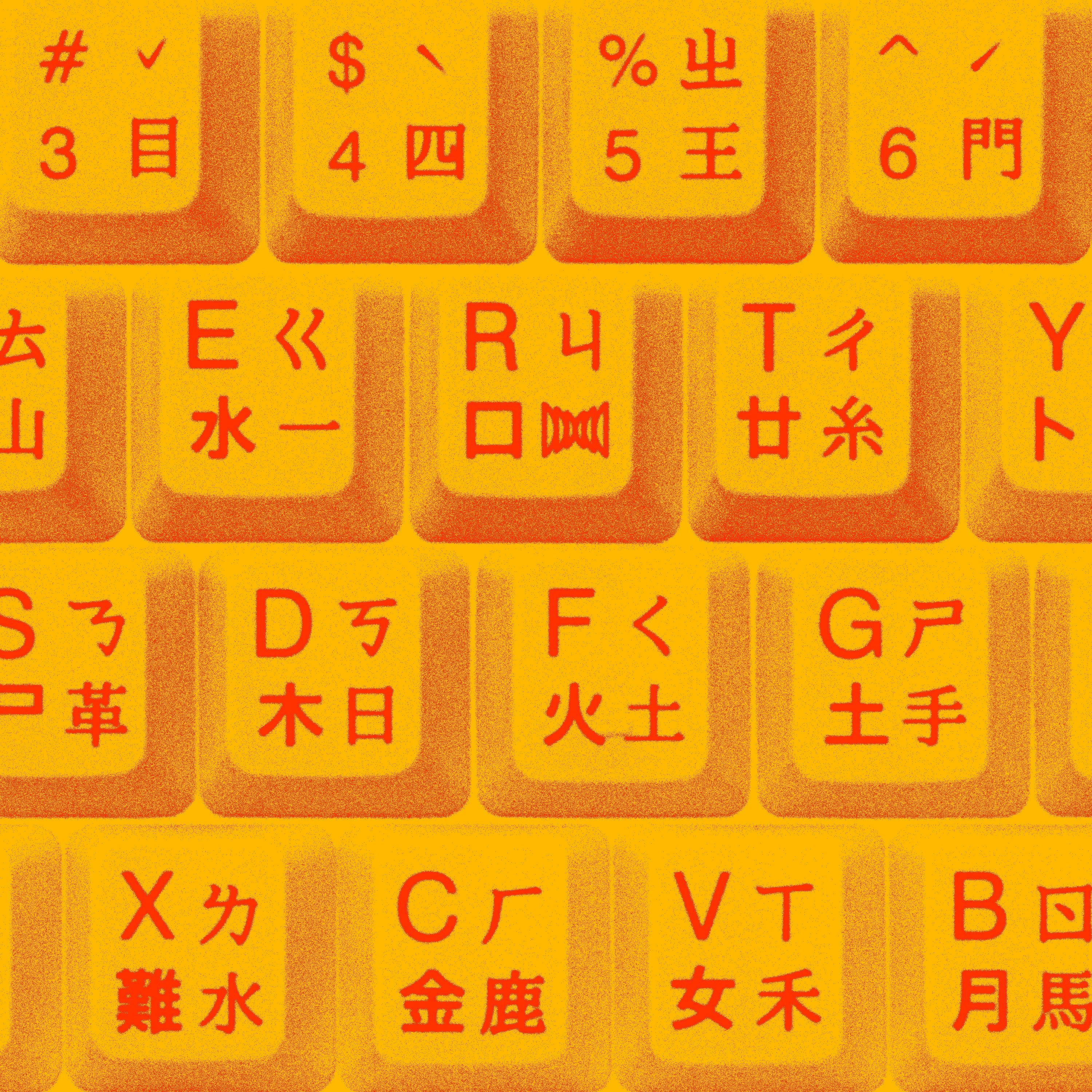
- Wubi (by Wang Yongmin) solved the problem by decomposing characters into a small set of repeatable visual components — a “periodic table” of 125 components mapped to keyboard keys.
- Wubi demonstrated that technology could be adapted to fit Chinese characters (not the other way around), briefly saving character-based writing from obsolescence and gaining rapid national attention in the 1980s.
- Multiple competing input methods emerged (shape-based, phonetic, numeric codes); by the 1990s, pinyin (phonetic) input dominated largely because the state promoted it as a unifying standard for spoken pronunciations across diverse Chinese dialects.
- Typing speed competitions remain popular; surprisingly, shape-based methods like Wubi still achieve the highest top speeds (e.g., 244 characters/minute in competition).
- Modern cloud-based predictive input aggregates millions of users’ keystrokes to suggest completions — speeding composition but raising concerns about homogenization, influence, and “co-writing.”
- The episode connects this history to broader ideas about how input devices (like QWERTY) change preferences and behavior (the “QWERTY effect”) and how design choices can carry cultural and political weight.
Background and context
- 1970s China: computing capability was nascent — estimates put only ~3,000 computers across a country of nearly a billion people.
- Chinese script: logographic, with roots ~3,000 years old and some 70,000+ characters in total. Characters encode meaning/shape more than phonetics, so they’re costly in early computer memory and dot-matrix printing.
- Technological anxiety led some to argue for replacing characters with an alphabetic system; Mao and language reformers even considered radical reforms to facilitate modernization.
The Wubi method — how it worked
Concept and process
- Wang Yongmin treated characters like molecules composed of recurring “atoms” (components).
- He and his small team manually decomposed 10,000 characters into components using piles of note cards, iteratively reducing redundancy until they identified ~125 basic components — his “periodic table” of Chinese.
- Those core components were mapped across QWERTY keys (multiple components per key). Users typed a character by entering its component sequence; the system assembled the character graphically.
Impact
- Wubi allowed Chinese characters to be typed on standard QWERTY keyboards and displayed/printed.
- Public demonstration (1984 UN) and political validation (meeting with leader Hu Yaobang) propelled Wubi to national fame and helped dissuade immediate plans to abolish characters.
- Wubi was widely adopted for a period and associated with Chinese computing literacy.
Competing input methods and outcomes
- Hundreds of input methods were developed: shape-based variants, schemes mapping visual pieces to letter look‑alikes, numeric codes, and phonetic (pinyin) input.
- Pinyin maps pronunciation to Latin letters; its adoption in education and state policy in the 1980s–90s made phonetic input easy to teach and ubiquitous.
- Political dimension: phonetic input encourages standard spoken pronunciation (Mandarin) and thus functions as a unifying tool across dialects — a factor in government support for pinyin-based systems.
- Despite pinyin’s prevalence, elite typing competitions often show shape-based methods (like Wubi) achieving higher top speeds.
Modern developments: predictive cloud input and consequences
- Cloud-based input editors use large‑scale aggregated usage to predict characters and even whole phrases, not only by frequency but by trending topics (news, social patterns).
- This goes beyond local autocomplete: suggestions are informed by what millions of other users are typing in real time.
- Consequences and concerns:
- Speed vs. agency: suggestions can speed composition but may nudge writers toward certain word choices or commonly typed constructions.
- Homogenization: cloud suggestions can reduce linguistic and dialectal diversity by preferring standard or viral forms.
- Influence/agenda: because cloud models surface collective behaviors (and can be shaped by platform policies, censorship, or commercial incentives), they can bias what people write and read.
- The episode frames this as a new kind of “input arms race” with cultural and political implications.
Notable quotes and memorable lines
- “Computers are the gravediggers of Chinese characters.” — a saying from the era that captured the existential threat felt by character supporters.
- Wang on his work: he felt it was “destiny” — that saving the character was a fate-driven imperative.
- Observation about tool feedback: “The hammer changes the hand” — a theme repeated in the episode to underscore how tools reshape users.
Examples & data points mentioned
- ~3,000 computers in China in the early 1970s.
- Chinese writing system: tens of thousands of characters; Wubi reduced components to 125.
- Wubi development involved ~120,000 note cards stacked ~12 meters tall during processing.
- Typing competition top speed cited: 244 characters per minute (winner used Wubi).
- QWERTY effect: study showing preference for names/words with letters typed by the right hand; increase in right-hand-letter names after keyboard ubiquity (~1990).
Implications and takeaways
- Input systems are not neutral: they embody design trade-offs that affect literacy, dialect survival, political centralization, and cultural continuity.
- The evolution from hardware limitation → inventive workaround (Wubi) → policy-driven phonetic adoption → cloud prediction shows how technical, social, and political forces interact.
- Contemporary AI and cloud-based input raise novel questions about co-writing, manipulation, and who controls language-feeding models.
Further reading / where to learn more
- Research by Tom Mullaney on Chinese computing and input methods (recommended for historical depth).
- Background on pinyin, Chinese language reform, and input method editors (IMEs).
- Studies on the “QWERTY effect” and research linking interface design to naming/word preference.
- Look into modern discussions of predictive text, cloud-based language models, and their societal effects.
Final thought
The Wubi story is both a technical detective tale and a cautionary parable: a seemingly small interface decision — how a language is typed — can ripple outward to affect education, culture, politics, and even how we think and write.