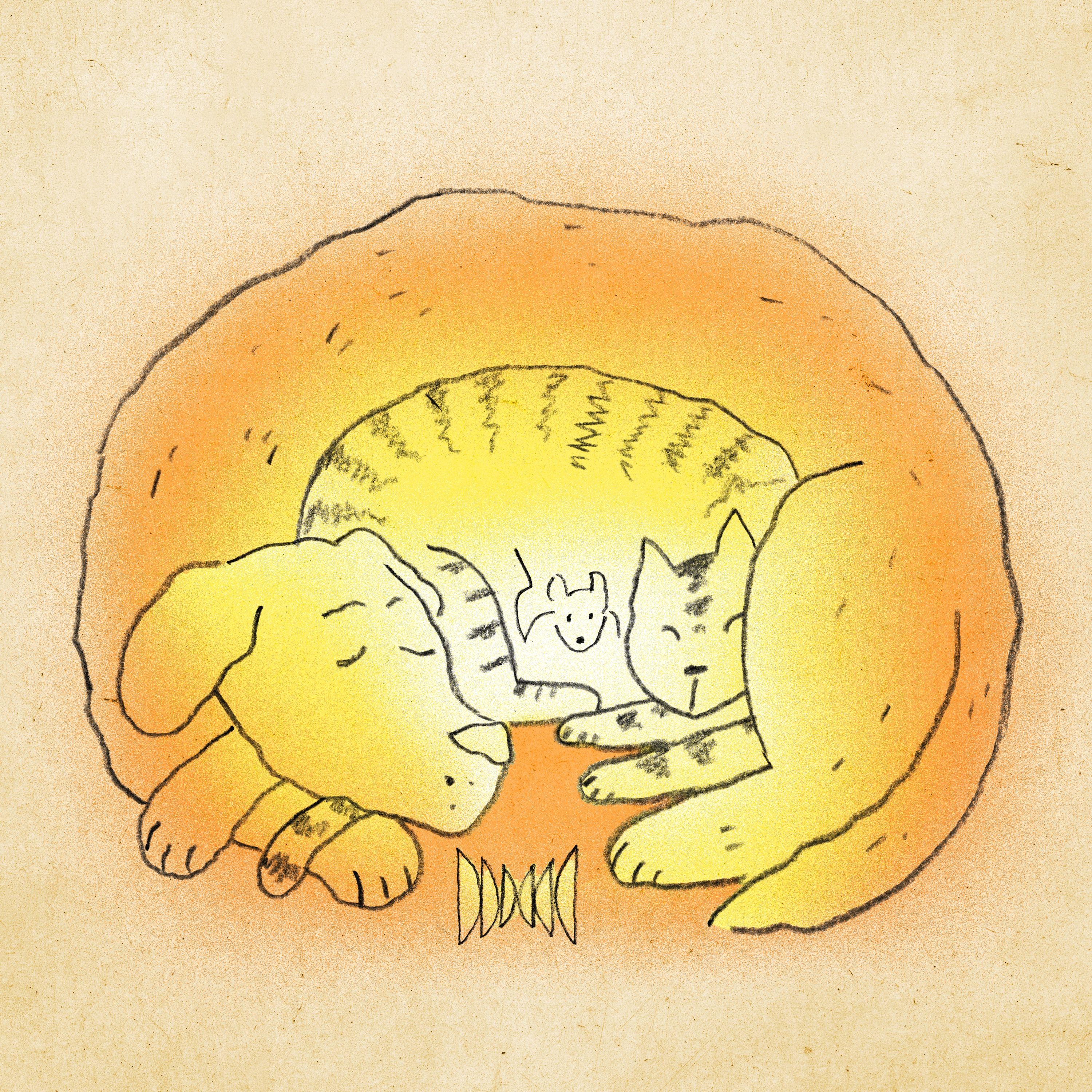
Overview of Kleptotherms
This Radiolab episode (WNYC Studios) explores how animals—and humans—steal heat to survive, survive social exclusion, and signal distress. Framed as a five-chapter “book,” the show weaves natural-history oddities, psychology experiments, medical observations, and temperature history to show that body temperature is not just physiology but entwined with social life, identity, and public health practices.
Episode structure (chapter-by-chapter)
Chapter 1 — Kleptothermy: heat theft in nature
- Definition: kleptothermy = taking heat from another organism rather than generating it yourself.
- Examples:
- A bright blue/black sea snake in New Caledonia that slithers into seabird burrows and coils around birds to absorb body heat (without eating them).
- Male garter snakes that mimic females so other males attempt to mate with them—frictional heating as a warm-up.
- Dwarf caimans and other animals that use termite mounds or warm communal masses to boost temperature.
- Biological economy: getting warmth from others can cut thermoregulatory energy costs by ~60–70%.
Chapter 2 — Redundant clothing and mental illness
- Case study (John): a man who, during worsening psychotic symptoms, wore many layers in summer; layers became socially alienating and fed a negative cycle until effective medication helped him thin out.
- Clinical observations (India, Australia, Memphis): psychiatrists noticed people with schizophrenia sometimes wear multiple layers in hot weather—termed “redundant clothing.”
- Research findings: patients wearing redundant layers had lower free T3/T4 (markers related to cold intolerance), blood pressure changes, and tended to be people who had been untreated/isolated longer — suggesting layering was sometimes a bodily response to feeling chronically cold (and possibly a visible indicator of untreated illness).
Chapter 3 — Social exclusion and perceived temperature
- Cyberball experiment: people who are socially excluded in a virtual ball-tossing game not only report feeling colder but show measurable drops in peripheral skin temperature.
- Takeaway: social coldness (rejection/exclusion) can translate into actual physical cooling.
Chapter 4 — The myth and variability of “98.6°F”
- Origins: 98.6°F stems from 19th-century data by Carl (Karl) Wunderlich and popularization in the U.S. by Edward Seguin and thermometer makers—eventually canonized in culture.
- Reality:
- There is no single “normal” temperature. Temperature varies by sex, age, body size, time of day, measurement site (oral/ear/axillary/rectal), hormones, and more.
- Recent analyses suggest the population mean is closer to ~97.5°F and that average body temperature has fallen slightly over decades (~0.05°F per decade since the 1850s).
- Infrared “temperature guns” used for COVID-era screening can be inaccurate (sometimes reading 2–3°F lower), and single readings are poor determinants of health or infectiousness.
Chapter 5 (wrap / syntheses)
- Social network diversity (having varied social groups) correlated with higher core body temperatures in one dataset—implying that social embeddedness may affect baseline physiology.
- The episode closes by reframing temperature as a porous boundary between body and social environment—physical warmth, emotion, and social context are interconnected.
Key findings & takeaways
- Kleptothermy is widespread in animals and energetically efficient; social or communal warmth reduces metabolic cost.
- Human behaviors (cuddling/huddling, layering) can be understood partly as thermoregulatory strategies with social consequences.
- “Redundant clothing” in hot weather can be a symptom (and visual sign) of physiological cold intolerance linked to untreated psychiatric illness, not merely odd behavior.
- Social rejection measurably cools peripheral temperature and shifts subjective warmth—emotions and social standing can change physiology.
- The canonical 98.6°F is historically situated and misleading; individual and population temperatures vary and have shifted over time.
- Relying on single temperature checks (especially with consumer thermometers/guns) is unreliable for diagnosing illness or making social exclusion decisions.
Notable quotes / memorable lines
- “Kleptothermy — basically engaging in heat theft.”
- “There’s just something so primal about the heat being more important even than the meat.”
- On 98.6°F: “That golden number…was just a little footnote from the 1800s.”
- “Temperature is a porous border between what I thought of as a physiological thing and what’s happening mentally and emotionally.”
Practical implications and recommendations
- Be cautious interpreting temperature readings: context (time of day, measurement site, individual differences) matters; a single number rarely tells the whole story.
- Temperature checks (e.g., infrared guns) are convenient but can be inaccurate and should not be the sole gatekeeper for public access or judgment.
- Layering behavior in hot weather, especially when sudden or extreme, can be a nonverbal signal of distress or untreated mental illness—approach with empathy rather than stigma.
- Social connection matters not just for mental health but may influence baseline physiology (including temperature); fostering diverse social ties has broader health relevance.
Credits & sources (selected)
- Host/reporters: Lulu Miller and Molly Webster; produced by Becca Bressler, Molly Webster, Lulu Miller.
- Research and authors referenced in the episode: Hans Ijzerman (research on social thermoregulation), psychiatrists reporting redundant clothing patterns (Dr. Tathagata Mahintamani and others), historians of thermometry (Karl Wunderlich, Edward Seguin), and infectious disease epidemiologists studying temperature trends.
- The episode pulls together behavioral ecology, psychiatry, psychophysiology experiments (Cyberball), and medical history to show temperature as both biological and social.
If you want, I can produce a one-paragraph TL;DR, a timeline of studies mentioned, or a short list of recommended further reading.