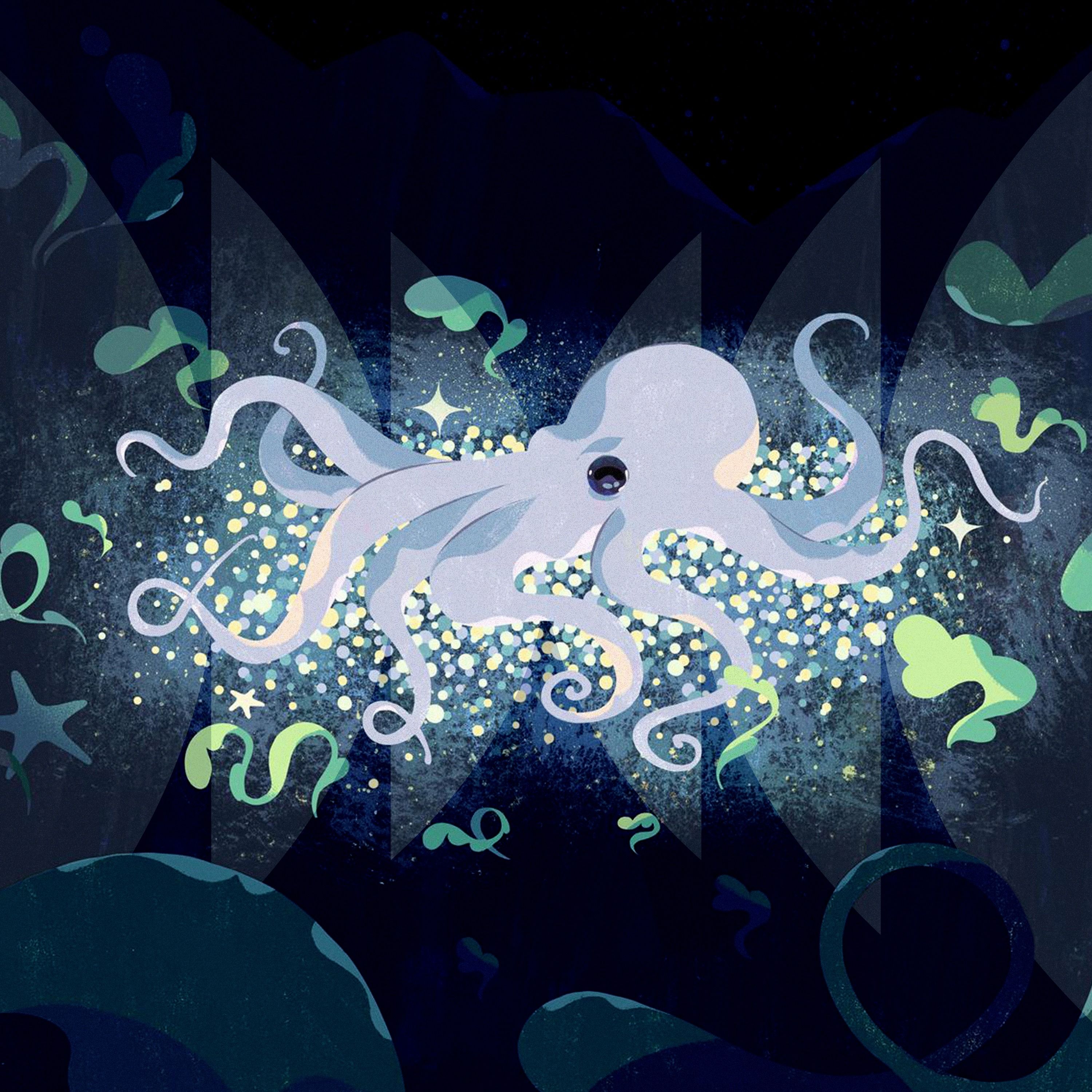
Overview of Octomom by Radiolab
This Radiolab segment tells the remarkable true story of a deep-sea octopus nicknamed “Octomom”—a mother who was observed guarding her eggs for about four and a half years without eating, barely moving, and repeatedly fending off predators. The episode blends wonder, marine biology, and emotional reflection to explore the extraordinary sacrifices of octopus motherhood and the strange biological machinery that makes such endurance possible.
The Story at a Glance
The discovery
- Deep-sea explorer Bruce Robison and his team were using a remotely operated submersible in Monterey Canyon off California.
- On one dive, they spotted a large octopus moving toward a rocky outcrop.
- A month later, they returned and found the same octopus brooding over a clutch of about 160 eggs.
- The team began checking in on her opportunistically over the following years and nicknamed her Octomom.
The astonishing timeline
- Octomom remained on the eggs for 4.5 years, an unusually long brooding period.
- During that time:
- she did not eat
- her body gradually weakened
- her skin turned pale and her eyes cloudy
- she continued to clean and protect the eggs
- At one point, crabs surrounded her and seemed poised to attack, but on a later visit the scientists found the crabs dead and torn apart—apparently killed by Octomom herself despite her frailty.
What the Episode Explains About Octopus Biology
Octopus reproduction is fatal for the mother
- The episode explains that for octopuses, reproduction is essentially a one-way journey.
- After mating and laying eggs, the female enters a final phase of life focused entirely on the eggs.
- She typically stops eating and eventually dies around the time the eggs hatch.
The brain and optic glands
- Scientist Yan Wong explains that the octopus nervous system behaves like an orchestra:
- most of the “instruments” quiet down during brooding
- the optic glands—tiny structures between the eyes—take the lead
- These glands appear to trigger chemical changes, including hormones and other processes, that help the octopus survive the brooding period without food.
- The exact mechanism is still not fully understood, especially in deep-sea species.
Why Octomom Matters
A scientific mystery
- Octomom may be the longest brooding octopus ever observed on Earth.
- Scientists still don’t know whether:
- she was an extraordinary outlier, or
- deep-sea octopuses normally brood this long and simply haven’t been studied enough
- Her case highlights how little humans know about deep ocean life.
A powerful metaphor
- The story is framed as a meditation on:
- perseverance
- sacrifice
- patience
- the hidden labor of caregiving
- The hosts connect Octomom’s endurance to broader human experiences of holding on through difficult times.
Notable Themes and Takeaways
Devotion and sacrifice
- Octomom’s life becomes a portrait of relentless maternal care.
- She protects her eggs with absolute focus, even at the cost of her own life.
The deep sea as a place of wonder
- The episode emphasizes how alien and mysterious the deep ocean is.
- It reminds listeners that some of the most extraordinary stories on Earth are happening far from ordinary human attention.
Science as patience
- The researchers were not witnessing a planned experiment, but a long, accidental observation.
- Their occasional visits slowly revealed the scale of what was happening, turning a routine dive into an unforgettable scientific discovery.
Final Impression
Octomom is both a nature documentary in audio form and a deeply moving story about life, death, and parental devotion. It uses one octopus’s improbable endurance to show how little we still know about the ocean—and how profound and heartbreaking biology can be.