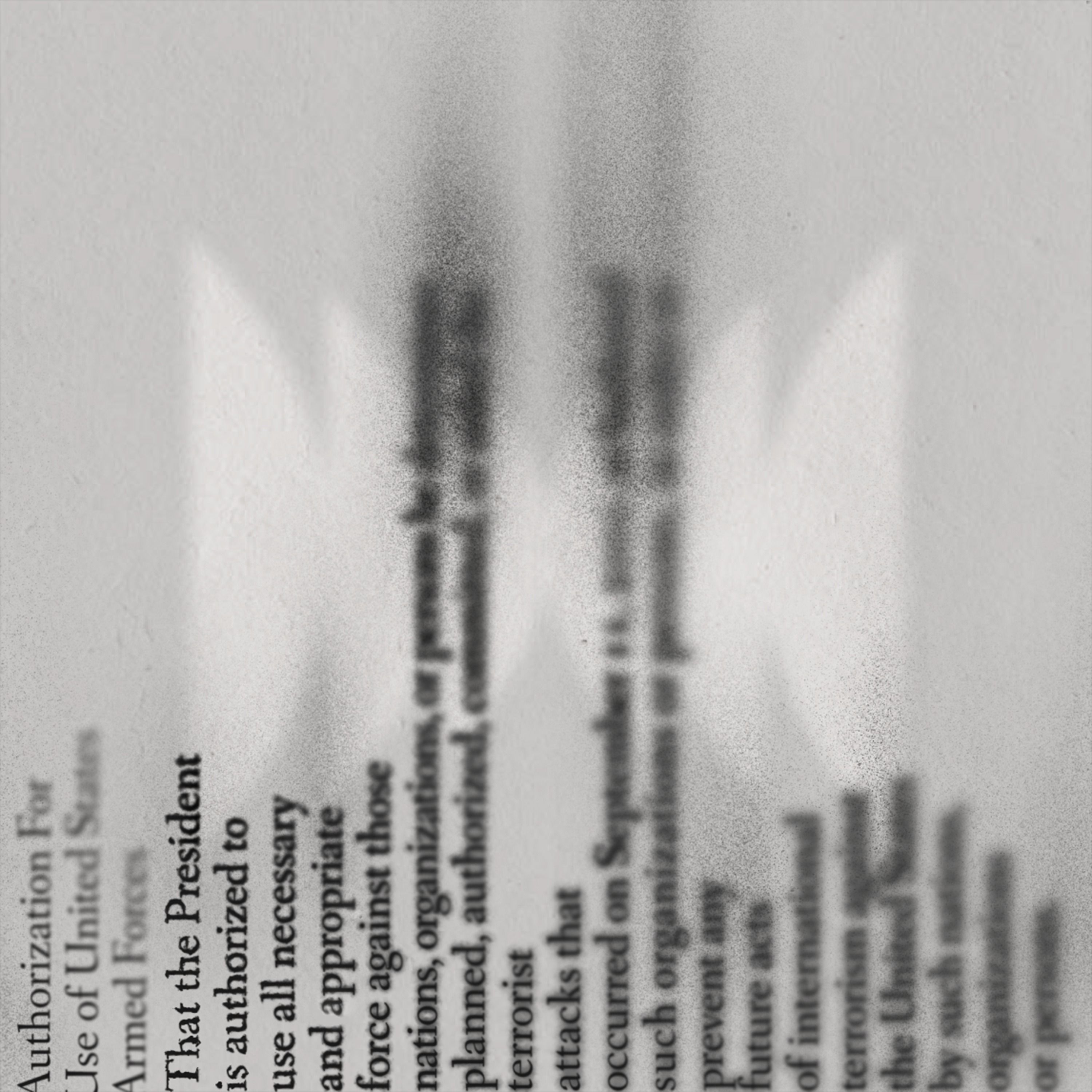
Overview of 60 Words
This Radiolab episode tells the story of the 2001 Authorization for Use of Military Force (AUMF) — a single 60-word sentence passed days after 9/11 that became the legal backbone of the U.S. “war on terror.” The episode follows how those words were written, why Congress approved them, why Barbara Lee was the lone “no” vote, and how that language later expanded to justify detention, drone strikes, renditions, and military action far beyond Afghanistan.
The Core Story
How the AUMF came to be
- In the immediate aftermath of 9/11, White House lawyer Timothy Flanigan drafted a resolution for Congress.
- He modeled it on the 1991 Gulf War authorization, then trimmed and revised it into a short, flexible sentence.
- The final text authorized the president to use “all necessary and appropriate force” against those responsible for the attacks or those who harbored them.
Why it mattered
- The episode argues that this one sentence became the legal foundation for:
- Guantanamo Bay detentions
- Drone strikes
- Secret renditions
- Special operations raids
- Even though the text never explicitly mentions detention or drones, lawyers interpreted “force” broadly enough to include them.
Barbara Lee’s Lone Dissent
Why she objected
- Barbara Lee, then a California congresswoman, warned the resolution was too broad and too open-ended.
- She and others remembered how vague language in the 1964 Gulf of Tonkin Resolution helped widen the Vietnam War.
- During a memorial service after 9/11, a clergy member’s line — “as we act, let us not become the evil we deplore” — helped crystallize her decision.
The cost of saying no
- Lee cast the only vote against the AUMF in Congress.
- She was met with intense backlash, including hate mail and threats.
- Despite that, she remained convinced that Congress should not hand over such expansive war powers without clarity.
How 60 Words Grew Into a Global War
The “associated forces” problem
- The episode explains that the text itself never says “associated forces,” but the U.S. government effectively added that idea later.
- This allowed the AUMF to cover groups beyond al-Qaeda and the Taliban, including later threats like al-Shabaab and AQAP.
- As a result, the war expanded to places like Yemen, Somalia, Pakistan, and Libya.
Who decides?
- Much of the real decision-making moved into classified legal and military meetings.
- Lawyers, not just generals, became central to deciding:
- who counted as an enemy
- who could be targeted
- whether a strike was legally justified
- The episode suggests this created a largely opaque system in which the public and even many lawmakers did not know who the U.S. was officially “at war” with.
Obama’s Attempt to End the War
A promise to wind it down
- In 2013, President Obama said the AUMF should be revisited and that the war, like all wars, must end.
- But instead of fully ending the framework, his administration leaned on a new justification: “imminent threat.”
Why that mattered
- “Imminent threat” gave the executive branch another way to justify unilateral strikes.
- Critics argued this risked replacing one expansive legal theory with another, leaving the war on terror effectively open-ended.
Later Updates in the Episode
- Obama never repealed the original AUMF.
- The administration later used it to justify action against ISIS, treating ISIS as a successor to al-Qaeda.
- The U.S. withdrawal from Afghanistan in 2021 did not end the legal framework.
- Barbara Lee continued pushing for repeal, eventually becoming mayor of Oakland in 2025.
- The episode notes that while a different Iraq-era AUMF was repealed, the original 2001 AUMF remains on the books.
Key Takeaways
- A short, vague legal sentence can shape decades of policy.
- Congressional unity after a national trauma can produce long-lasting legal consequences.
- Barbara Lee’s warning about vague war powers proved prescient.
- The AUMF became a flexible, expanding authorization for a war that never had a clear end date.
- The episode’s central question is not just what those 60 words meant in 2001, but who gets to decide what they mean today.