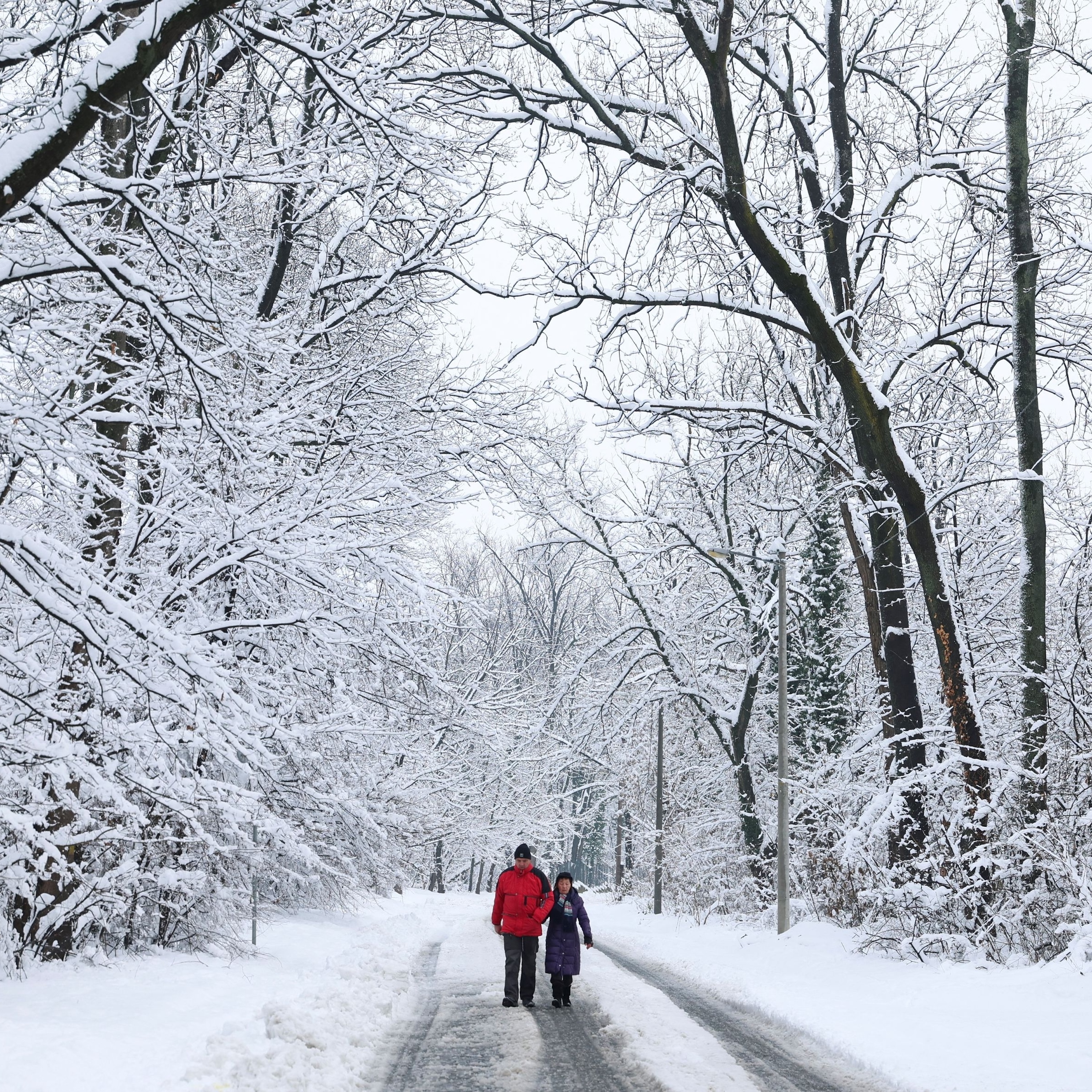
Overview of "Why going outside is good for you, even when it's freezing" (The Washington Post — The Optimist)
This episode argues that brief time outdoors — even in cold weather — measurably improves mental and physical health, and outlines how therapists are increasingly bringing sessions outside. Reporter Maggie Penman walks through Rock Creek Park with three psychologists (Dr. Jess Magidson, Dr. Heidi Schreiber‑Pan, Dr. Mickey Moskowitz) to explain the research, practical benefits, training and safety considerations, and simple, actionable ways anyone (and some clinicians) can start using nature to boost wellbeing.
Key takeaways
- Short doses help: Even 10 minutes in nature can reduce stress, lower cortisol, improve mood and sleep, and boost attention and memory.
- Attention restoration/soft fascination: Natural environments engage attention without exhausting it, producing a kind of mini‑mindfulness that supports creativity and focus.
- Exercise amplifies benefits: Pairing walking or movement with time outdoors nearly doubles mental‑health gains.
- Accessible everywhere: Benefits aren’t limited to wilderness — city parks, tree‑lined streets and small green spaces count.
- Nature therapy is growing but still niche: More clinicians are offering "walk and talk" or nature‑informed therapy, accelerated by pandemic practices, but widespread adoption is limited by training, liability and logistics.
Experts quoted (and their roles)
- Dr. Jess Magidson — Clinical psychologist, professor at University of Maryland; advocates outdoor therapy and research on access to care.
- Dr. Heidi Schreiber‑Pan — Founder/Executive Director, Center for Nature‑Informed Therapy; trained clinicians to use nature in treatment.
- Dr. Mickey Moskowitz — Clinical psychologist working in primary care; practices walk‑and‑talk therapy and uses outdoor mindfulness techniques.
Research and psychological mechanisms
- Stress reduction: Nature exposure reduces physiological stress markers (e.g., cortisol) and helps regulate the stress response.
- Attention restoration theory: Natural scenes produce "soft fascination" that replenishes directed attention and memory capacity.
- Mindfulness made easier: Sensory cues (sounds, colors, movement) make present‑moment awareness more accessible than traditional sitting meditation for many people.
- Dose and accessibility: Small, regular exposure (e.g., 10 minutes daily — like the Scandinavian Freiluftsleben practice) produces measurable effects even for people who say they don't particularly like nature.
Practical, evidence‑based tips for individuals
- Start small: Aim for 10 minutes if you’re pressed for time — it still helps.
- Pair movement with nature: Walks or light exercise outdoors increase benefit.
- Use sensory prompts for brief mindfulness: Notice a color, a sound, something moving, or a texture to anchor attention.
- Embrace winter rituals: Combine brief outdoor exposure with a cozy ritual afterwards (hygge — tea, a candle, nesting) to reinforce the habit.
- City dwellers: Use local parks, tree‑lined streets or even green patches — you don't need mountains or oceans.
How therapists use outdoor therapy (and caveats)
- Formats: Walk‑and‑talk sessions, guided mindfulness in green spaces, nature‑informed activities integrated into therapy.
- Benefits for clinicians: Reduced burnout and improved mood; therapists report feeling more energized after outdoor sessions.
- Barriers: Lack of formal training, liability concerns, privacy/ confidentiality challenges, weather and scheduling/logistics.
- Safety & professional guidance: American Psychological Association guidelines recommend liability insurance, basic first aid, proper training in outdoor therapy, and clear informed‑consent discussions about privacy and what to do if others are encountered on a trail.
- Practical clinician prep: Discuss expectations with clients (privacy, encounters with acquaintances, emergency plans), bring basic supplies and plan routes that suit clients’ mobility and comfort.
Notable quotes and phrases
- "Even 10 minutes of time outside or 10 minutes in nature can make an impact on our mental health."
- Attention restoration described as "soft fascination" — nature captures part of our attention without taking it all.
- Scandinavian practices highlighted: Freiluftsleben (go outside every day for at least 10 minutes) and hygge (cozy ritual after being outdoors).
Action items / quick checklist
For anyone:
- Try a 10‑minute outside walk today — layer up if it’s cold.
- Use one sensory prompt: notice one sound, one color, one movement.
- Afterward, do a small warm/cozy ritual (hot drink, candle, warm bath).
For clinicians considering outdoor therapy:
- Seek training in nature‑informed therapy and check APA guidance.
- Arrange appropriate professional liability coverage and basic first‑aid preparedness.
- Use informed consent: clarify confidentiality limits, route choices and plans if you meet acquaintances or emergencies occur.
- Start with feasibility: try a single walk session and assess client comfort and outcomes.
Final note
The episode emphasizes that outdoor time is a low‑cost, accessible, evidence‑based tool to reduce stress and improve attention and mood — and that small, regular doses (even in winter) can make a meaningful difference. The host and experts encourage experimenting with short, intentional outdoor practices and highlight that nature therapy can be adapted for urban settings and clinical use.