Overview of Post Reports: Trump’s Greenland ‘deal,’ and Democrats’ midterm math
This episode of The Washington Post’s Post Reports politics roundtable (host Kolbe Eshowitz) reviews President Trump’s year‑anniversary White House briefing and his trip to Davos — focusing on his unorthodox 80‑minute address, the unclear “deal” over Greenland, and rising tension with traditional allies — then shifts to why Democrats are increasingly optimistic about the 2026 midterms, including evolving Senate math and strategic tradeoffs for both parties.
What happened at the White House briefing
- Setting: An unusually crowded briefing room for Trump’s one‑year anniversary press appearance; reporters described difficult access and an intense atmosphere.
- Trump’s remarks:
- He delivered an 80‑minute, wide‑ranging opening statement (he presented a handout touting “365 wins in 365 days”).
- Topics ranged from Columbus Day and White House refurbishing to immigration, the economy, local anecdotes and odd tangents (e.g., joking about calling the Gulf the “Gulf of Trump”).
- The tone was defensive and credit‑seeking: he repeatedly argued he isn’t getting deserved praise for accomplishments.
- He also made inflammatory/derogatory comments about groups (the transcript cites disparaging remarks about Somali‑Americans) and used polarizing language.
- Reporters’ read: The speech felt rambling, unfocused and aimed at rallying his base while trying to secure validation from skeptical listeners.
Davos visit and reactions from world leaders
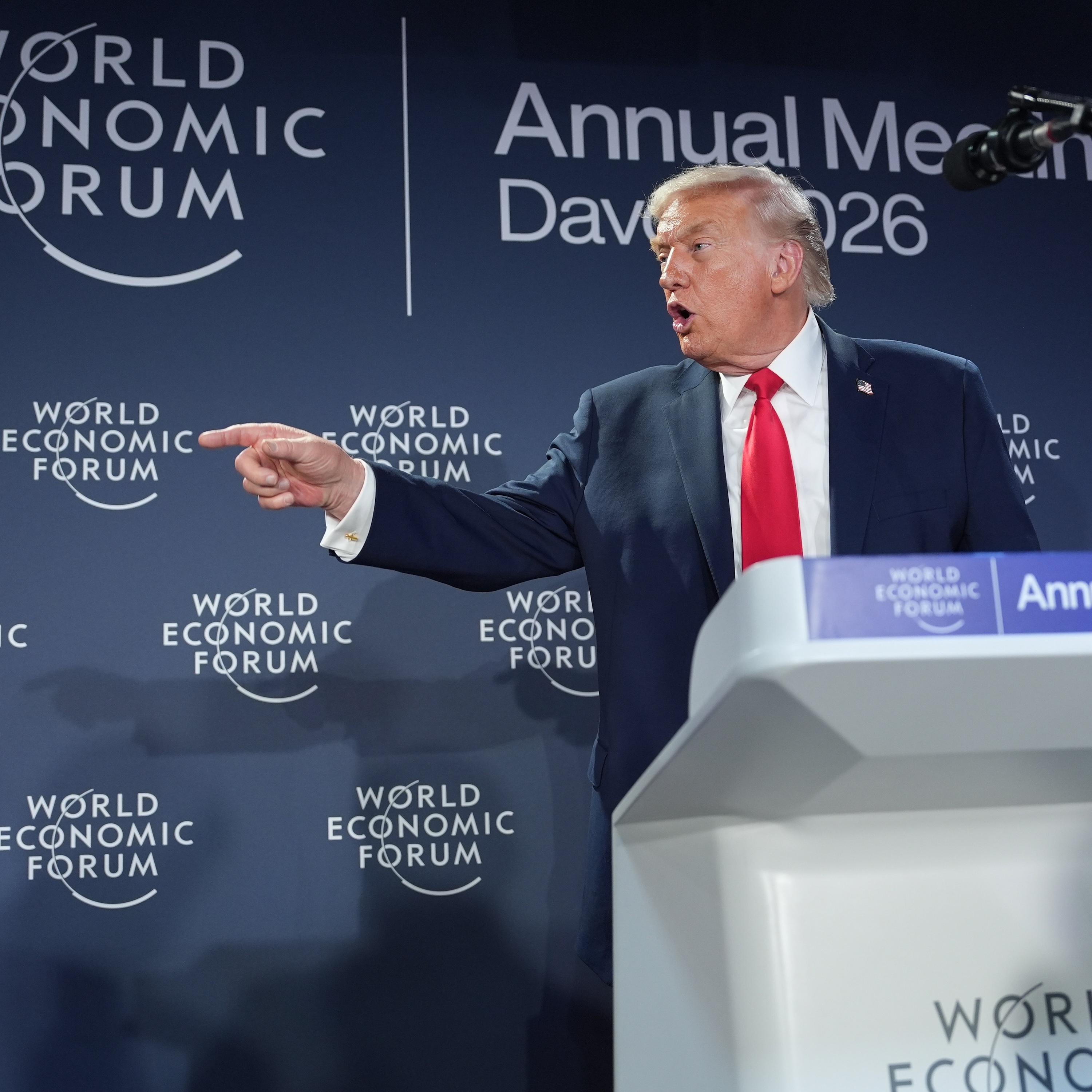
- Context: Trump’s trip to the World Economic Forum in Davos followed escalation of rhetoric over Greenland and threats of tariffs on Europe.
- Key diplomatic moments:
- European and allied leaders pushed back publicly — framing the U.S. as less reliable and signaling fractures in long‑standing relationships.
- A prominent Canadian speech (referred to in the episode as a wake‑call for allies) emphasized that countries can’t assume automatic security/prosperity from U.S. alignment and urged middle‑power cooperation.
- Trump responded in Davos by criticizing leaders (including mocking France’s president and criticizing NATO commitments), then later announced a vaguely described “deal” that he said defused his Greenland saber‑rattling; details were not provided at the time of the episode.
- Takeaways:
- Davos showcased a rare, public rebuke of the U.S. by allied leaders and highlighted talk of “middle powers” coordinating as a hedge against U.S. unpredictability.
- For domestic political audiences, both Trump and European leaders can claim a win; Trump can say he “achieved” something, while allies can say tariff threats and other risks were avoided.
Midterms: why Democrats feel optimistic
- Historical + political backdrop:
- Midterms historically punish the president’s party; Democrats point to 2018 and other cycles as precedent.
- Polling shows many voters still perceive affordability and economic issues as unresolved, undermining Trump’s claims of economic success.
- Trump’s coalition appears weakened among some groups that helped him in 2024 (notably Latino voters and younger voters, per the hosts’ reporting).
- Senate math and pickups that Democrats see as possible:
- Current status cited: Democrats down roughly 47–53 and need a net gain of 6 seats to take control (map shifts make that hard but not impossible).
- Potential pickup opportunities discussed: North Carolina (strong recruit: former governor Roy Cooper), Alaska (Mary Peltola), Ohio (Sherrod Brown running), and other traditionally red states that might come into play if national conditions deteriorate for Republicans.
- Defenses for Democrats: Georgia (Ossoff), Michigan, New Hampshire, Minnesota — some vulnerable seats the GOP will target.
- Strategic challenge: a widened competitive map helps Democrats politically but forces hard resource allocation decisions (where to spend money, when to surge national support, etc.).
- Cautious caveat: It’s still early (January), and economic or political shocks before November could change everything.
Republican party dynamics and why few GOP lawmakers openly oppose Trump
- Primary calculus:
- Primary voters are typically the most partisan and pro‑Trump; Trump’s endorsements remain influential in GOP primaries.
- Many vulnerable Republicans avoid overt criticism for fear of a primary challenge backed by Trump’s base.
- Examples & consequences:
- The hosts point to cases where Republicans who crossed Trump faced primary threats or lost support from Trump allies (making intra‑party challenges politically risky).
- Post‑primary behavior:
- Some Republicans may moderate or criticize Trump after surviving primaries; Democrats will watch for such post‑primary pivots and be prepared to exploit perceived flip‑flops.
Notable quotes / moments
- Trump’s self‑branding: “365 wins in 365 days” (handout provided in the briefing room).
- Trump joking/tangential line: “I was going to call it the Gulf of Trump.”
- Diplomatic pushback at Davos framed as a “wake call” for allies to coordinate beyond depending on U.S. stability.
What to watch next (actionable items)
- Greenland “deal” details: what was actually agreed, whether it’s binding, and how it affects U.S. posture in the Arctic.
- Davos fallout: will middle‑power cooperation solidify beyond rhetoric? Any formal trade/security responses?
- Midterm signals: candidate recruitment and polling in North Carolina, Alaska, Ohio, Texas and other long‑shot pickup states; where national Democrats choose to allocate funds.
- Local impacts of immigration/ICE actions: monitoring consequences in swing states and key Senate battlegrounds (Maine, Minnesota).
- Primary season dynamics: which vulnerable Republicans face—and survive—challengers, and who pivots toward the center post‑primary.
Bottom line
- Trump’s one‑year anniversary briefing and Davos trip reinforced his combative, presidential style that energizes supporters but alienates many allies and critics. He left Davos claiming a victory on Greenland without public details.
- Democrats see structural and political reasons to be optimistic about 2026, especially given early polling, candidate recruitment and a shifting Senate map—but the outcome still depends heavily on economic conditions, campaign funding choices and how events unfold through the year.